Agentic AI is a form of artificial intelligence (AI) that can make autonomous decisions and take actions. Unlike traditional AI systems that wait for instructions or perform tasks based on specific prompts, agentic AI is designed to pursue goals, make decisions, and take action to achieve desired outcomes. It represents a shift from AI as a reactive assistant to AI as an active participant in business processes.
The rise of large language models (LLMs), advances in reasoning capabilities, and the growing demand for intelligent automation have accelerated interest in agentic AI. Enterprises across industries are accelerating investments in agentic AI to drive productivity, streamline operations, and unlock new business value. As a result, the enterprise agentic AI market is projected to expand from USD 2.58 billion in 2024 to USD 24.50 billion by 2030, reflecting a robust 46.2% CAGR over the 2025–2030 forecast period.2
Agentic AI is more than an incremental advancement in artificial intelligence; it represents a fundamental shift in how organizations leverage technology to achieve business goals. By functioning as autonomous, goal-driven teammates, these systems enable organizations to automate complex processes, improve operational efficiency, and enhance decision-making across a wide range of business functions with minimal human intervention. As the technology matures, agentic AI is expected to become a critical driver of competitive differentiation and long-term business growth.
The term "agentic" originates from the concept of agency - the capacity to act intentionally to achieve specific goals. Agentic AI systems are capable of understanding environmental context, learning from interactions, and dynamically adapting to evolving conditions to accomplish multi-step objectives. In practical terms, agentic AI combines reasoning, planning, memory, tool usage, and execution capabilities to perform tasks that would otherwise require human coordination.
At its core, agentic AI seeks to answer a fundamental question: "How can AI move beyond generating responses and begin delivering outcomes?"
To achieve this, agentic systems often employ AI agents that collaborate, share information, and perform specialized tasks. These agents can access enterprise systems, retrieve data, interact with applications, invoke external tools, and coordinate workflows across business functions. This ability to move beyond conversation and into autonomous action is what distinguishes agentic AI from earlier generations of AI technology.
At the enterprise level, agentic AI is increasingly viewed as the next phase of intelligent automation. Rather than automating isolated tasks, organizations can automate end-to-end workflows that require reasoning, decision-making, and adaptation across multiple systems and stakeholders.
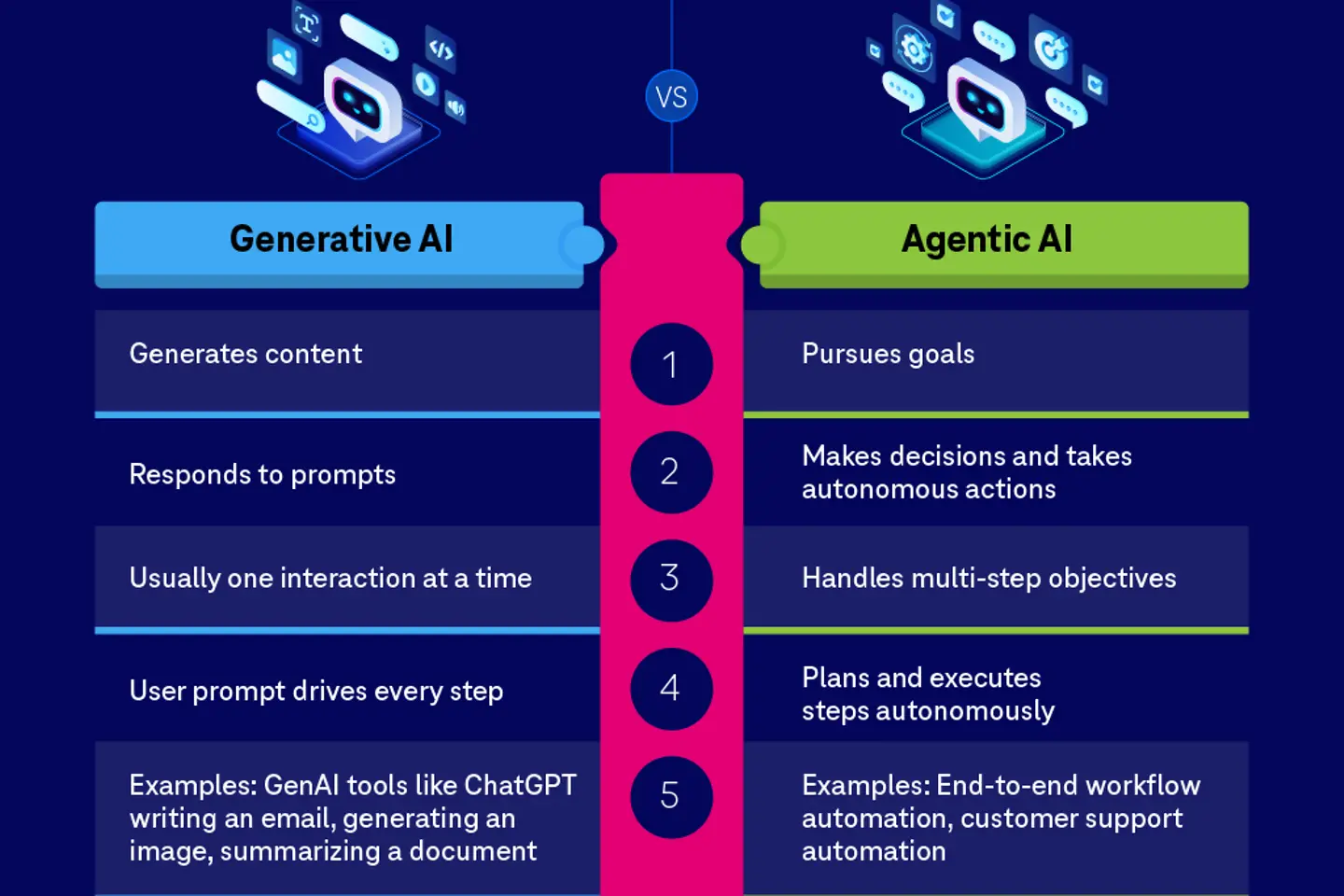
While agentic AI and generative AI are closely related, they serve fundamentally different purposes.
Generative AI is a form of AI that is designed to generate content based on user prompts. Powered by LLMs, it can generate text, images, code, audio, and other forms of content by learning patterns and relationships from large volumes of training data and responding to user prompts in natural language.
Agentic AI, on the other hand, extends the capabilities of generative AI beyond content creation. It uses LLMs as a reasoning engine to power autonomous agents that can plan, make decisions, interact with tools, and execute actions across systems to achieve a defined objective. Rather than simply responding to prompts, agentic AI can independently determine the sequence of tasks required to accomplish a goal, monitor progress, adapt to changing conditions, and take corrective actions when needed.
Let’s consider an example to understand the differences better.
A sales representative wants to book a meeting for a product demonstration with a customer.
To achieve this, the sales representative asks a generative AI tool to: "Write an email inviting the customer to a product demo next week."
The generative AI tool generates a professional email with suggested meeting times. The representative then:
Thus, generative AI assists with content creation, but the human handles the process.
With agentic AI, the sales representative gives the system a goal: "Schedule a product demo with the customer next week."
To achieve this, the agentic AI system can:
The representative is only involved if approval or intervention is needed.
The difference is, therefore, clear.
Generative AI helps generate content as per user prompt and agentic AI makes decisions and executes end-to-end workflow to achieve a goal.
The decision to deploy agentic or non-agentic or traditional AI chatbots is not merely a technology decision; it is a strategic choice that shapes operational efficiency, scalability, risk management, and long-term business value.
Traditional AI chatbots are designed primarily for conversational interactions and operates in a request-response model. Non-agentic AI chatbots leverage conversational AI techniques, including natural language processing (NLP), to interpret user inputs to answer questions, provide information, guide users through predefined workflows, and automate routine exchanges. Once the interaction ends, the system generally takes no further action on its own. Their value lies in improving responsiveness and user engagement.
Agentic AI, on the other hand, is designed to achieve goals. Leveraging autonomous AI agents, these systems can analyze situations, make decisions, coordinate actions across systems, and complete multi-step processes by interacting with enterprise applications, APIs, and external tools. They continuously adapt to user preferences over time, enabling more personalized interactions and delivering more comprehensive responses. Their value lies especially in situations where success is defined not just by responses but by outcomes.
While choosing between the two, the real challenge is understanding when conversational assistance is enough and when autonomous execution delivers greater value, and how much autonomy AI should have in specific business workflows.
For example, a non-agentic AI chatbot may answer a customer's question about a delayed shipment. An agentic AI chatbot, on the other hand, can investigate the shipment status, identify the cause of the delay, initiate corrective actions, communicate updates to stakeholders, and continue monitoring the issue until it is resolved.
The key difference lies in autonomy.
Non-agentic chatbots are reactive. Agentic AI systems are proactive. This distinction is driving growing interest in agentic architectures across diverse areas like customer service, operations, cybersecurity, supply chain management, and software development.
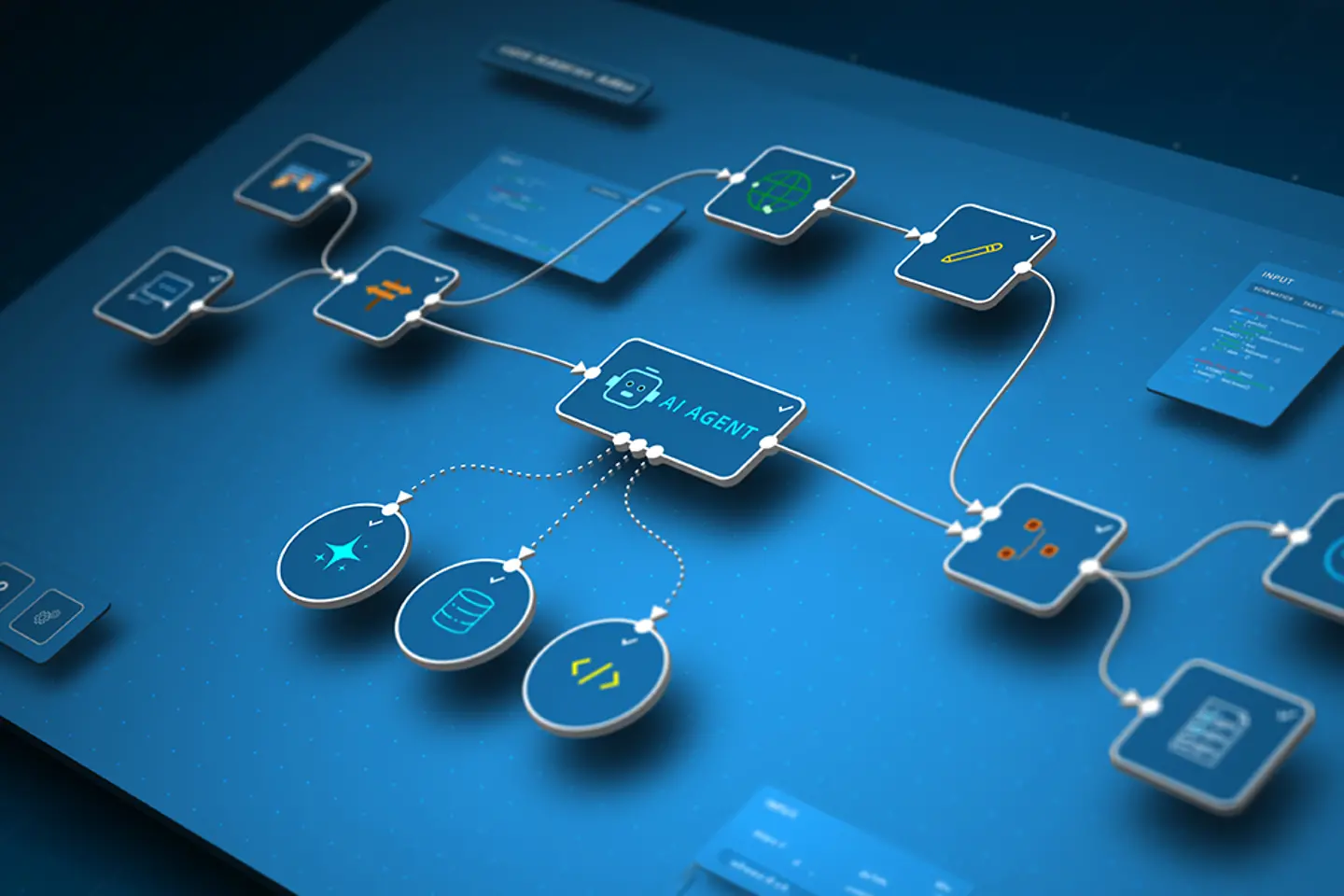
The terms "agentic AI" and "AI agents" are often used interchangeably, but they refer to different concepts.
An AI agent is an individual software entity capable of perceiving its environment and autonomously performing tasks to achieve specific goals.
AI agents are designed to address complex challenges across enterprise applications such as software development, code generation, IT automation, etc. At the core, AI agents are advanced large language models (LLMs) that can understand and respond to user inputs, reason through tasks step by step, and determine when to utilize external tools to accomplish their objectives.
For instance, Uber has developed Finch3, a conversational AI agent designed to simplify financial data access for analysts. Integrated with Slack, Finch eliminates the need for manual SQL queries by converting natural language into structured data.
Agentic AI refers to the broader framework or capability that enables autonomous behavior. Think of AI agents as the building blocks and agentic AI as the overall system.
A single AI agent might perform a focused task such as monitoring inventory levels or responding to customer inquiries.
An agentic AI system may consist of multiple specialized agents working together to accomplish larger objectives. One agent may gather information, another may perform analysis, a third may make recommendations, and a fourth may execute actions.
This collaborative approach is often referred to as a multi-agent system.
For enterprises, understanding this distinction is important because successful deployments often involve orchestrating multiple AI agents across business functions rather than relying on a single autonomous entity.
Retrieval-Augmented Generation (RAG) has emerged as one of the most effective approaches for improving the accuracy and relevance of AI-generated responses. Traditional RAG systems retrieve information from external knowledge sources before generating answers instead of solely relying on the data it is trained on.
Agentic RAG takes this concept further.
Agentic RAG systems enable the integration of AI agents into the retrieval pipeline, improving both adaptability and response accuracy.
The effectiveness of traditional RAG systems largely depends on predefined prompts and user guidance. Agentic RAG takes a more sophisticated approach with greater autonomy. It can generate its own follow-up questions, leverage memory to build richer context, and proactively execute additional tasks when needed. This ability to reason, adapt, and act independently enables agentic RAG to deliver deeper insights, make more informed decisions, and reduce the need for constant human intervention.
For example, with traditional RAG, a user can ask a chatbot to explain a company's travel reimbursement policy. The chatbot would retrieve and present the relevant policy details. With agentic RAG, the system would not only explain the policy but also present the user with an option to submit a reimbursement request. Following which, AI agents could gather the required receipts, populate the expense claim form, verify compliance with company guidelines, route the request for approval, and track its status on the user’s behalf.
While implementations may vary depending on the use case, most agentic AI systems follow a common operational framework.
Agentic AI starts by gathering information from various sources using APIs, databases, sensors, or user interactions, ensuring it has the latest data needed for analysis and decision-making. This flow of information provides the context required to accurately understand the situation and determine the most appropriate next steps.
Once it has the information, the agentic AI system analyzes it to derive meaningful insights. Using capabilities such as natural language processing (NLP), computer vision, and machine learning, it understands the user queries and the broader context to logically determine what actions are required.
Based on user instructions, predefined goals, or contextual insights, the AI establishes a target outcome. It then develops a plan to achieve that outcome, often breaking complex tasks into smaller, manageable steps and determining the most effective path forward.
The AI analyzes the different possible actions and determines the most effective one to achieve the desired outcome. In doing so, it considers factors such as accuracy and efficiency, leveraging techniques like machine learning-based reasoning or other utility functions.
After deciding on the best course of action, the AI goes on to execute it. This may involve interacting with external applications or generating responses and recommendations for the user.
Following execution, the AI reviews the results and gathers feedback to improve future performance. Through techniques such as reinforcement learning and self-supervised learning, it refines its decision-making process and becomes more effective over time.
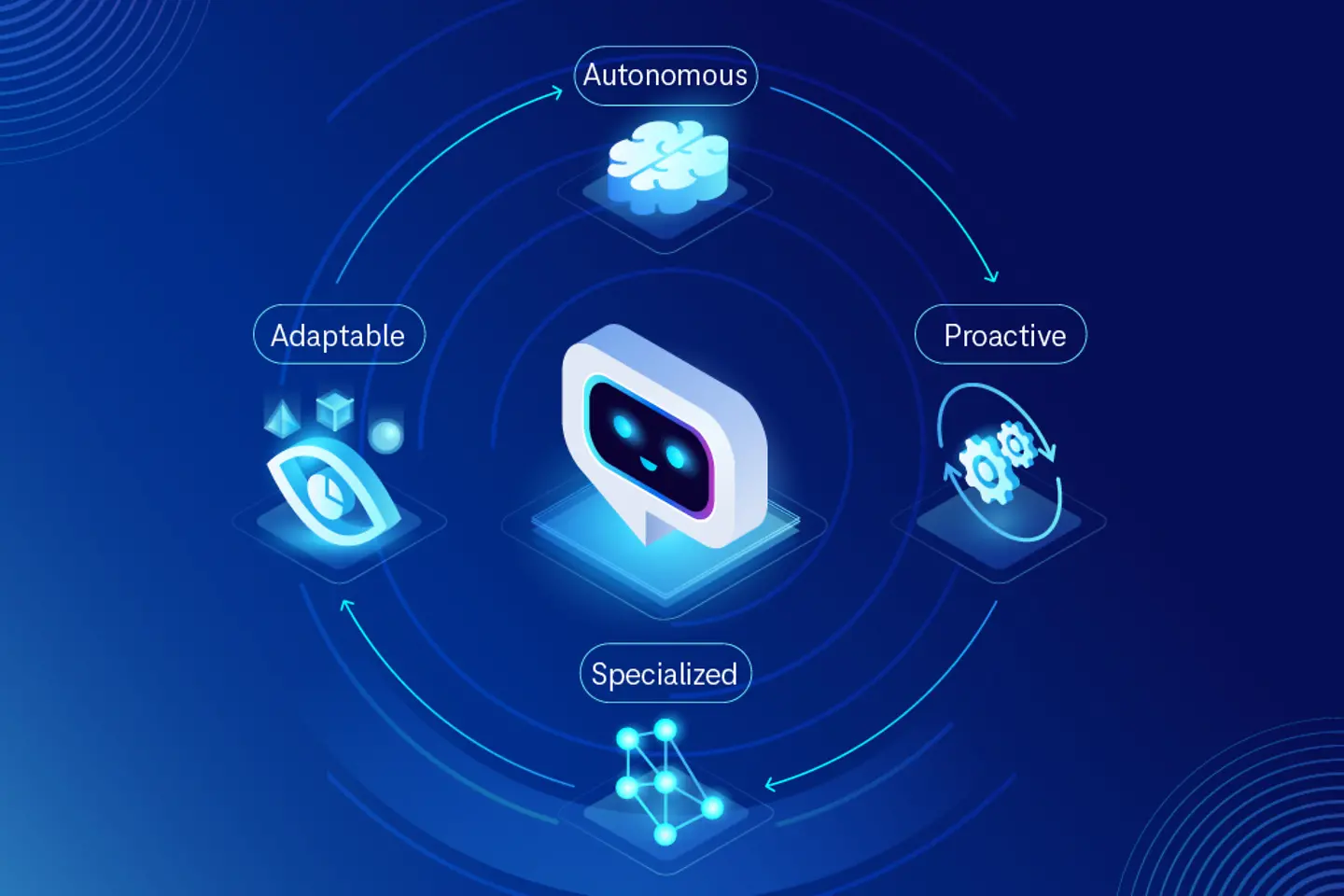 Image generated with AI
Following are some of the key characters of an agentic AI system.
One of the defining characteristics of an agentic AI system is its autonomous ability to operate without constant human intervention. Unlike traditional AI models that require continuous guidance, agentic systems can pursue long-term objectives, manage complex multistep workflows, and monitor progress independently while adapting their actions to achieve desired outcomes.
Agentic AI systems can move beyond simply generating responses to make informed decisions and execute tasks in a goal-oriented manner. By interacting with external tools, databases, APIs, and query databases, agentic systems can gather information, evaluate options, and respond dynamically to changing circumstances.
Agentic AI systems can be designed in different ways depending on the type of tasks they need to perform. The architecture of the system plays a key role in how efficiently agents collaborate, make decisions, and complete objectives.
One common approach uses an LLM-powered conductor model that acts like a coordinator, supervising the activities of other simpler agents. Another approach uses a decentralized structure where multiple agents operate as peers and collaborate directly with one another.
For instance, in supply chain management, one agent might monitor inventory levels, another could track shipments, and a third might analyze demand forecasts. Together, they can identify potential disruptions, recommend corrective actions, and help maintain smooth operations across the supply chain.
Another key characteristic of agentic AI is its capacity to learn from interactions, feedback, and past experiences. With appropriate governance and safeguards, these systems can refine their behavior over time, improving their effectiveness and responsiveness.
Agentic AI systems can evaluate their performance using a range of indicators, such as latency, confidence, and success rate. In multi-agent environments, individual agents exchange learnings and updates in communal memory layers, allowing the system to learn collectively and improve performance over time.

The growing interest in agentic AI is driven by its potential to deliver measurable business value. While specific outcomes vary by industry and use case, organizations are increasingly exploring agentic systems as a way to improve productivity, accelerate decision-making, and enhance customer experiences. Some key benefits of agentic AI include:
Agentic AI can automate repetitive and time-consuming tasks, allowing employees to focus on high-value strategic work, innovation, and problem-solving. Unlike traditional automation, agentic systems can understand goals, plan actions, and execute workflows with minimal human intervention. It acts like a teammate that works around the clock so that you don’t need to. According to Gartner's prediction, at least 15% of day-to-day work decisions will be made autonomously through agentic AI by 2028.4
Customer expectations continue to evolve. Agentic AI can personalize customer interactions, provide faster responses, and resolve customer issues more effectively, leading to higher satisfaction levels.
For instance, Walmart is leveraging LLM-powered AI agents to offer personalized shopping experiences while automating customer service functions and operational processes such as merchandise planning and issue resolution.5
By minimizing manual effort and reducing the likelihood of human errors, agentic AI helps organizations lower operational expenses. Automated decision-making and task execution can improve consistency, eliminate inefficiencies, and reduce costs associated with mistakes, delays, and resource-intensive processes.
Agentic AI can analyze and interpret vast amounts of real-time data. By identifying patterns and extracting insights from a large pool of data, it yields better outcomes, improving accuracy and quality. Additionally, the continuous learning cycle enables the system to adapt to changing conditions and improve its performance over time, allowing businesses to gain long-term value from their AI investments.
However, realizing these benefits requires robust governance, secure infrastructure, and careful implementation. Many organizations are, therefore, focusing not only on autonomous capabilities but also on building the foundations needed to deploy agentic systems responsibly and at scale. T-Systems’ AI experts guide organizations through each step in their AI journey to ensure successful AI adoption, while focussing on innovation, governance, security, and operational control, to ensure autonomous systems remain aligned with business objectives.
While agentic AI presents significant innovation potential and transformation opportunities, organizations must also address a range of ethical, technical, operational, and organizational challenges. CIOs and IT leaders often find themselves wondering – “What would be the business impact if an agentic AI system makes a mistake?”
Moving from experimentation to enterprise-scale deployment requires more than capable models and autonomous agents, and organizations must ensure that agentic AI systems are aligned with their broader business objectives and value. It demands governance, reliability, trust, and a clear understanding of where autonomous decision-making should—and should not—be applied.
As AI systems gain greater autonomy, it becomes increasingly important to identify and address the ethical considerations of agentic AI deployment. If training data, algorithms, or decision-making frameworks contain hidden biases, agentic AI can perpetuate and even amplify unfair outcomes at scale, potentially reinforcing biased patterns over time and disregarding fairness. This can lead to discriminatory outcomes and significant real-world consequences in critical areas such as healthcare diagnostics, high-frequency trading, and resource allocation. Organizations must therefore establish clear ethical guardrails, regularly audit datasets and outcomes, implement bias-detection mechanisms, and continuously monitor agent behavior. Additionally, privacy and security must remain foundational considerations throughout the AI lifecycle. This requires building AI architecture with robust safeguards that protect sensitive data, secure information exchanges, and reduce the risk of unauthorized access or misuse.
Although autonomy is the primary feature of agentic AI, one of the most significant challenges that come with this power is balancing innovation with control. Enterprises want agents that can operate independently, but they also need mechanisms to ensure that those agents remain aligned with business objectives, compliance requirements, and ethical standards.
Many agentic AI systems often rely on reinforcement learning, where decisions are guided by reward functions. While this approach enables autonomy and continuous improvement, it also introduces risk. If the reward mechanism is not carefully aligned with business objectives, the system may discover shortcuts or loopholes that could technically satisfy its goals but in an undesirable fashion.
For instance, a customer service agent designed to minimize ticket resolution times may start closing support requests prematurely rather than fully addressing customer issues. A logistics optimization agent tasked with reducing delivery costs might choose routes that increase delivery delays and negatively affect customer satisfaction.
Thus, agentic AI systems can produce unintended outcomes when they over-optimize for a specific objective without proper safeguards, especially in multi-agent environments where errors can quickly spread across the system. Clear goals, continuous monitoring, and feedback mechanisms are essential to keep AI behavior aligned with organizational objectives.
Trust remains one of the biggest barriers to enterprise adoption.
Even the most sophisticated AI systems are not immune to hallucinations, which can disrupt workflows, impact business operations and introduce costly mistakes. When an AI model generates inaccurate information and shares it across interconnected AI agents designed to perform specific tasks, those errors can quickly propagate throughout the system, compounding issues and affecting the quality of the final output. In high-stakes and data-sensitive sectors such as healthcare and finance, where decisions can have significant real-world consequences, ensuring the accuracy and reliability of AI-generated insights is critical. Therefore, organizations must establish a strong level of trust in their AI solutions before deploying them at scale.
Additionally, many advanced AI systems operate as "black boxes," making it difficult for humans to understand how decisions are reached. However, a reasonable degree of transparency is widely regarded as essential for the safe, reliable, and effective deployment of these systems in enterprise environments.
Below are some critical questions that must be answered to ensure that agentic AI operations remain transparent and accurate.
Building and operating agentic AI systems is significantly more complex than deploying traditional AI models. Organizations must design architectures where multiple agents can collaborate, reason, plan, and execute tasks while coordinating effectively with one another. Testing and debugging such systems can be difficult because failures may emerge from interactions between agents rather than from a single component. In addition, agentic AI requires substantial computing resources, storage capacity, and specialized infrastructure to support large-scale reasoning and real-time decision-making. The shortage of expertise in developing, monitoring, and maintaining these advanced systems further increases implementation challenges for enterprises.

Agentic AI offers broad applicability and can be tailored to address a wide range of business needs and objectives.
Research and development initiatives often involve extensive effort in data collection, literature reviews, experimentation, analysis, and collaboration across teams. Agentic AI can automate many of these time-intensive activities, enabling researchers to focus more on innovation and strategic problem-solving. By continuously processing information from multiple sources, AI agents can help identify patterns, generate insights, and accelerate the overall research cycle.
In more advanced environments, multiple AI agents can work together, with each agent specializing in a specific task such as data analysis, experiment design, simulation, or result validation. This coordinated approach improves efficiency and helps organizations move from discovery to implementation more quickly.
For example, in pharmaceutical research, agentic AI can analyze millions of molecular compounds, identify promising drug candidates, simulate potential outcomes, and prioritize the most viable options for laboratory testing. This can significantly reduce the time and resources required during the early stages of drug development.
Customer support teams often spend significant time handling repetitive inquiries, retrieving information, and guiding customers through common issues. Agentic AI can automate these processes end-to-end by understanding customer requests, accessing relevant information across knowledge bases and internal systems, and delivering accurate, context-aware responses in real time.
Unlike traditional chatbots, agentic AI can engage in multi-step problem-solving. It can gather additional details, perform actions across connected systems, track conversation history, and adapt its responses based on the customer's specific situation. When a request exceeds its capabilities or requires human judgment, the AI can seamlessly transfer the case to a support representative along with the full interaction context.
By continuously learning from interactions and adapting to changing customer needs, agentic AI helps organizations provide faster resolutions, improve service quality, and extend support availability beyond standard business hours. For example, Salesforce has introduced autonomous AI agents, through their agentic AI solution, Agentforce, that can handle help organizations scale customer support operations more efficiently.
Organizations can use agentic AI to forecast demand, optimize inventory levels, coordinate logistics, and respond dynamically to supply chain disruptions in real-time. By continuously analyzing operational data, AI agents can help improve efficiency, reduce delays, and support more informed decision-making.
For instance, Unilever is envisioning autonomous supply chain with agentic AI to streamline operations across global markets.6
Financial institutions can deploy agentic AI for fraud detection, risk assessment, compliance monitoring, personalized financial services, and investment analysis. These systems can continuously monitor transactions and market trends while adapting to new patterns. Beyond analytical applications, agentic AI can also be used to automate internal workflows and streamline day-to-day operations, helping employees enhance productivity and efficiency.
For instance, the multinational banking institution, JPMorgan and Chase7 has been exploring the role of AI agents in automating complex multi-step tasks on behalf of their employees.
Software development can become more efficient with agentic AI automating tasks such as code generation, debugging, lifecycle management, and architectural planning. It also plays a growing role in application modernization, helping organizations migrate legacy systems and transform complex codebases more efficiently.
For instance, the American multinational investment bank and financial services company, Goldman Sachs,8 has already started exploring agentic AI to automate software development.
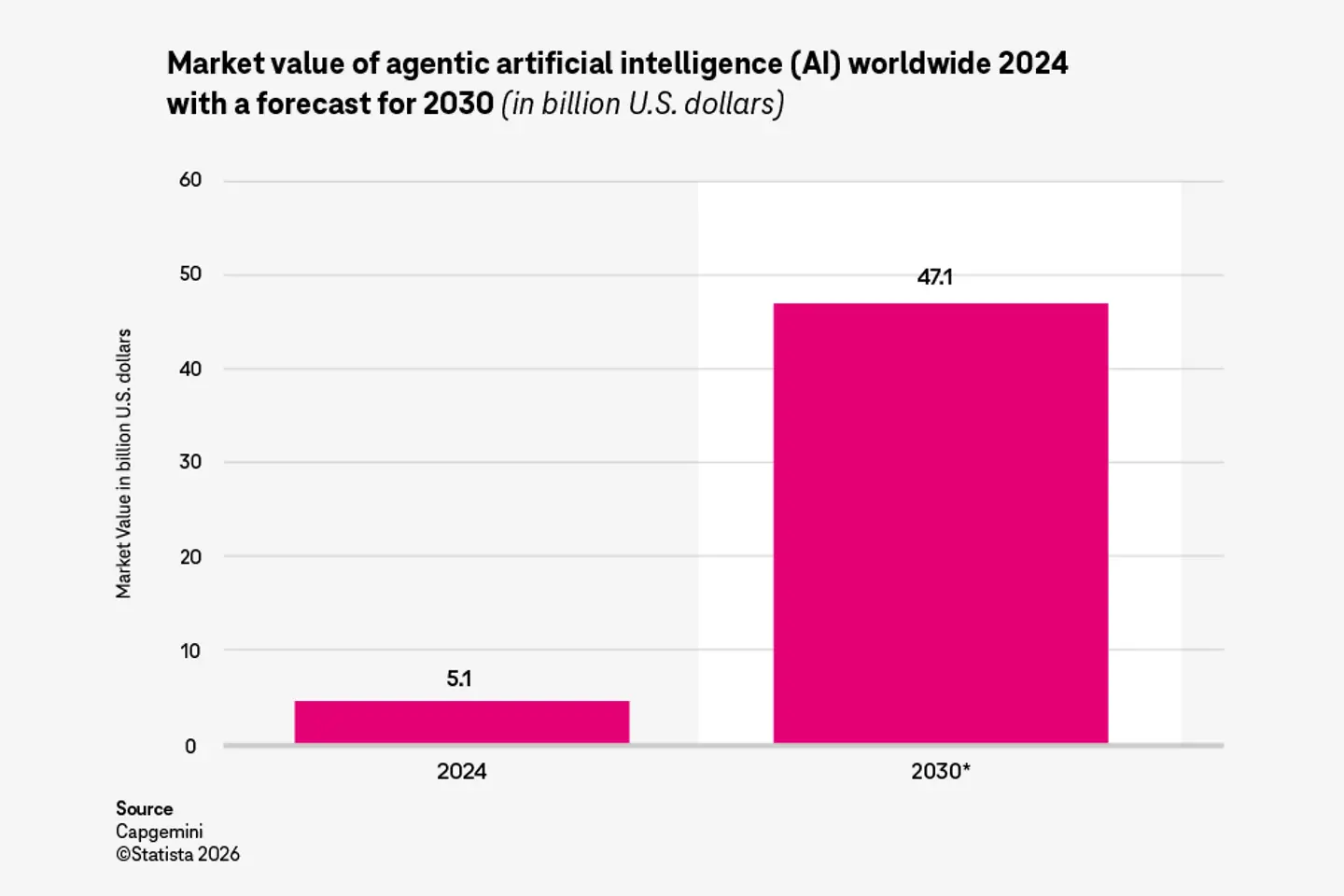
Source: Statista
The current wave of enterprise adoption suggests that businesses are not implementing agentic AI simply to automate individual tasks; they are using it to automate decision-making processes and orchestrate complex workflows. The shift is from AI as a tool that assists employees to agentic AI as a system that can work as a 24/7 available teammate, independently coordinating actions across multiple functions while operating within defined business objectives.
From a strategic perspective, agentic AI is particularly valuable in scenarios where information is fragmented, difficult to verify, or unevenly distributed among participants. AI agents can continuously monitor multiple data sources, cross-reference information, and detect inconsistencies in real-time, helping organizations and consumers make more informed decisions. In industries such as insurance, real estate, and automotive sales, where evaluating options often requires extensive research and due diligence, agentic AI can surface relevant insights far more quickly than manual processes. By drawing on patterns from vast numbers of historical transactions, AI agents can also strengthen negotiations and improve decision-making in areas such as property purchases, financial planning, and other high-value transactions without any fatigue.
What further strengthens the business case for agentic AI is its potential to augment decision quality while lowering operational costs. As a result, businesses are increasingly viewing agentic AI as a mechanism for improving both efficiency and the quality of business outcomes, rather than merely a tool for workforce productivity.
One of the practical challenges of deploying autonomous systems is managing situations where agents encounter obstacles they cannot resolve independently.
An agent may become stuck for several reasons:
To address these situations, organizations typically implement fallback mechanisms such as:
The solution approach should be aligned with the type of agent. Fixing a stalled AI agent generally involves stopping the failed process, resetting its memory or context, and adjusting its instructions or goals to prevent it from falling into repetitive reasoning patterns or execution loops.
Successfully implementing agentic AI in an enterprise environment requires thoughtful planning and a clear understanding of the factors that influence its effectiveness. Key considerations include:
Agentic AI remains in the early stages of adoption, but the momentum is growing rapidly. Advances in reasoning, planning, memory, multimodal capabilities, and interoperability are making autonomous systems increasingly practical for enterprise use. Over the next few years, organizations are expected to move beyond isolated pilots and begin integrating agentic capabilities into core business operations.
Several developments are likely to shape the future:
According to McKinsey,9 the agentic organization will be built around five critical enterprise pillars: business model; operating model; governance; workforce, people, and culture; and technology and data. As these capabilities mature, agentic AI may become a foundational layer of the digital enterprise.
T-Systems offers end-to-end services for building, deploying, and scaling tailored AI and LLM solutions.
Contact us to get started today!
Yes. Agentic AI can exist without generative AI if it uses other forms of traditional AI techniques such as rule-based systems, machine learning models, optimization algorithms, or reinforcement learning. However, modern agentic AI solutions frequently leverage generative AI and large language models because they provide advanced reasoning, planning, and communication capabilities.
Organizations can use agentic AI to automate workflows, improve customer service, optimize operations, support software development, enhance cybersecurity, streamline supply chains, and assist with decision-making. The most effective implementations typically begin with clearly defined business problems and measurable outcomes.
ChatGPT itself is primarily a generative AI application. However, when integrated with tools, memory, workflows, and autonomous action capabilities, it can become part of an agentic AI system.
ChatGPT is based on a large language model (LLM). While it can perform some agent-like tasks when connected to external tools, the underlying technology is an LLM rather than a fully autonomous AI agent.
Agentic AI refers to artificial intelligence (AI) systems that can autonomously pursue goals, make decisions, plan actions, interact with tools, and execute tasks with limited human intervention.
An autonomous IT operations system that detects infrastructure issues, diagnoses root causes, initiates remediation workflows, and verifies successful resolution is an example of agentic AI.
Generative AI creates content such as text, images, code, or audio. Agentic AI uses reasoning, planning, memory, and execution capabilities to pursue goals and perform actions. Generative AI can be a component of agentic AI, but the two are not synonymous.
Agentic behavior is not determined solely by the model itself. Large language models such as GPT, Claude, Gemini, and other advanced foundation models can serve as reasoning engines within agentic systems when combined with memory, planning, tools, and orchestration capabilities.
2 https://www.grandviewresearch.com/industry-analysis/enterprise-agentic-ai-market-report
3 https://www.evidentlyai.com/blog/ai-agents-examples
4 https://www.dataversity.net/articles/preparing-for-the-next-wave-of-ai-agentic-workflows/
5 https://corporate.walmart.com/news/2025/05/29/inside-walmarts-strategy-for-building-an-agentic-future
6 https://meet.aeratechnology.com/aerahub-2025-london-ungated-how-unilever-is-envisioning-the-autonomous-supply-chain-with-agentic-ai
7 https://www.cnbc.com/2025/09/30/jpmorgan-chase-fully-ai-connected-megabank.html
8 https://www.youtube.com/watch?v=ANV3aut3v5A
9 https://www.mckinsey.com/capabilities/people-and-organizational-performance/our-insights/the-agentic-organization-contours-of-the-next-paradigm-for-the-ai-era