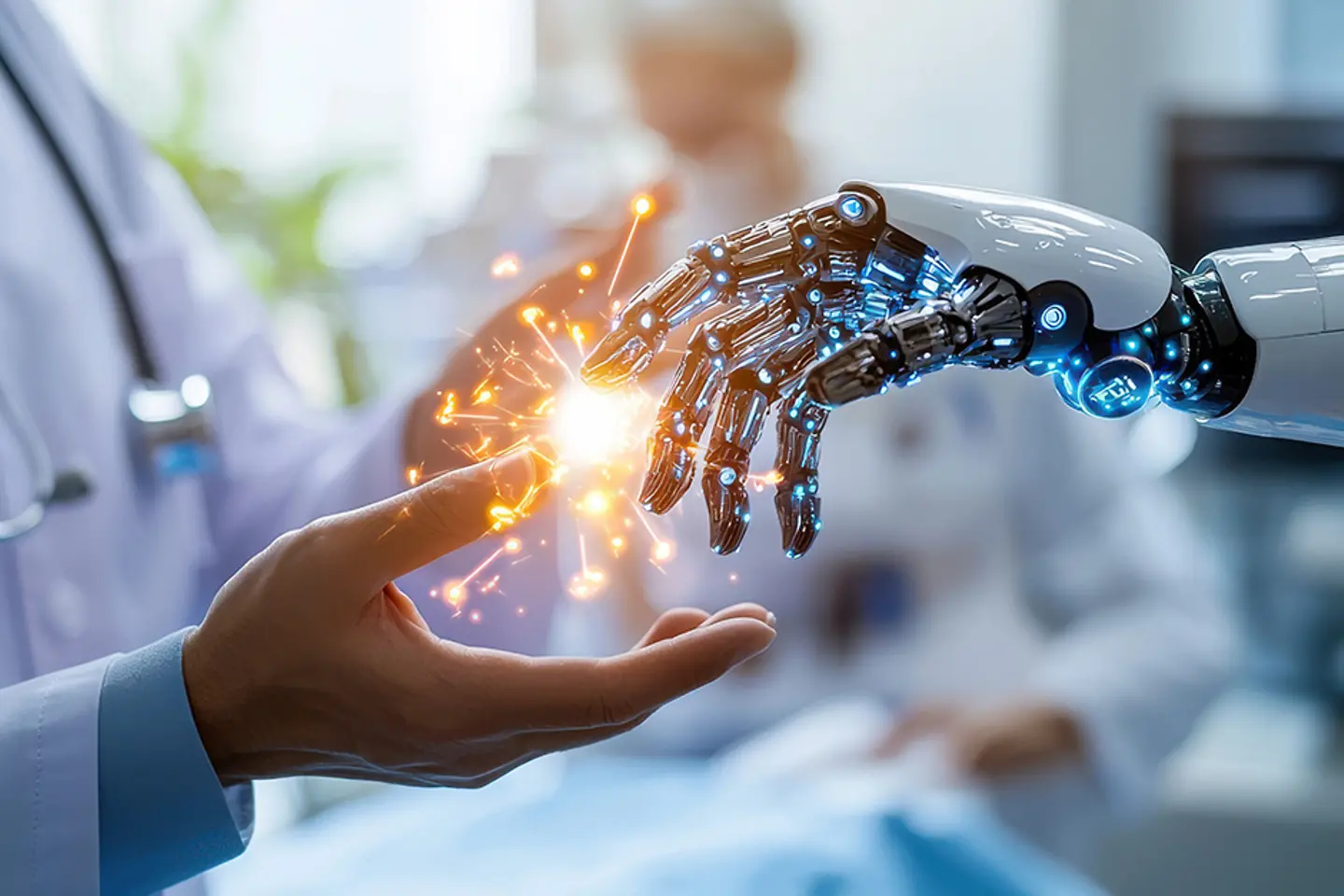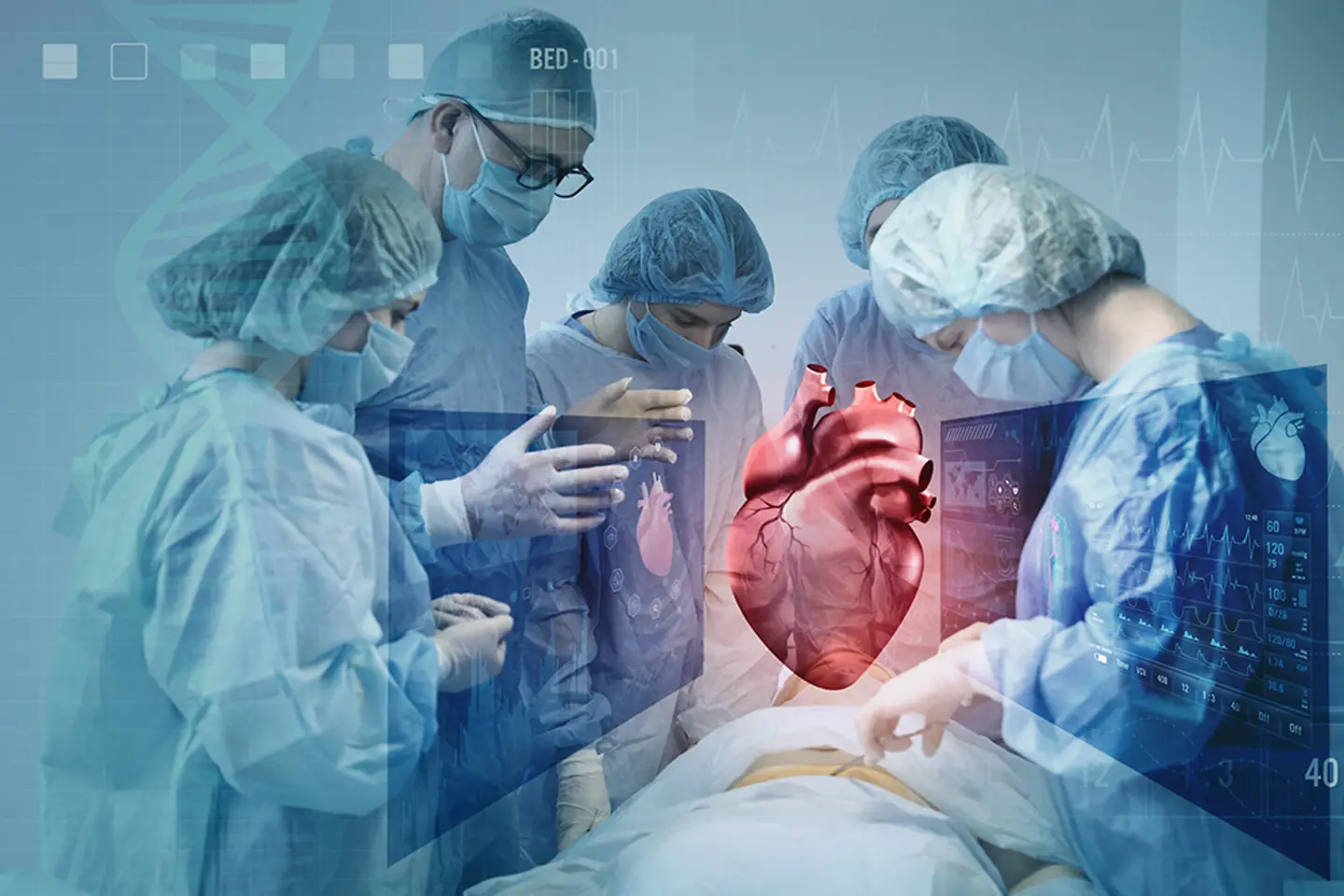
Our AI solutions for the healthcare sector comprise a sovereign AI platform for hospitals and health insurance companies. This combines applications such as AI Receptionist, Talk2EHR and Patient Summary with open data integration (e.g. synedra HCM) and secure T Cloud infrastructure. Instead of isolated individual solutions, it offers a modular system for automation, documentation, and decision support—GDPR-compliant and scalable.
You can display all external content on the website at this point.
I agree that personal data may be transmitted to third-party platforms. Read more about this in our privacy policy.
Discover how Deutsche Telekom and synedra combine global scale with advanced Health Content Management software expertise to reimagine digital healthcare. This powerful partnership ensures secure data management and enables more connected, patient-centric care, helping build a resilient healthcare IT ecosystem.
The AI solutions for the healthcare sector form a scalable platform for innovative AI applications in the healthcare sector. It combines state-of-the-art technologies in a GDPR-compliant environment, including solutions such as AI-supported patient self-anamnesis, automated documentation and natural language search. With its modular structure, it can be tailored to the user's needs, enabling it to specifically address the challenges faced by hospitals and health insurance companies, relieve the burden on medical staff and optimize processes, this ensuring more time for patients.
The AI solutions for the healthcare sector are suitable for all hospitals, health insurance companies and research institutes that are looking for more efficient processes and better data integration. The platform helps to reduce the workload of specialists, automate manual processes and strengthen the focus on patients. Whether for emergency rooms, inpatient clinics or insurance companies – the solution can be flexibly adapted to individual requirements and offers a basis for tapping long-term innovation potential.
The included modules include, for example, the AI Receptionist for the emergency department (AI-supported symptom entry and self-check-in), Patient Summary for quick overviews, Talk2EHR for natural language queries in patient data, AI-assisted Reporting for radiology and the Shockroom assistant for real-time documentation. These solutions combine state-of-the-art technologies such as synedra HCM, the sovereign T Cloud and multi-agent frameworks to increase efficiency and precision. We tailor the content of the platform to meet the customer's specific needs.
Data processing takes place entirely in the sovereign T Cloud Public, which was specially developed for the European market. With the highest security standards such as ISO/IEC 27017/18 and BSI-C5, as well as GDPR-compliant workflows, it guarantees data sovereignty at all levels. In addition, the platform offers functions such as audit logging, user access rights and encrypted data transmission, which guarantee the security and integrity of sensitive health data.
The AI solutions for the healthcare sector are offered flexibly as a cloud service or on-premise solution and seamlessly integrated into existing systems. Thanks to the open architecture, modules such as AI Receptionist or Talk2EHR can be easily connected to software such as synedra HCM. The configuration takes into account the individual requirements of hospitals or health insurance companies, while all existing IT processes and systems can continue to be used without any problems in order to minimize costs and effort.
The AI solutions for the healthcare sector combine sovereign T Cloud infrastructure, AI Foundation Services and Healthcare Data Management in one platform. Instead of isolated AI tools, clinics receive integrated, scalable solutions with a regulatory framework (GDPR, AI Act, MDR) as part of a customized package. This reduces integration effort, increases data security and enables sustainable digitalization. Medical professionals benefit from automation, optimized processes and clear workflows that noticeably reduce the workload.
AI is used along the entire value chain in the healthcare sector, from patient admission to diagnostics and billing. Typical areas of application are clinical documentation, decision support, image analysis, process automation and data integration. Our AI solutions support hospitals and health insurance companies in making information usable more quickly and making processes more efficient.
AI helps to record, structure and evaluate medical information faster. This reduces the workload for medical professionals, speeds up decision-making processes and improves data quality. The greatest added value lies not in the automation of individual tasks, but in the better use of existing data. As a result, AI can support the quality of care without replacing the responsibility of medical staff.
Numerous AI applications are already in use in the healthcare sector today, particularly in medical image analysis, decision support systems and administrative processes. Many of these solutions are approved as medical devices or support non-diagnostic tasks such as documentation and data preparation. Platforms such as our AI solutions for the healthcare sector combine such applications in a secure, regulatory-compliant environment.
Medical AI is subject to strict regulatory requirements in Europe. These include, in particular, the GDPR for the protection of personal data, the EU Regulation on Artificial Intelligence (AI Act) and – for diagnostic or therapeutic applications - the Medical Device Regulation (MDR). Transparency, traceability and secure data processing are crucial. Our AI solutions for the healthcare sector take these requirements into account through sovereign infrastructure, clear governance and auditable processes.
Generative AI makes it possible to automatically structure, summarize and complete medical content. Instead of manual documentation, information from different sources can be consolidated and transferred into standardized formats. This reduces the time required and improves traceability. The professional examination and approval remains with the medical staff.
In the emergency room, AI tools primarily support the admission, documentation and prioritization of patients. Solutions such as AI Receptionist enable digital self-check-in and structured anamnesis, while systems such as the Shockroom Assistant support real-time documentation during treatment. This speeds up processes and relieves the burden on medical staff without changing clinical decision-making responsibilities.
1, 2, 3, 4, 5, 6, 7 The solutions are offered by the following company: Deutsche Telekom Healthcare and Security Solutions GmbH, Friedrich-Ebert-Allee 140, DE-53113 Bonn.