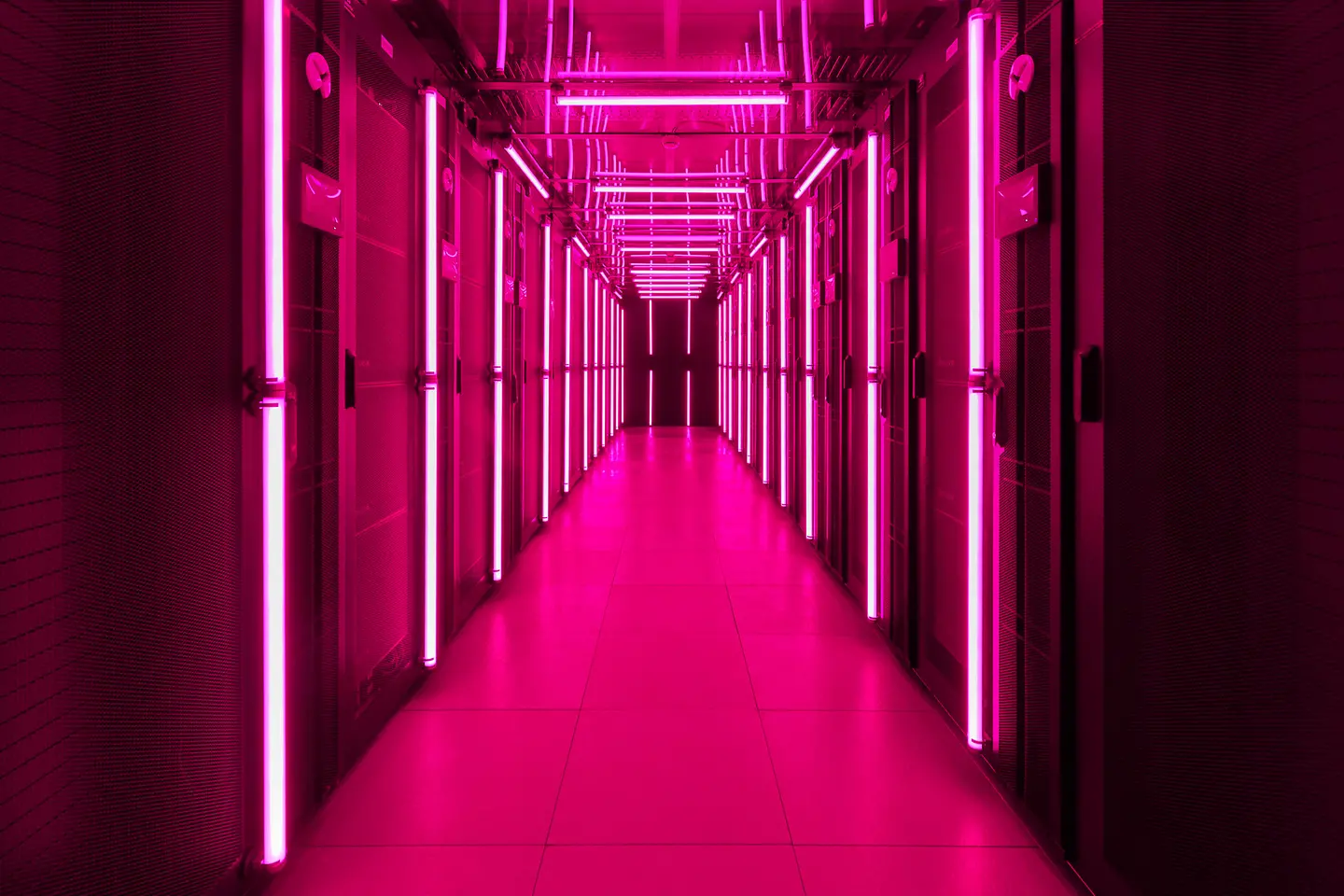
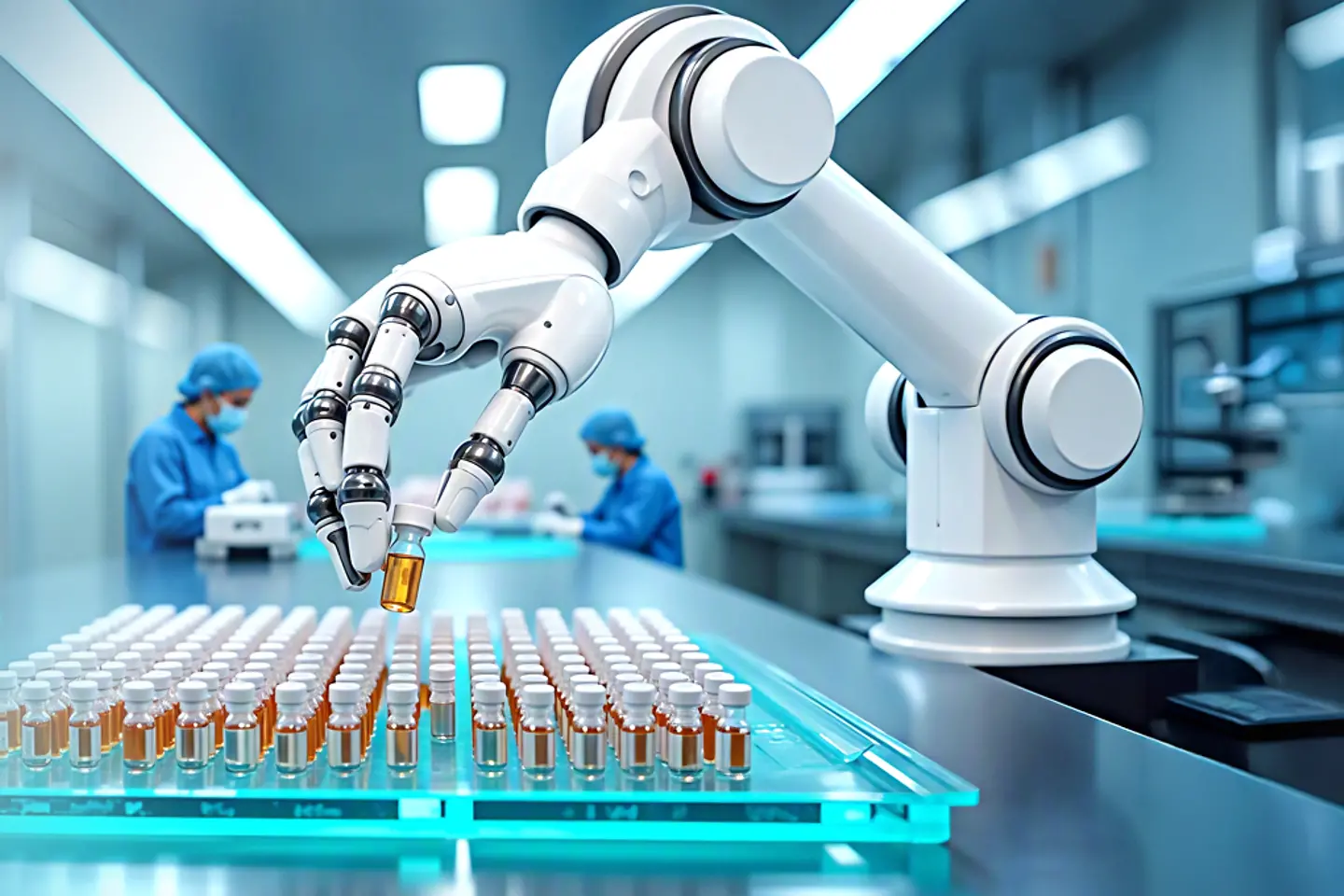
 Image generated with AI
The decisive question is no longer whether Europe needs its own AI infrastructure. It is about what companies make of it. Our Industrial AI Cloud in Munich shows how quickly concrete value creation can emerge from computing power. From engineering and robotics to medicine and research, an ecosystem for industrial AI has grown in just under a year.
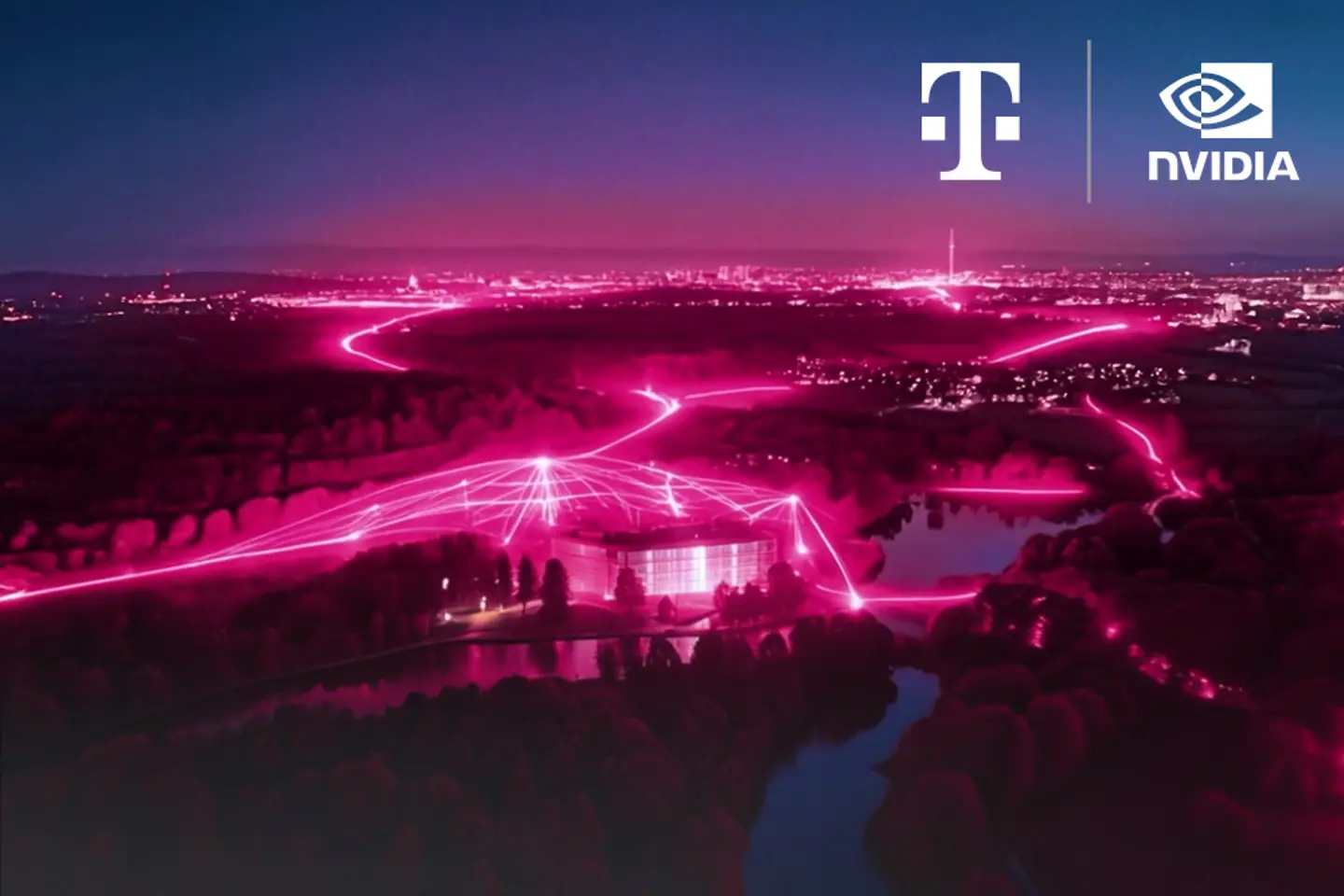
When we announced the build-out in November 2025, the technological dimension was the dominant topic. 10,000 NVIDIA GPUs in Germany make a statement. They increase the available AI computing capacity in Germany by 50 percent in one fell swoop. And they enable AI workloads, operated on German soil, securely, in a sovereign manner, and tailored to the requirements of the European industry.
But even at that point, our ambition was greater. Because nobody digitalizes a factory, develops a new product, or automates a process just because GPUs are sitting somewhere. We also do not see ourselves as mere GPU vendors. Rather, our customers expect us to be able to map the entire AI value chain.
Industrial companies, in particular, need applications. They require software, data, models, platforms, and industry know-how. And they must be able to trust that business-critical information remains protected and that regulatory requirements are met. That is why we designed the Industrial AI Cloud from the outset not as a monolithic data center, but as the core of an ecosystem. The result: the development of a modular AI stack.
Even before our AI Factory launched, it became clear how quickly this ecosystem would take shape: with SAP, Siemens, Agile Robots, Wandelbots, PhysicsX, and Quantum Systems, around 10 companies were already a part of our sovereign AI ecosystem before we even switched on the servers.
Since February, our Industrial AI Cloud in Munich has been up and running. And the demand from our customers was there immediately. They very quickly became interested in the possibilities offered by the first AI Factory for industrial applications on German soil. Just six months later, we were able to report a utilization rate of more than 80 percent. For me, this development shows one thing above all: the question of whether Europe needs sovereign AI infrastructure has been answered. The more exciting question has long been: how quickly can we turn this into concrete applications for companies?
Our customers and partners are leading the way: Agile Robots and PhysicsX were among the first companies to bring their applications to our new infrastructure. In doing so, it quickly became clear how diverse industrial AI can be.
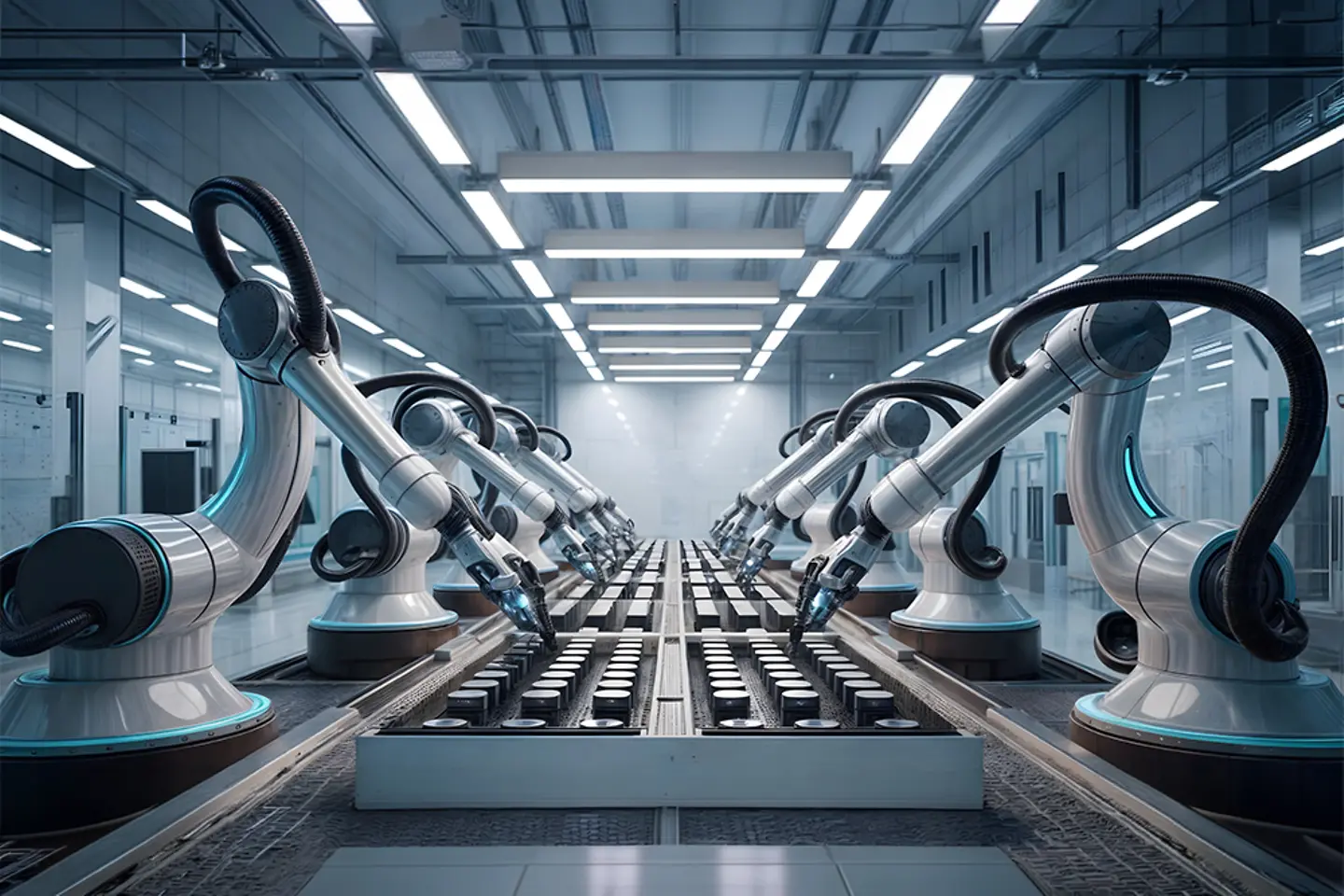
PhysicsX uses AI for technical simulations and thereby for accelerating development processes. Agile Robots combines AI with robotics. Wandelbots, in turn, requires AI computing capacity to connect digital twins of production facilities and manufacturing data with robotics and to develop AI applications for production.
The research project SOOFI also uses our Industrial AI Cloud as its technological foundation. SOOFI stands for "Sovereign Open Source Foundation Models". The initiative develops open, transparent, and adaptable AI models for industrial applications. With SOOFI S, a model with 30 billion parameters has already been created in our AI factory, optimized for German and English texts.
The goal is to scale to 100 billion parameters. The decisive aspect of SOOFI: we combine a European model with sovereign, secure, and scalable computing infrastructure—and turn it into a platform that companies can genuinely use.
The range of applications extends from AI for everyday office use to industrial workflows and sovereign LLMs for the public sector. Companies can connect their own knowledge via Retrieval-Augmented Generation (RAG), specialize models through fine-tuning, integrate tools, and use these to create their own AI applications.
This is precisely where the added value of SOOFI lies: not only providing yet another language model, but also creating the conditions that enable companies to integrate AI into their processes securely, adaptably, and productively. This is how digital sovereignty becomes tangible—from the model to the operations.
Or take Noxtua. The start-up is creating a Legal AI for Europe—fast legal research, smarter contract analysis, and support for the secure drafting of legal documents. With the Industrial AI Cloud, we provide the infrastructure to operate this AI in a secure, sovereign, and scalable way.
Because legal data requires special protection. Especially when it comes to legal documents, contracts, corporate data, or confidential client information, it is not enough to simply run some AI somewhere. Companies in this sector want to be able to trust that their sensitive data does not fall into the wrong hands.
These examples alone already demonstrate the broad range of our AI technology stack: engineering, simulation, robotics, foundation models, legal AI. Industrial AI is not a single technology, and certainly not a single use case.
The market is not simply looking for more computing power. It is looking for ways to turn AI into real business value – at scale, with high performance and digital sovereignty. And everything we are currently seeing in the market suggests that demand for sovereign AI is only going to grow.
In April, EDAG was added as another important building block. The engineering service provider connects virtual product development and physical production in a digital ecosystem. To this end, EDAG uses both our T Cloud and the Industrial AI Cloud. One of the goals is to make modern hardware, high-performance computing, AI training, and simulation more accessible to industrial SMEs. This is an important point. Industrial AI must not be a privilege reserved for very large companies.
The German SME sector, in particular, possesses enormous process knowledge and valuable data. However, the resources to build and permanently operate a high-performance AI infrastructure are often lacking. This is where the cloud changes the economic equation. Capacity can be used when it is needed, rather than first having to build one's own supercomputer infrastructure.
In June, another area of application followed: SupplyOn is connecting its industrial supply chain network with our Industrial AI Cloud. The platform links around 140,000 companies in more than 100 countries. AI is set to automate and accelerate procurement, logistics, and supplier processes, among other things, while sensitive purchasing, production, and supplier data is processed under European control.
This means that the range of applications now extends far beyond the classic single factory: from product development and simulation to robotics and production, all the way to supply chains.
This development becomes particularly clear to me when I look at two of our most recent use cases.
Together with Currenta and Wandelbots, the Environmental Laboratory Automation and Robotics for Analytics (ELARA) project is developing a concept for laboratory automation. Currenta is using this to explore how complex and highly varied workflows in an environmental laboratory can be automated using digital twins and robotics. Before a robot actually enters the laboratory, selected workflows can be virtually tested in the NVIDIA Omniverse. The Industrial AI Cloud provides the computing power required for this. Wandelbots NOVA then opens up the prospect of transferring simulated workflows to real robots.
This may initially sound like a special case. In fact, ELARA exemplifies the direction in which industrial AI is heading: the digital and physical worlds are converging. Simulation, AI, and robotics are becoming a part of a shared development and optimization process.
And then Apheris: this concerns an area where trust and data sovereignty could hardly be more important—medical and pharmaceutical research.
Apheris relies on federated learning. The AI model works locally with the data of the respective clinic. Patient data does not need to leave the clinic. The Berlin-based company then consolidates the locally calculated model parameters in the Industrial AI Cloud.
For me, this is a particularly good example of what sovereign AI actually means. It is not about moving data into a central cloud at any cost. It is about making intelligence available where the data is, while at the same time intelligently connecting computing power, models, and distributed knowledge.
This creates new possibilities for research without sacrificing the protection of highly sensitive information.
Almost a year ago, we had an ambitious idea. Today, in Munich, we are connecting enormous AI computing power with a growing ecosystem of technology companies, software providers, research institutions, and industry.
Robots are learning. Engineers are simulating products. Supply chains are being supported by AI. Legal professionals are working with sovereign legal AI. Laboratories are first testing their future automation processes in the digital twin. Pharmaceutical companies and clinics can collaborate on AI models without centralizing sensitive data.
The market is not simply looking for more computing power. It is looking for a way to translate AI into real value creation—in a powerful, scalable, and sovereign way. And everything we are currently seeing in the market suggests that the demand for sovereign AI is not at the end of its development. On the contrary. We are only at the beginning. That is why we are already planning to expand our AI Factory. We want to significantly expand our capacities in order to offer even more customers the opportunity to develop and operate industrial AI openly, securely, and in a sovereign manner.
You can display all external content on the website at this point.
I agree that personal data may be transmitted to third-party platforms. Read more about this in our privacy policy.
Powered by NVIDIA. Secured by European sovereignty.