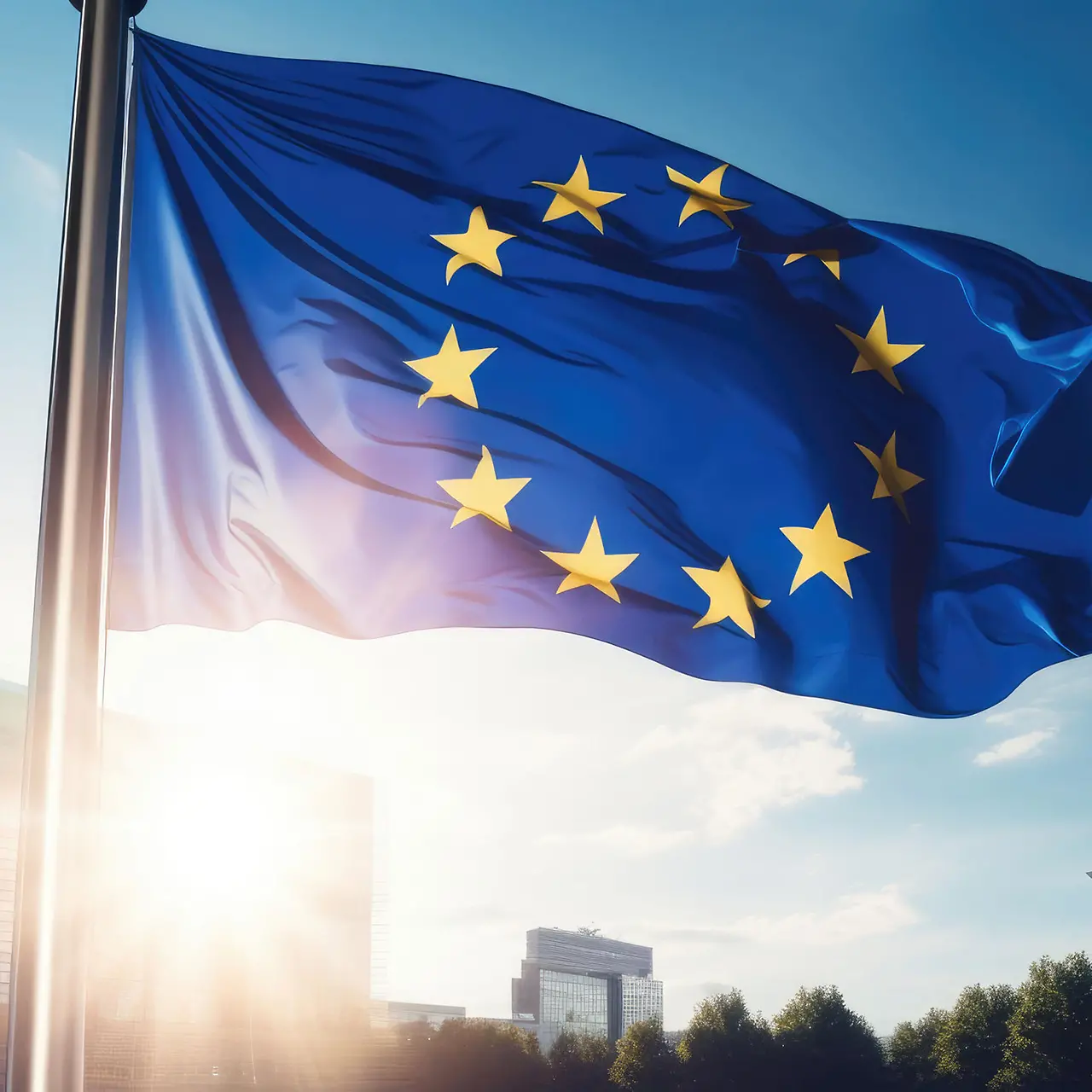
Digital independence is not a luxury. It is a matter of location policy, security policy and a prerequisite for our competitiveness. The world is currently being reshaped, geopolitical tensions are rising and technology is increasingly becoming a strategic power factor. At the same time, in Europe we still heavily depend on providers from the US and China for key digital technologies. That is convenient, but also risky. Therefore, Deutsche Telekom and T‑Systems are, together with partners, creating a European ecosystem of sovereign AI and cloud solutions and infrastructure. Because technological dependence has long become a business risk. Whoever has only one option for cloud and AI has none in an emergency.
We are currently experiencing how quickly the rules of the game can change. Technologies are becoming subject to export restrictions, trade conflicts and geopolitical interests. At the same time, non‑European regulations can affect European data and companies. For executives and political decision‑makers, digital sovereignty is therefore no longer an abstract technology debate. It has become an integral part of risk management. After all, we do not organise resilient supply chains with only a single supplier. Why should we do it differently with the most important digital resources of our time?
That is explicitly not about banning American or Asian technology from Europe. On the contrary: we need the best partners and technologies in the world, but we also need genuine alternatives. Companies and public authorities must be able to decide themselves where their data reside, who can access it, and under which legal jurisdiction it is processed. They must be able to choose which AI models to deploy and how dependent they want to be on individual providers. Sovereignty, for me, therefore does not mean isolation, but choice and the ability to act. That is precisely why we need more cloud and AI “Made in Europe”.
And that is precisely why, at Deutsche Telekom and T‑Systems, we do not only talk about digital sovereignty, but we are building the necessary structures for it. This ranges from cloud and data centers to AI infrastructure and models, as well as security, connectivity and integration. Our claim is clear: European companies and public institutions should be able to use innovative AI without giving up control over their most important data and processes. For that, Europe needs its own technological capabilities and, at the same time, strong partnerships with the best companies in the world. What matters most is that we have the freedom to choose. For me, that is the difference between technological dependence and digital sovereignty.
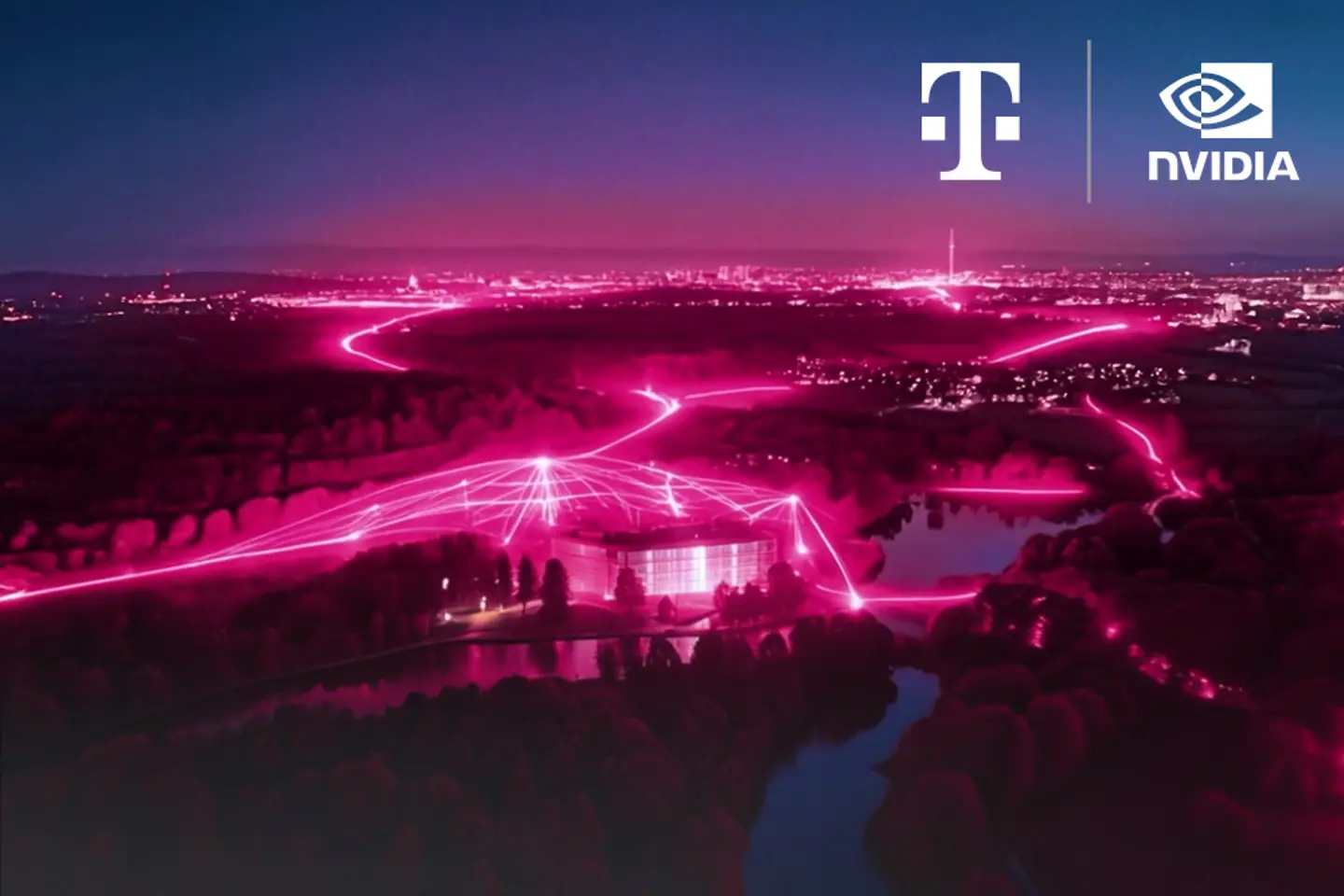
A practical example of this is our AI factory in Munich’s Tucherpark. Together with strong partners such as NVIDIA, SAP and Siemens, we built one of Europe’s largest AI factories there in just six months, investing €1 billion and installing around 10,000 Blackwell GPUs. With this we provide companies, research and the public sector with high‑performance, sovereign computing power. After only a few months of live operation, our Industrial AI Cloud is fully utilized. This shows: we have hit a nerve. There is a strong demand for powerful, sovereign AI infrastructure in Germany. And this demand is growing faster than many expected.
That’s why we are already expanding our AI factory: we are investing another quarter of a billion euros in additional NVIDIA Blackwell Ultra systems of the B300 generation. This doubles the number of chips in this performance class and raises the site’s capacity to 20 megawatts. Companies can use this to train and run large AI models, accelerate complex simulations, and develop applications in the field of physical AI. To me, this rapid expansion is primarily a signal: AI has arrived in the economy. Now we must ensure that the value creation also takes place in Germany and Europe.
Exactly here lies a special opportunity for Europe. Our greatest treasure is not the data of the public internet. It is the data of our industry: from factories, machines, vehicles, logistics and development. This data is highly specialized, valuable and often unique. Whoever develops industrial AI from it creates a competitive advantage that cannot simply be copied. Europe therefore does not have to become the next Silicon Valley. We must translate our own strengths into the AI age.
What this means in practice is shown by the applications of our customers and partners: agile robots connect AI with robotics, PhysicsX uses our infrastructure for technical simulations, SOOFI trains its European language model on it, and other industrial partners such as Siemens are unlocking new possibilities for development and production.
For SMEs this is crucial, because not every company can buy thousands of GPUs or operate its own AI data center. With a shared infrastructure, high‑end AI becomes accessible to companies that could never afford these investments on their own. From computing power concrete applications arise, from applications productivity, and from productivity new value creation. In this way, digital sovereignty becomes an economic advantage.
Sovereign AI, however, must not remain a German single project. With the Swiss AI factory we therefore take the next step in Switzerland and bundle our AI activities there as well in a sovereign Enterprise‑AI platform. Our offering ranges from GPU infrastructure and various models to productive applications and AI agents. Our customers can decide themselves which models to use, where their data is processed, and how to integrate their AI into existing IT and business processes. This control is essential, especially for companies with sensitive data and operators of critical infrastructure. Because a data center in Europe alone does not make an AI sovereign for long.
Our Swiss AI factory therefore combines local data sovereignty with European scaling. GPU capacities are available in our own Swiss data centers, companies can deploy open-source language models or their own models and adapt them to individual requirements via fine-tuning or Retrieval-Augmented Generation (RAG). An AI gateway supports security and Governance requirements, for example through anonymization, access controls and audit logs.
For particularly compute-intensive applications, customers can also access the more than 10,000 GPUs available through our Industrial AI Cloud in Germany. This allows businesses to choose between Swiss-based data processing and high-performance computing capacity in Europe without having to leave the Deutsche Telekom and T-Systems ecosystem. This is digital sovereignty in practice: local control and European scalability go hand in hand. And we are already considering expanding our infrastructure to additional T-Systems locations across Europe.
Hardware and data centers alone will not make Europe sovereign. We also need powerful models, software and AI competence from Europe. Therefore, through T.Capital we have now invested €100 million in the French AI start‑up Mistral.
But hardware and data centers alone will not make Europe sovereign. We also need powerful models, software and AI expertise from Europe. That’s why, through T.Capital, we have now invested €100 million in the French AI start‑up Mistral. This creates the basis for a strategic partnership that links our sovereign infrastructure, our customer relationships and our integration expertise with European AI models and enterprise software. The focus is on businesses and the public sector, especially industry and regulated areas. European AI models on sovereign infrastructure in Europe: this exact combination is what we must now build consistently.
Here we should discard the notion that companies need the biggest and most powerful AI model in the world for every task. What matters is which model reliably, securely and economically solves a concrete use case. This is precisely where open European models such as Mistral Large 4 have a strength. They can be run on own—or sovereign—infrastructure, linked with corporate knowledge and adapted to specific tasks. Thus a machine builder can use AI with sensitive design data and still decide where the model and the data run. To me, that is far more relevant than the highest score in any AI benchmark test.
With Mistral we want to further expand this freedom of choice. Companies and authorities should be able to deploy the appropriate model for each use case without having to hand over sensitive data. They can train their own models, simulate production processes, or integrate AI into ongoing operations, open, secure and sovereign. Our Industrial AI Cloud provides the computing power for this and the T Cloud the easy access. In this way we connect European AI with European infrastructure and bring it into everyday industrial life.
Because true digital sovereignty only emerges when Europe has its own options across the entire technological value chain. Computing power is part of it, but equally models, software, data, security and the know-how to integrate them into industrial and administrative processes. We will continue to work with non‑European technology companies, and that is the right approach. But partnership works best on equal footing and not out of dependency. Therefore our goal must be a European AI ecosystem that is open to the world, yet possesses strong technological capabilities of its own. Whoever wants choice must create alternatives.
This also applies to the cloud world! Because AI is only part of the task. Companies simultaneously need data storage, connectivity, security and integration competence. That’s exactly what our T Cloud portfolio aims at: With T Cloud Public we offer European Public Cloud Solutions for high requirements on security and compliance. It is operated in certified data centers in Germany, the Netherlands and Switzerland. T Cloud Private, on the other hand, creates a secure Private Cloud environment and supports, among other things, SAP workloads, while the Industrial AI Cloud provides easy access to our broad AI ecosystem.
Companies therefore do not get off‑the‑shelf Sovereignty, but can choose the appropriate environment based on data, workload and protection needs. And this is precisely where a more modern understanding of digital sovereignty lies: not everything has to run in the same cloud. Companies need a robust portfolio of Public, Private and sovereign cloud and AI Solutions and must be able to actively distribute their risks.
That this is not theory is especially demonstrated by public administration: Our T Cloud Public is part of a framework agreement for cloud and AI services for the federal government, the states and municipalities and enables public institutions a standardized access to sovereign cloud and AI resources. In the German state of Baden-Württemberg, for example, we have migrated the statewide learning platform Moodle to T Cloud Public.
Thus, in very practical terms, it becomes clear what digital sovereignty can achieve: modernising critical applications, using high‑performance cloud technology, and at the same time meeting high demands on data protection and security. That is exactly the combination Germany needs right now. Sovereignty must not only sound politically correct, but work in everyday life.
In Europe, we already have many of the assets we need to succeed in the AI era: a strong industry, excellent research, world‑class engineers, innovative start‑ups and a huge internal market. More importantly, we possess something that becomes increasingly valuable in the AI age: decades‑long built industrial knowledge and unique data from real production processes. We must not underestimate this treasure. The next wave of AI will not be decided only by the best chatbot, but in factories, vehicles, energy grids, hospitals and administrations. That is precisely where Europe is strong. And that is exactly where we must translate our technological sovereignty into economic strength.
What we often lack is speed, scaling and the courage to take our technological future into our own hands. Therefore we must not only regulate our digital future, but also build it. This includes our own cloud capacities, AI infrastructure, European models, secure data rooms, high‑performance networks and international partnerships where Europe sits confidently at the table. Munich shows that demand exists, Switzerland shows that sovereign AI is scalable, cooperation with the French company Mistral strengthens the European model layer and T Cloud brings European sovereignty into everyday operations. It is not about doing everything alone. It is about never having to rely on others to do everything for us.
In the end, it is about whether our industry remains competitive in the AI age, whether our companies can protect their most important data and know-how, whether our authorities remain digitally capable of action, and whether innovation, jobs and value creation will continue to arise in Europe. I am convinced that Europe has what it takes to succeed in AI, cloud technology and digital sovereignty. The technologies are here. The companies are here. And the demand is here. Now we need to turn that potential into scale.