
The agreement will enable Spain’s fourth-largest bank to make agentic AI a core capability across the Group, based on an open, interoperable model designed to evolve over the long term. Banco Sabadell will retain its technological autonomy as its AI strategy evolves, avoiding structural dependence on a single provider and facilitating the adoptioncloud services designed to meet sovereignty requirements
Banco Sabadell, Spain’s fourth-largest banking group, aims to accelerate the adoption of agentic AI at scale and establish AI as a cross-functional, sustainable capability across the Group, while also driving operational efficiency and improving the experience of the seven million customers it serves. To achieve this, it has entered into an agreement with T-Systems, the digital services division of Deutsche Telekom Group and one of Europe’s major clouds hyperscalers, to build the technological and governance foundations needed to scale this new generation of AI while maintaining control, security and architectural flexibility.
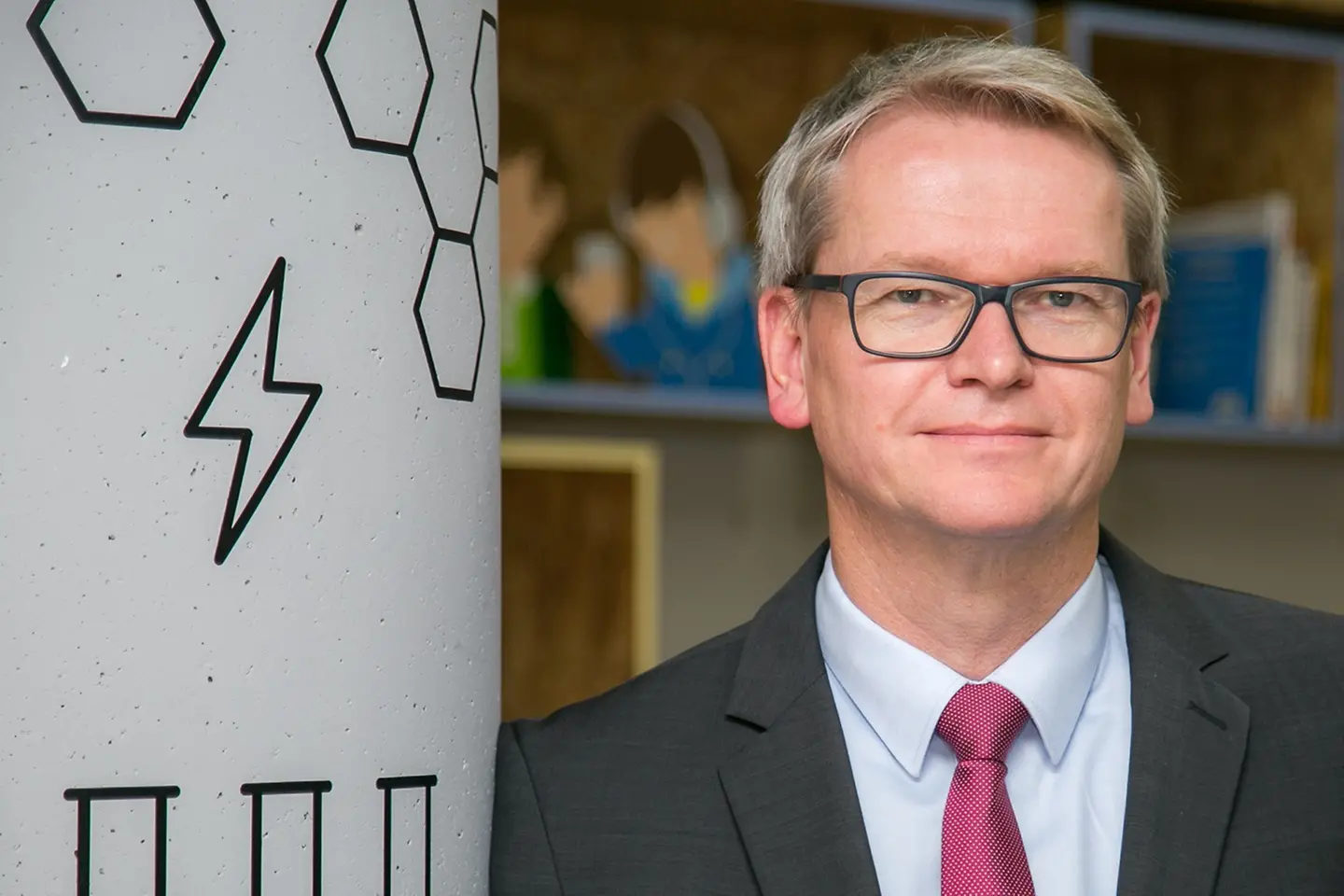
This solution enables us to integrate new agentic capabilities into our AI technology platform and accelerate our ability to transform the business, improving productivity and delivering greater impact for our customers, while at the same time preserving our independence and flexibility in relation to the AI models available on the market.
Rüdiger Schmidt, CTO at Banco Sabadell
The drive to advance AI forms part of Banco Sabadell’s new strategic priorities to strengthen its digital transformation. Under the agreement, the bank will use T-Systems’ Agentic AI platform, developed in Europe for European companies with a sovereign approach, to deploy use cases that can be extended to new processes and entities across the banking group while maintaining a consistent framework for security, governance and oversight. This will enable Banco Sabadell to accelerate the launch of new AI initiatives without having to build the capabilities required for their industrialisation from scratch.
At a time when financial institutions are moving beyond pilot projects towards the industrial-scale application of AI across business processes, operations and customer services, one of the key pillars of this agreement is to preserve Banco Sabadell’s technological autonomy as its AI strategy evolves.

In a rapidly evolving economic and financial landscape, the real opportunity presented by artificial intelligence lies in turning it into an enterprise-wide capability that is fully embedded in the business and can operate securely, sustainably and at scale. This partnership enables us to support Banco Sabadell on that journey by combining open technology with a sovereign approach, helping AI become a strategic driver of competitiveness, innovation and efficiency while remaining firmly under the bank’s control.
The platform is designed to govern and control AI agents built using different technologies and models and integrate them with corporate systems. This enables the bank’s business teams to manage, monitor, optimise and hyperautomate processes at scale, while meeting stringent regulatory requirements.
In addition, the platform is built on an open, modular and interoperable architecture designed to operate across different technology environments and to select models, components and infrastructure based on performance, cost, security, criticality and compliance requirements. This approach avoids structural dependence on a single provider (vendor lock-in) and gives the bank the flexibility to evolve its AI capabilities over the long term, while also enabling the adoption of sovereign cloud capabilities and strengthening control over data, operations and critical technology assets.
The platform also natively addresses a significant proportion of the requirements needed for deployment, helping accelerate implementation and allowing additional efforts to focus on Banco Sabadell’s specific capabilities and needs.
Through this partnership, Banco Sabadell and T-Systems are laying the foundations to industrialise agentic AI in a secure and open way, with a sovereign approach and an architecture designed to scale alongside the Group’s evolving needs and support the financial sector’s transition towards a new generation of intelligent services.