

A production line suddenly grinds to a halt. A critical pump fails without warning. A train is taken out of service because of an unexpected component issue. Across industries, these scenarios have one thing in common: they are expensive, disruptive, and often preventable.
For decades, organizations have approached maintenance in one of two ways. They either waited until equipment broke down and then fixed it, or they performed maintenance at scheduled intervals whether it was needed or not. Both approaches have significant drawbacks. Reactive maintenance can lead to costly downtime, while preventive maintenance often results in replacing components that still have useful life remaining.
Today, a different approach is gaining momentum. Powered by Industrial IoT, cloud computing, advanced analytics, and artificial intelligence (AI), predictive maintenance enables organizations to anticipate failures before they happen. Instead of relying on assumptions or fixed schedules, maintenance decisions are based on actual equipment condition and operational data.
The results are already being seen across industries. Railway operators such as Deutsche Bahn are using AI and analytics to improve infrastructure reliability across vast asset networks. Manufacturers including BlueScope Steel have successfully scaled predictive maintenance programs from pilot projects to global deployments. Meanwhile, organizations working with Siemens have used AI-powered maintenance solutions to identify equipment issues months before failure, helping avoid costly production disruptions and generating measurable business value.
The business case is compelling. According to Deloitte's smart manufacturing research, predictive maintenance can reduce unplanned downtime by as much as 53%, decrease defects by 79%, and lower lost sales by 49% compared with traditional maintenance approaches.1
As industrial operations become increasingly connected, predictive maintenance is evolving from a maintenance strategy into a core component of Industrial AI. Organizations are no longer just monitoring assets. They are building intelligent systems capable of learning, predicting, and continuously optimizing operations.
This article explores what predictive maintenance is, how it works, why it matters, and how organizations are using AI to unlock new levels of reliability, efficiency, and resilience, from factory floors and rail networks to energy infrastructure and smart industrial operations.

Predictive maintenance, often abbreviated as PdM, is a maintenance strategy that uses real-time equipment data, analytics, and artificial intelligence to predict when an asset is likely to fail.
Instead of performing maintenance according to a fixed calendar or waiting for equipment to break down, organizations continuously monitor machine conditions and intervene only when data indicates a potential issue. The goal is simple: perform maintenance at the right time.
This approach relies on information collected from sensors, control systems, maintenance records, operational data, and environmental conditions. Advanced algorithms analyse this information to identify patterns that indicate wear, degradation, or impending failure.
Think of it as the industrial equivalent of a health monitoring system. Rather than scheduling a medical procedure every six months regardless of need, predictive maintenance continuously evaluates the condition of the equipment and recommends action only when warning signs appear.
The concept has become increasingly important as organizations embrace digital transformation. According to Grand View Research, the global predictive maintenance market is expected to exceed $98 billion by 2033, driven by growing adoption of AI, IoT, and connected industrial systems.2
To understand predictive maintenance, it helps to compare it with older maintenance approaches.
Reactive maintenance follows a "fix it when it breaks" philosophy. While this approach minimizes upfront maintenance costs, it often results in unexpected downtime, production losses, emergency repairs, and safety risks.
Preventive maintenance improves upon reactive maintenance by scheduling maintenance activities at predetermined intervals. Components are inspected, repaired, or replaced according to a timetable.
While preventive maintenance reduces the risk of sudden failures, it introduces a different challenge. Equipment may be serviced too early, resulting in unnecessary costs and wasted resources. Predictive maintenance sits between these approaches. Maintenance activities are triggered by actual equipment condition rather than assumptions or schedules.
The distinction may appear subtle, but the business impact is significant. Imagine two identical industrial motors. In a preventive maintenance program, both motors might be serviced every six months. In a predictive maintenance program, sensors continuously monitor vibration, temperature, and power consumption. One motor may require attention after four months because of abnormal behaviour, while the second motor may continue operating efficiently for another year.
By aligning maintenance with actual asset condition, organizations reduce unnecessary interventions while minimizing the risk of unexpected failures. According to Deloitte, predictive maintenance can reduce downtime by an additional 19% compared with traditional preventive maintenance programs.3
What truly sets predictive maintenance apart is precision. Traditional maintenance strategies focus primarily on schedules and historical averages. Predictive maintenance focuses on real-time operational reality. Instead of asking, "When should we service this asset?" organizations ask, "What is this asset telling us right now?" That shift in perspective transforms maintenance from a cost center into a strategic business capability.
Modern industrial operations operate under constant pressure to increase productivity, reduce costs, improve sustainability, and remain resilient against disruption. At the same time, assets are becoming more complex and interconnected. A single equipment failure can trigger a domino effect across production lines, supply chains, and customer commitments. Predictive maintenance addresses this challenge by enabling organizations to detect problems before they escalate.
Downtime is one of the most expensive events in any industrial environment. A single unexpected failure can halt production, delay deliveries, and create cascading operational challenges.
One global automotive manufacturer experienced recurring failures in robotic welding equipment. By implementing predictive maintenance using vibration and current monitoring sensors, engineers identified abnormal motor behaviour weeks before failures occurred. Maintenance could be scheduled during planned production pauses rather than emergency shutdowns. The result was higher production availability and significantly fewer disruptions.
Research from Deloitte indicates that organizations implementing predictive maintenance report up to 53% lower unplanned downtime compared with traditional maintenance approaches.4
Industrial assets represent significant investments. Replacing turbines, locomotives, manufacturing robots, compressors, or transformers can require millions of dollars in capital expenditure.
Predictive maintenance helps extend asset life by identifying issues early, before minor wear develops into major damage. For example, a bearing showing early signs of vibration can be replaced before excessive wear damages the surrounding machinery. Addressing problems at an early stage often prevents expensive secondary failures and extends the operational lifespan of the entire asset.
Maintenance budgets are under increasing scrutiny. Traditional maintenance often results in unnecessary inspections, premature component replacements, and inefficient labour utilization. Predictive maintenance enables organizations to focus resources where they are needed most.
According to Deloitte's 2024 findings, predictive maintenance programs can reduce maintenance costs while simultaneously improving reliability and operational performance. Organizations also report inventory reductions ranging from 10% to 30% because spare parts can be managed more strategically.5
The true cost of downtime extends far beyond repair expenses. Lost production, missed deliveries, customer dissatisfaction, quality issues, and reputational damage can quickly multiply the financial impact. Industrial manufacturers lose approximately $50 billion annually due to unplanned downtime. Equipment failures account for a substantial share of these losses.6
This explains why predictive maintenance has moved from a technical initiative to a boardroom priority, saving millions of euros and dollars. For instance, a global automotive manufacturer monitored more than 10,000 machines across multiple sites using predictive maintenance. The company identified equipment issues months before failure, reduced unnecessary maintenance activities, achieved ROI in less than three months, and generated tens of millions in downtime savings.7
The benefits extend beyond maintenance teams. Operations gain greater predictability. Supply chain teams experience fewer disruptions. Production planners gain confidence in equipment availability. Sustainability teams benefit from improved asset utilization and reduced waste.
According to Deloitte, organizations implementing predictive maintenance often improve labour productivity by between 5% and 20%.8 The ripple effects can be felt across the entire enterprise.
Perhaps the most compelling argument for predictive maintenance is its ability to generate measurable business value. Consider the example of a wind farm operator managing hundreds of turbines spread across remote locations. Traditionally, technicians travelled to sites according to maintenance schedules. Many visits revealed no issues.
After implementing predictive analytics and remote condition monitoring, maintenance activities became targeted and data-driven. Service teams were dispatched only when early indicators suggested potential component degradation. The result was lower maintenance expenditure, reduced travel costs, and improved turbine availability. In many organizations, predictive maintenance quickly evolves from an operational initiative into a strategic investment because the return extends far beyond maintenance savings.
Every equipment failure tells a story. Long before a motor seizes, a pump breaks down, or a transformer fails, subtle warning signs begin to emerge. A bearing may vibrate slightly more than usual. A machine may draw more power than normal. Temperatures may gradually increase. Individually, these signals may appear insignificant. Together, they can reveal a developing problem.
Predictive maintenance is fundamentally about identifying those signals early enough to take action. Unlike traditional maintenance approaches that rely on schedules or assumptions, predictive maintenance continuously evaluates the health of equipment. It combines operational data, sensor information, historical maintenance records, and advanced analytics to estimate the future condition of an asset. The process can be broken into four key stages: monitoring, data collection, analysis, and action.
At the heart of every predictive maintenance program lies condition monitoring. Condition monitoring refers to the continuous observation of equipment health through measurable indicators such as vibration, temperature, pressure, lubrication quality, acoustic signals, electrical performance, and operational behaviour.
Think of condition monitoring as the nervous system of an industrial operation. Without visibility into what equipment is experiencing, it becomes impossible to anticipate failures. A good example comes from the railway industry. Modern trains generate enormous amounts of operational data through onboard sensors. Wheelsets, braking systems, bearings, and traction components are continuously monitored for signs of degradation. Rather than waiting for scheduled inspections, maintenance teams can identify abnormal patterns and intervene before failures affect operations.
Managing railway infrastructure is a complex challenge when thousands of assets are spread across vast networks and even small failures can affect passenger services. Deutsche Bahn has been using advanced analytics and AI to evaluate maintenance data from more than 5,000 stations and hundreds of thousands of infrastructure assets. By identifying recurring fault patterns and emerging maintenance risks earlier, Maintenance teams can prioritize interventions before minor issues develop into service disruptions. The initiative demonstrates how condition monitoring and data-driven maintenance can improve reliability across large-scale transportation networks while making more efficient use of maintenance resources.9
This approach has become increasingly important as rail operators seek to improve reliability while controlling maintenance costs. In one recent rail monitoring project, AI-enabled fault detection achieved close to 90% prediction accuracy for identifying emerging equipment issues before they became operational failures.10 The lesson applies across industries. Visibility creates predictability.
Condition monitoring can be applied to virtually any critical asset where failures create operational, financial, or safety consequences.
Common applications include:
The broader the operational impact of a failure, the stronger the case for predictive maintenance.
Predictive maintenance programs live or die by the quality of their data. Artificial intelligence may generate predictions, but those predictions are only as reliable as the information feeding the models.
Modern industrial environments generate enormous volumes of information. Sensors installed on equipment collect real-time measurements including:
At the same time, organizations capture operational information from industrial control systems, enterprise asset management platforms, maintenance records, and production systems. A single wind turbine can generate thousands of operational data points every second. A modern manufacturing plant may generate terabytes of equipment data each day. The challenge is no longer collecting information. The challenge is identifying which data matters.
Once data is collected, advanced analytics begin searching for patterns. Some patterns are obvious. For example, a sudden spike in motor temperature may immediately indicate a problem. Others are more subtle.
A gradual increase in vibration combined with slightly higher power consumption and declining output quality may indicate bearing degradation that would otherwise go unnoticed. Machine learning models excel at detecting these hidden relationships because they can analyse thousands of variables simultaneously. This capability enables organizations to move beyond simple threshold-based alerts toward true predictive intelligence.
One of the most overlooked challenges in predictive maintenance is data quality. Many organizations begin their predictive maintenance journey expecting artificial intelligence to solve maintenance problems automatically. However, poor data often becomes the biggest obstacle.
Common issues include:
According to research from Gartner, poor data quality continues to be one of the leading causes of AI project underperformance across industries. Successful predictive maintenance programs invest as much effort in data governance as they do in analytics.
The most mature organizations go beyond equipment data alone. They combine machine information with process data, environmental conditions, production schedules, and operational context. Consider a manufacturing plant where machine temperatures rise unexpectedly. Viewed in isolation, this might indicate a maintenance issue. However, when analysed alongside production data, the increase may simply reflect higher throughput requirements during a peak production period.
Context transforms data into insight. This is where Industrial AI begins to demonstrate its value. Rather than evaluating individual signals, AI models understand relationships across entire operational environments.
Predictive maintenance has existed conceptually for decades. What has changed is the technology available to make it practical at scale. Today's predictive maintenance programs are powered by a combination of Industrial IoT, cloud computing, AI, edge processing, and advanced analytics. Together, these technologies form the foundation of modern asset intelligence.
Industrial IoT sensors
Industrial IoT sensors are the eyes and ears of predictive maintenance. They continuously monitor physical conditions and transform them into digital information that can be analyzed. Sensor costs have fallen dramatically over the past decade, making large-scale deployments increasingly feasible across industrial environments.
According to McKinsey, advances in sensor technology and industrial connectivity are accelerating adoption of predictive maintenance across manufacturing and infrastructure sectors.
Cloud platforms
Predictive maintenance generates vast amounts of data. Cloud platforms provide the storage, computing power, and scalability required to process this information efficiently.
Rather than maintaining isolated monitoring systems for individual assets, organizations can aggregate data from thousands of machines across multiple locations into a unified environment. This creates a single source of truth for asset performance.
Edge computing
Not every maintenance decision can wait for cloud processing. In environments where milliseconds matter, edge computing enables data analysis closer to the asset itself. For example, a critical manufacturing machine experiencing abnormal vibration may require immediate intervention. Edge-based analytics can identify the anomaly locally and trigger alerts before data even reaches the cloud.
Artificial intelligence and machine learning
AI is the engine that transforms monitoring into prediction. AI systems learn from historical equipment behavior and continuously refine their understanding of failure patterns. Unlike traditional rules-based systems, machine learning models improve as more data becomes available. This allows organizations to detect increasingly subtle indicators of future failures.
Digital twins
Digital twins are virtual representations of physical assets. By combining operational data with simulation models, organizations can predict how equipment will behave under different conditions.
A utility operator, for example, can model transformer performance under varying loads and weather conditions, helping maintenance teams identify potential issues before they affect service reliability.
Digital twins are increasingly becoming a cornerstone of advanced predictive maintenance strategies because they allow organizations to test scenarios without impacting real-world operations.
Collecting data is relatively easy. Creating business value from data is much harder. The real power of predictive maintenance emerges when organizations transform information into actionable decisions.
Machine learning models identify relationships that humans might never detect. For example, a specific combination of temperature fluctuations, vibration changes, and power consumption may consistently precede motor failures.
By learning from historical incidents, algorithms can recognize these patterns long before a breakdown occurs. One major energy company used machine learning to monitor thousands of rotating assets across multiple facilities. Instead of relying on routine inspections, maintenance teams received risk scores indicating which assets required attention. The result was improved reliability and more efficient use of maintenance resources.
Building an algorithm is only the beginning. Organizations must also integrate predictive insights into everyday operations. A prediction has little value if maintenance teams cannot act upon it.
Successful deployments connect AI-generated insights directly to maintenance workflows, work order systems, and operational processes. This ensures that predictions translate into measurable business outcomes.
Predictive maintenance algorithms are typically trained using historical equipment data. The objective is to identify patterns associated with previous failures and then apply those lessons to future scenarios.
Models may estimate:
As more data becomes available, models become increasingly accurate.
The final step is operationalization. Predictions must reach the right people at the right time. Modern predictive maintenance platforms often generate automated alerts, maintenance recommendations, and prioritized work orders.
Instead of drowning teams in data, they provide actionable guidance. The most advanced systems are now beginning to automate parts of the decision-making process itself. This evolution represents a significant step toward Industrial AI, where systems not only identify problems but also recommend or initiate corrective actions.
For dairy producer Sachsenmilch, unexpected equipment failures can quickly disrupt production schedules and affect operational efficiency. As part of a predictive maintenance initiative with Siemens, AI models were trained using machine and process data to identify early signs of equipment degradation. During the project, the system detected an impending failure in a critical production pump well before it reached the point of breakdown. The early warning allowed maintenance teams to intervene during a planned maintenance window rather than responding to an emergency outage. The success of the project helped validate the business value of AI-driven maintenance and encouraged broader adoption of data-driven operational practices across the facility.11
In many ways, predictive maintenance serves as one of the clearest examples of Industrial AI delivering measurable business value today. Organizations start by monitoring equipment health. Over time, they build intelligent operational systems capable of predicting, learning, optimizing, and continuously improving performance across the enterprise.
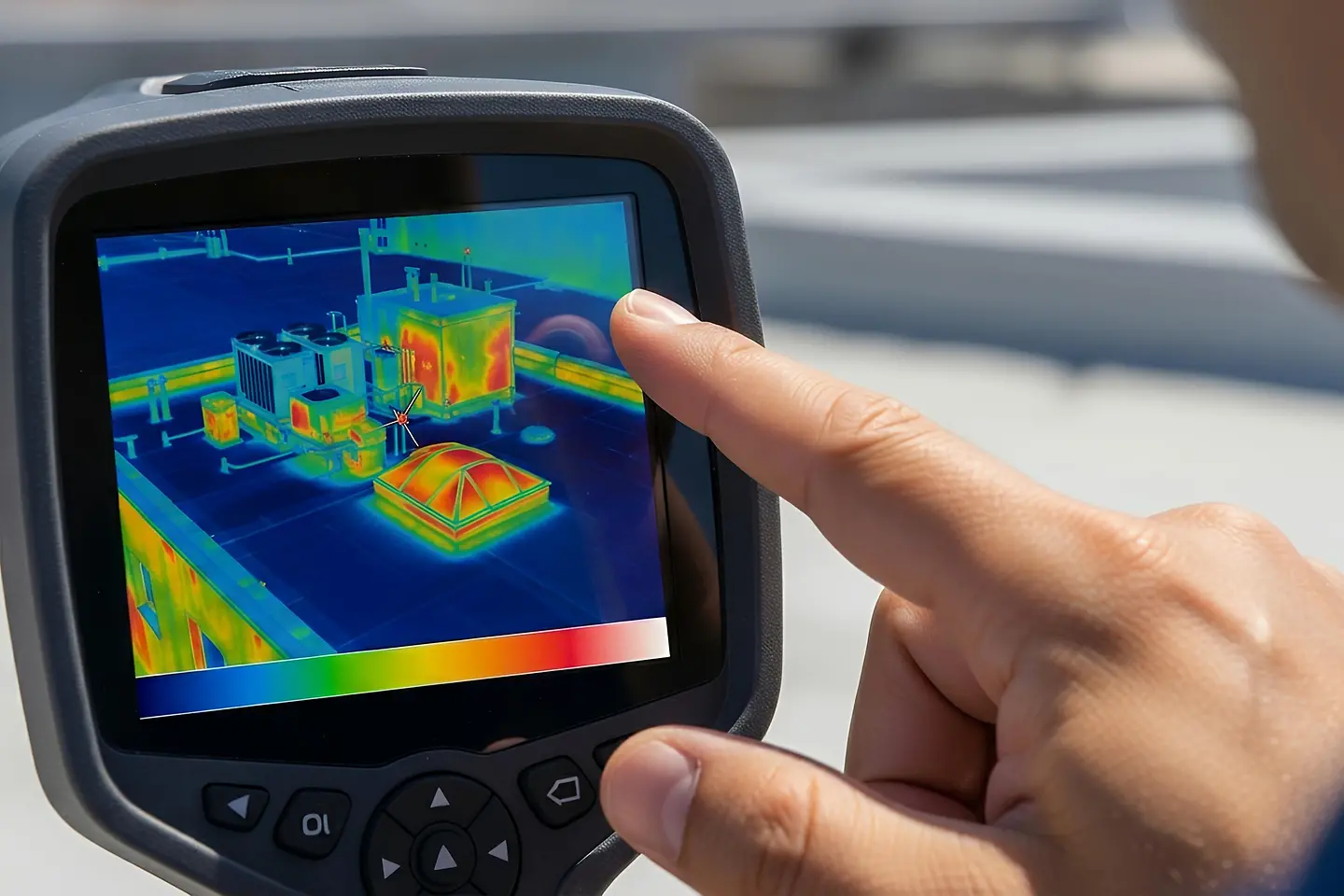 Image generated with AI
Not all equipment failures reveal themselves in the same way. A failing bearing generates different warning signs than an overheating transformer or a deteriorating gearbox. This is why predictive maintenance relies on multiple analysis techniques, each designed to detect specific forms of degradation. The most effective programs combine several methods to build a complete picture of asset health.
Vibration analysis is one of the most widely used predictive maintenance techniques, particularly for rotating equipment such as motors, pumps, turbines, compressors, and gearboxes.
As components wear, loosen, misalign, or become imbalanced, their vibration patterns change. Modern sensors can detect these changes long before they become visible to maintenance teams.
A global automotive manufacturer, for example, used vibration monitoring to identify abnormal spindle behaviour in CNC machines. Instead of experiencing unexpected failures during production, maintenance teams could replace affected components during planned maintenance windows, significantly reducing downtime.
Heat is often one of the earliest indicators of developing equipment issues. Infrared cameras and thermal sensors help organizations detect abnormal temperature increases in electrical systems, bearings, motors, transformers, and production equipment.
Thermal analysis is particularly valuable because it can identify issues without interrupting operations. Utilities frequently use thermal imaging to inspect substations and transmission infrastructure. Components showing unusual heat signatures can be repaired before failures lead to outages.
Machines often "tell" maintenance teams when something is wrong long before they fail. Acoustic monitoring captures sound patterns that may indicate friction, cracking, leakage, cavitation, or mechanical wear. Advances in AI have significantly improved acoustic analysis by enabling systems to distinguish between normal operating sounds and abnormal equipment behaviour.
This approach is increasingly used in manufacturing environments where continuous monitoring is required but physical inspections may be difficult.
Lubricants provide valuable insights into equipment health. Oil analysis evaluates contamination levels, metal particles, viscosity, moisture content, and chemical composition. A rise in metal particles, for instance, may indicate component wear inside gearboxes or engines. In sectors such as mining, energy, and transportation, oil analysis often provides early warnings that prevent catastrophic failures and expensive repairs.
Electrical analysis focuses on monitoring voltage, current, resistance, insulation performance, and power quality. Electrical anomalies often reveal issues affecting motors, transformers, drives, and power systems. As industrial operations become increasingly electrified, electrical analysis is playing a growing role in predictive maintenance programs.
Artificial intelligence is transforming predictive maintenance from a monitoring exercise into a decision-making capability. Rather than simply collecting data and generating alerts, AI systems can identify complex relationships across thousands of variables and continuously improve their predictions over time.
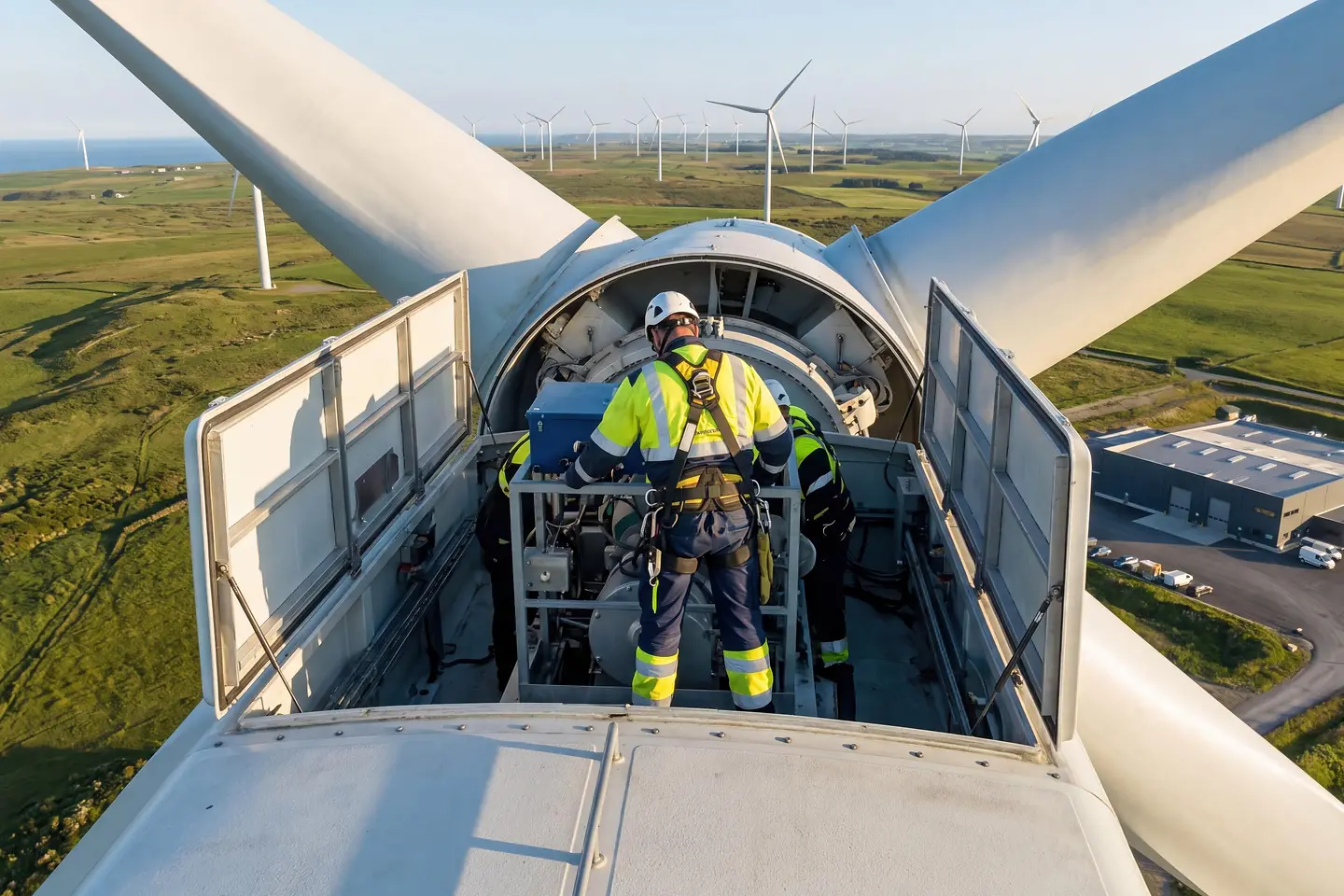
Consider the case of a large wind energy operator managing hundreds of turbines across geographically dispersed locations. Traditional maintenance strategies relied heavily on routine inspections and periodic servicing.
However, turbine failures often occurred between inspection intervals. By implementing AI-powered predictive maintenance, the operator began analysing vibration data, weather conditions, rotor performance, power output, and historical maintenance records. The system identified subtle patterns that preceded gearbox failures. Maintenance teams could intervene weeks before failures occurred, reducing downtime while improving energy production.
The result was not simply better maintenance. It was better business performance. Here’s another example: Lufthansa Technik uses digital twin technology and operational flight data to optimize aircraft engine maintenance. By analyzing engine performance continuously, maintenance schedules can be tailored to actual operating conditions rather than fixed intervals, improving reliability and reducing unnecessary maintenance activity.12
Manufacturing environments often contain thousands of interconnected assets. A failure in one machine can quickly affect production schedules, inventory planning, quality control, and customer deliveries.
AI helps organizations understand these interconnected relationships. For example, a semiconductor manufacturer deployed machine learning models to monitor critical production equipment. The system analysed operational data in real time and detected anomalies that human operators would likely have missed.
The company reduced equipment failures while improving production stability and product quality. The broader lesson is clear: AI does not replace maintenance teams. It augments their expertise by providing visibility that would otherwise be impossible at scale.

Manufacturing remains the largest adopter of predictive maintenance globally. According to Grand View Research, manufacturing accounts for the largest share of predictive maintenance deployments due to its dependence on high-value production assets and continuous operations.
Manufacturers use predictive maintenance to monitor robots, conveyors, compressors, CNC machines, pumps, and production equipment. The objective is simple: maximize production availability while minimizing disruptions.
Rail operators face unique reliability challenges because equipment failures can affect thousands of passengers and create significant operational disruption. Modern predictive maintenance systems monitor wheelsets, bearings, braking systems, track infrastructure, and signalling equipment.
According to the International Union of Railways, predictive maintenance initiatives are increasingly helping operators improve reliability while reducing maintenance costs through data-driven interventions.13
Power generation and distribution assets often operate continuously for decades. Failures can result in service interruptions, safety concerns, and significant financial consequences. Utilities increasingly use predictive maintenance to monitor transformers, substations, turbines, and grid infrastructure. This enables maintenance teams to prioritize high-risk assets before failures occur.
In oil and gas environments, equipment reliability is closely linked to safety and operational continuity. Predictive maintenance helps monitor pumps, compressors, valves, drilling equipment, and pipelines. Early identification of equipment degradation reduces both operational risk and maintenance expenditure.
Fleet operators generate enormous volumes of operational data through connected vehicles. Predictive maintenance solutions analyse engine performance, fuel consumption, tire conditions, braking systems, and driver behaviour. Instead of reacting to vehicle failures, operators can proactively schedule maintenance activities. This improves vehicle availability while reducing maintenance costs.
Predictive maintenance is increasingly being applied to HVAC systems, elevators, electrical infrastructure, and building automation systems. As smart buildings become more connected, predictive maintenance helps facility managers optimize energy consumption while reducing equipment failures.
The value of predictive maintenance becomes most visible through real-world outcomes. Here are some examples below.
A logistics provider operating thousands of delivery vehicles struggled with unexpected breakdowns and rising maintenance costs. Using telematics, engine diagnostics, and AI-powered analytics, the company identified early indicators of component wear. Maintenance activities became proactive rather than reactive. The result was higher fleet availability, improved delivery reliability, and lower maintenance expenditure.
Rail infrastructure operators increasingly deploy sensors along tracks and rolling stock to detect anomalies before failures occur. One AI-enabled monitoring project achieved nearly 90% fault prediction accuracy, enabling maintenance teams to address issues before they disrupted operations.14
A European renewable energy operator deployed predictive analytics to monitor turbine performance across multiple wind farms. By identifying gearbox degradation early, the organization reduced emergency maintenance visits and improved energy production. The initiative also lowered operational costs associated with remote inspections.
A manufacturer experiencing recurring production interruptions used machine learning to analyse equipment performance data. The system identified hidden correlations between temperature fluctuations, vibration patterns, and component failures. Maintenance planning became more accurate, improving production stability.
Utility companies increasingly use AI to monitor transformer health and electrical infrastructure. By predicting equipment failures before outages occur, utilities improve service reliability while reducing repair costs.
A large commercial property operator implemented predictive maintenance for HVAC systems across multiple facilities. Sensors continuously monitored equipment performance and identified anomalies before failures occurred. The company reduced maintenance costs while improving occupant comfort and energy efficiency.
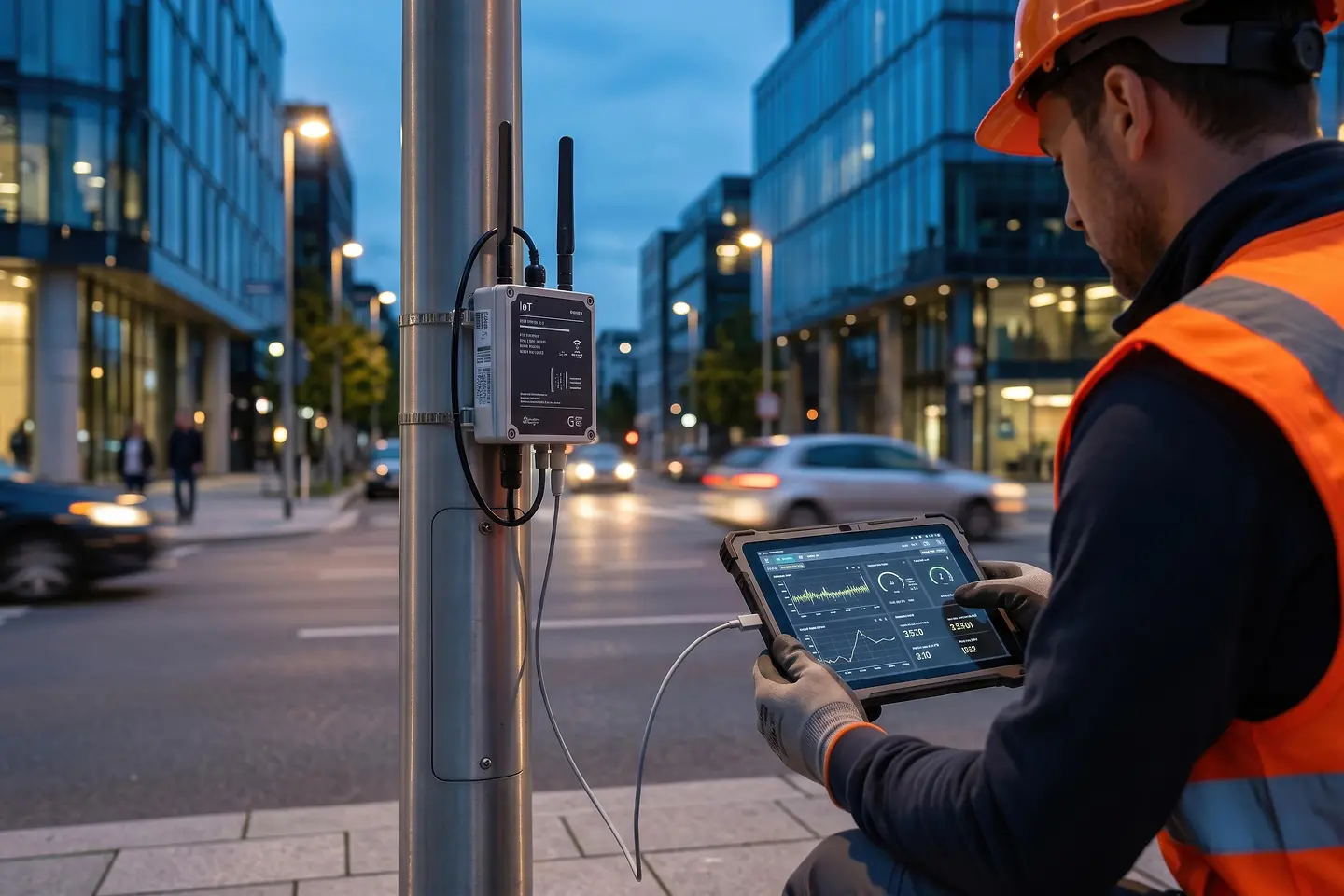 Image generated with AI
One of the most compelling applications of predictive maintenance emerges when maintenance intelligence is combined with energy optimization. Consider a modern train washing facility operating around the clock. Any unexpected equipment failure can disrupt maintenance schedules, affect train availability, and increase operational costs.
By combining sensor data, predictive analytics, energy monitoring, and AI-driven optimization, operators can continuously monitor asset health while optimizing energy consumption. Instead of reacting to equipment issues after they occur, operations teams gain visibility into emerging risks and can take corrective action before disruptions happen. The result is a more resilient operation where reliability and sustainability reinforce one another.
This convergence of predictive maintenance, energy intelligence, and automation represents a broader shift toward Industrial AI-powered operations.
Many organizations recognize the value of predictive maintenance but struggle to determine where to begin. The challenge is rarely the technology itself. More often, it is knowing where to focus efforts, how to prioritize investments, and how to turn data into measurable business outcomes. Successful implementations typically follow a structured approach.
Start by identifying critical assets whose failures create the greatest operational or financial impact. Not every asset requires predictive maintenance. Focus on the equipment that matters most.
A good rule of thumb is to begin with assets whose failure would halt production, compromise safety, or create significant repair costs. Early success on high-value assets helps build momentum and justify future investments.
Different assets require different monitoring methods. A rotating motor may benefit from vibration analysis, while electrical equipment may require thermal and power monitoring. The monitoring strategy should align with likely failure modes.
Understanding how equipment fails is just as important as understanding how it operates. Selecting the wrong monitoring technique can result in unnecessary data collection while missing the signals that matter most.
Organizations must connect sensors, operational systems, maintenance records, and analytics platforms into a unified environment. Integration is often one of the most important and challenging phases of implementation. Data silos remain one of the biggest barriers to scaling industrial AI and predictive maintenance initiatives. Bringing operational technology and information technology together creates the foundation for reliable insights.
Once monitoring infrastructure is deployed, organizations begin building the data foundation required for predictive analytics. Data quality should be prioritized from the outset. Organizations are often surprised to discover that successful predictive maintenance depends less on the volume of data collected and more on the relevance and consistency of that data.
Machine learning models are trained using historical and real-time data. The objective is to identify patterns associated with equipment degradation and future failures. Over time, these models become more accurate as they learn from additional operating conditions, maintenance events, and failure scenarios. The result is a system that continuously improves its ability to predict risk.
Many successful predictive maintenance programs begin with a limited pilot project. This enables organizations to demonstrate value, refine processes, and build internal confidence before expanding. McKinsey recommends starting with a focused use case rather than attempting enterprise-wide deployment from day one. Early wins often provide the business case needed for broader transformation.
For many organizations, the biggest challenge is not proving that predictive maintenance works but proving that it can scale. BlueScope Steel faced a similar situation when its predictive maintenance journey began with a pilot program covering approximately 300 assets across three production lines. By combining machine monitoring with AI-driven analytics, the company was able to identify potential equipment issues earlier and improve maintenance planning.
The pilot delivered sufficient value to justify expansion, eventually leading to deployments across facilities in Australia, the United States, China, Thailand, and New Zealand. BlueScope's experience highlights an important lesson for industrial organizations: start small, demonstrate measurable business value, and use those early wins to build momentum for broader transformation.15
Predictions alone do not create value. Organizations must establish clear operational workflows that ensure maintenance teams act on insights effectively. A maintenance alert that is ignored provides no more value than having no alert at all. The goal is to ensure insights translate into timely action and measurable outcomes.
As models improve and confidence increases, organizations can expand predictive maintenance across additional assets, facilities, and operational environments. At this stage, predictive maintenance begins evolving into a broader operational intelligence capability, supporting not only maintenance decisions but also production planning, energy optimization, and asset lifecycle management.
Despite its advantages, predictive maintenance is not without challenges. Organizations often discover that success depends as much on people, processes, and data governance as it does on technology.
Poor data remains one of the biggest obstacles to successful predictive maintenance. Organizations often discover that sensor information, maintenance records, and operational data require significant cleanup before analytics can deliver reliable results. The phrase "garbage in, garbage out" is particularly relevant here. Even the most advanced AI models cannot compensate for inaccurate, incomplete, or inconsistent data.
Many industrial environments contain decades-old equipment that was never designed for connectivity. Integrating legacy assets into modern predictive maintenance platforms can be complex. Yet these assets are often the ones where predictive maintenance can create the greatest value. Industrial IoT gateways, edge devices, and retrofit sensors are increasingly helping organizations bridge the gap between legacy equipment and modern analytics platforms.
Successful predictive maintenance requires collaboration between maintenance teams, operations personnel, data scientists, and technology specialists. Building these capabilities takes time. One of the biggest barriers is cultural rather than technical. Maintenance teams must learn to trust data-driven recommendations while organizations adapt long-established maintenance practices.
Many organizations achieve success with small pilot projects but struggle to scale predictive maintenance across the enterprise. A scalable architecture and clear business case are essential. Many industrial AI initiatives fail to move beyond the pilot stage because organizations underestimate the operational changes required to scale successfully.
Predictive maintenance is increasingly evolving into smart maintenance. Smart maintenance combines predictive analytics, automation, AI, workflow orchestration, and operational intelligence. Instead of simply predicting failures, it enables organizations to make faster, smarter, and increasingly autonomous decisions.
Rather than simply predicting failures, smart maintenance helps organizations prioritize actions, automate responses, and optimize maintenance planning. This shift allows maintenance teams to spend less time reacting to problems and more time focusing on reliability, performance, and continuous improvement.
Industrial IoT gateways connect operational technology environments with enterprise systems and cloud platforms. They serve as a critical bridge between physical assets and digital intelligence. Without this connectivity layer, valuable machine data often remains trapped inside isolated systems, limiting the effectiveness of predictive maintenance initiatives.
As AI capabilities mature, many maintenance workflows can be partially automated. This reduces administrative burden while enabling faster responses to emerging issues. For example, an AI system can automatically generate a work order, prioritize the maintenance task, assign resources, and notify relevant personnel when a high-risk failure is detected.
The future of predictive maintenance will be shaped by increasingly intelligent and autonomous systems. As Industrial AI continues to mature, predictive maintenance will move beyond forecasting failures toward orchestrating entire maintenance ecosystems.
AI models running directly on industrial assets will enable faster decision-making and reduced latency. This capability is particularly important in environments where even a few seconds of delay can result in operational disruption or safety risks.
Digital twins will become increasingly sophisticated, enabling organizations to simulate asset behaviour and maintenance scenarios with greater accuracy. Rather than reacting to equipment conditions, organizations will be able to test maintenance strategies virtually before implementing them in the real world.
Future systems will not only predict failures but also recommend and initiate corrective actions automatically. Industry analysts increasingly view autonomous maintenance as a key step toward self-optimizing industrial operations, where systems continuously adapt based on changing conditions.
Predictive maintenance is often the first step toward broader Industrial AI adoption. Organizations begin by monitoring equipment health. Over time, they create intelligent operational environments capable of learning, optimizing, and continuously improving performance. Organizations that successfully combine AI, operational data, and industrial expertise are better positioned to improve productivity, resilience, and competitiveness in an increasingly digital economy.
In many ways, predictive maintenance serves as the proving ground for Industrial AI. It demonstrates how data can move beyond reporting and become a driver of smarter decisions, more resilient operations, and sustainable business growth.
Predictive maintenance is no longer an experimental technology reserved for digital leaders. It has become a practical and proven strategy for improving reliability, reducing costs, extending asset lifecycles, and strengthening operational resilience.
As Industrial AI continues to mature, predictive maintenance will play an increasingly central role in how organizations manage assets and operations. The question is no longer whether predictive maintenance delivers value. The question is how quickly organizations can capture that value and turn operational data into a competitive advantage.
Predictive maintenance is a maintenance strategy that uses data, analytics, and AI to predict equipment failures before they occur, allowing maintenance teams to intervene proactively.
Preventive maintenance follows a fixed schedule, while predictive maintenance relies on actual equipment condition and operational data.
The four common maintenance approaches are reactive maintenance, preventive maintenance, predictive maintenance, and prescriptive maintenance.
The five primary methods are vibration analysis, thermal analysis, acoustic analysis, oil analysis, and electrical analysis.
Common sensors include vibration sensors, temperature sensors, pressure sensors, current sensors, acoustic sensors, and humidity sensors.
Manufacturing, transportation, railways, utilities, energy, oil and gas, logistics, and commercial facilities are among the industries seeing significant benefits.
Yes. Individual assets can be monitored using standalone sensors and local analytics, although IIoT connectivity enables greater scalability and visibility.
AI analyzes large volumes of operational data, identifies hidden patterns, predicts failures earlier, and continuously improves prediction accuracy over time.
1. Predictive Maintenance and the Smart Factory, 2024, Deloitte
2. Predictive Maintenance Market Size, Share & Trends Analysis Report, 2024, Grand View Research
3. Predictive Maintenance and the Smart Factory, 2024, Deloitte
4. Predictive Maintenance and the Smart Factory, 2024, Deloitte
5. Predictive Maintenance and the Smart Factory, 2024, Deloitte
6. Predictive Maintenance and the Smart Factory, 2024, Deloitte
7. Case Study on Predictive Maintenance, 2024, Siemens
8. Predictive Maintenance and the Smart Factory, 2024, Deloitte
9. Maintenance Excellence and AI-Driven Asset Management at Deutsche Bahn, 2024, Inspirient
10. Rail Detection Case Study,2024, Abacus Group
11. Siemens Advances Predictive Maintenance with Artificial Intelligence at Sachsenmilch, 2024, Siemens
12. Predictive Maintenance of Aircraft Engines, 2024, ITB FEM
13. Predictive Maintenance and Asset Management Initiatives in Railways, 2024, International Union of Railways (UIC)
14. Rail Detection Case Study,2024, Abacus Group
15. BlueScope Steel Success Case Deep Dive, 2024, Siemens