Search
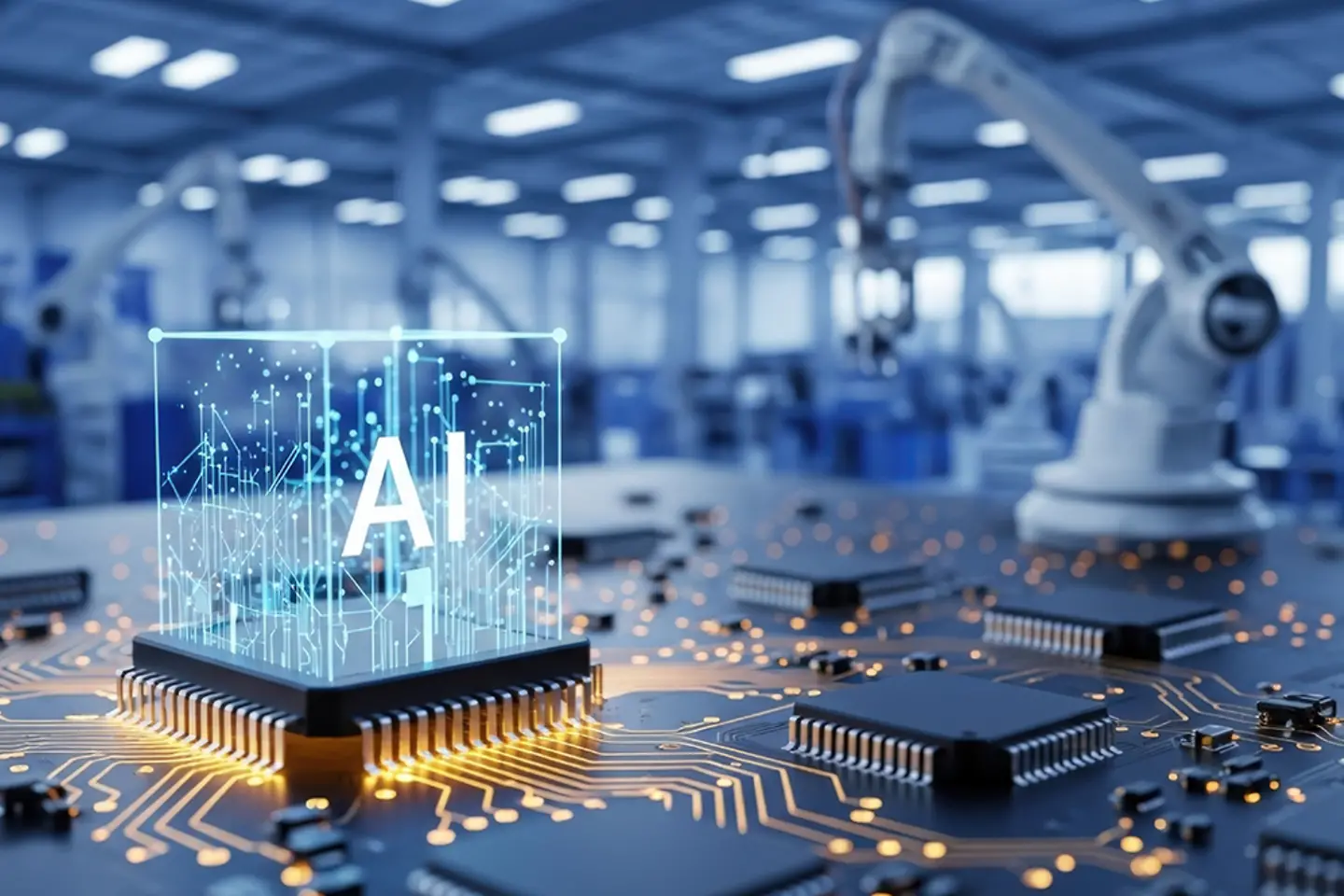
Robotic arm in factory, CPU chip on circuit board. Future of manufacturing innovation.

What is industrial AI?

Explore industrial AI: Optimize processes, boost efficiency, drive innovation, and transform industries

What is industrial AI?

The application of Artificial Intelligence (AI) in the industrial environments has redefined the concepts of scalability, adaptability, and efficiency. The term industrial AI refers to the use of AI and related technologies in industrial environments such as manufacturing, aerospace, automotive, retail, logistics, energy, and engineering. It enables machines, systems, and processes to learn from data, optimize operations, and make autonomous or semi-autonomous decisions in real-world environments.

Unlike general-purpose AI, industrial AI operates in complex, real-world environments where safety, precision, and reliability are non-negotiable. It combines advanced analytics, machine learning, and domain-specific expertise to turn vast amounts of operational data into actionable insights and smarter, more efficient systems.

How is industrial AI defined?

Industrial AI is the integration of AI systems and AI agents with industrial operations, leveraging machine data, physical processes, and engineering knowledge to improve efficiency, productivity, and decision-making.

It typically operates in environments such as factories, supply chains, and infrastructure systems, where large volumes of machine, sensor, and operational data is continuously generated.

Core principles and purpose

The foundation of industrial AI rests on the following key principles:

  • Trust and reliability: Industrial AI combines machine learning and engineering fundamentals to deliver accurate, dependable outcomes. By bringing together domain expertise with data-driven models, it ensures predictions are not only robust but also grounded in real-world physical principles.
  • Data-driven optimization: The success of industrial AI depends on high-quality, well-structured, and context-rich data. This data is typically sourced from sensors, machines, and legacy systems. Ensuring quality, consistency, and accessibility across the organization is critical to achieving reliable and scalable AI outcomes.
  • Explainability and transparency: Models must be transparent, allowing operators to understand how recommendations are generated and keeping humans in the loop for safe, compliant operations. It ensures traceability of decisions for regulatory compliance.
  • Purpose-built: Industrial AI is designed to solve domain-specific, high-value industrial challenges, such as predictive maintenance, anomaly detection, quality assurance, and supply chain optimization. These solutions are tailored to real-world processes and grounded in deep industry knowledge.
  • System-of-systems modeling: Industrial AI addresses the complexity of interconnected operations by modeling interactions across multiple, fragmented systems.
  • Edge-native and secure deployment: To ensure low latency and high reliability, industrial AI is often deployed at the edge—directly on machines or close to data sources. This approach is combined with strong cybersecurity measures to ensure the security of sensitive operational technology.
  • Human-in-the-loop: AI augments human intelligence rather than completely replacing it, enabling collaborative, adaptive automation.
  • Scalability: Industrial AI typically starts small, and scales gradually once validate, ensuring performance in larger, distributed systems.

The ultimate goal is to drive operational excellence in asset-intensive industries and to create self-improving industrial systems that reduce costs, enhance quality, and enable faster innovation cycles.

  • Predictive maintenance: By analyzing sensor data, industrial AI can detect early signs of system failure, helping reduce unplanned downtime.
  • Quality control: Computer vision systems enable real-time detection of even microscopic defects, improving product quality. This in turn minimizes rework and ensures optimum utilization of available resources.
  • Process optimization: Industrial AI makes it possible to continuously balance hundreds of variables across production environments.  This in turn increases yield and reduces energy consumption.
  • Safety monitoring: Using AI enhances workplace safety by ensuring efficient monitoring, identification of potential hazards, and enabling faster responses to critical conditions.
  • Sustainability: Optimizing resource usage with industrial AI improves energy efficiency and supports the reduction of emissions across operations.
  • Supply chain resilience: AI-driven forecasting and logistics optimization help organizations respond more effectively to demand fluctuations, reducing excess inventory and improving overall supply chain efficiency.

How does industrial AI process real‑world data?

Industrial AI uses continuous data generated from systems, infrastructure, and production environments. Unlike traditional IT systems, this data is dynamic, high-frequency, and often time-sensitive. It requires specialized architecture and processing techniques to generate actionable insights from the data.

In industrial environments, data sources are extensive, including:

  • Embedded sensors within machines and equipment, measuring parameters such as vibration, temperature, pressure, and load
  • Industrial control systems such as PLCs, SCADA, and DCS, which provide structured operational data and control signals
  • Industrial IoT (IIoT) devices that enable connectivity and data aggregation across distributed environments

This raw data is typically fragmented, non-uniform and must be ingested, standardized, and contextualized before it can be used effectively. Data engineering pipelines can be used to clean, normalize, and contextualize data. With machine learning, deep learning, and time-series models, the prepared data can be analyzed to detect hidden patterns, predict outcomes such as failures or demand shifts, and optimize operations in real time. Processing often occurs at the edge to support low-latency decision-making, while cloud or hybrid infrastructures support scalable training and cross-site analysis. This creates a closed-loop system where data is continuously captured, analyzed, and acted upon, enabling more adaptive and efficient industrial operations.

Solutions

Industrial AI Cloud

Accelerate industrial AI with high-performance GPUs and sovereign AI infrastructure built for Europe.

AI Foundation Services

Unlock AI’s potential with our secure, compliant AI Foundation Services ecosystem.

AI Solution Factory

Reduce failure rates and automate business processes smartly with a standardized, vendor-agnostic approach.

Artificial Intelligence and Data Analytics

Is data hidden in documents, e-mails, pictures? How to use this potential for data-driven business models.

How does industrial AI work?

Industrial AI integrates real-time data, data engineering, domain expertise, and advanced AI models. Unlike general AI, it combines real-time data from industrial environments with machine learning algorithms, deep engineering knowledge, and scalable analytics to enable intelligent, automated decision-making while respecting engineering laws and safety regulations.

Role of sensors, telemetry, and machine data

Industrial environments generate large volumes of both structured and unstructured data from a variety of sources. This data includes data from sensors, machine logs, performance metrics, visual inputs from devices such as cameras and automated inspection systems. This continuous stream of data is the foundation of industrial AI. By capturing real-time insights into machine behavior and process conditions, it enables continuous monitoring, early detection of anomalies, and more informed decision-making across operations.

Domain knowledge, data science and AI integration

Industrial AI goes far beyond traditional standalone algorithms. It seamlessly combines engineering expertise, data science, and advanced AI technologies to operate effectively in real-world environments. Domain knowledge provides an understanding of physical systems, constraints, and operational processes, while data science enables data conditioning and preparation by structuring and analyzing complex industrial datasets. On top of this foundation, AI technologies, such as machine learning, deep learning, and computer vision, generate predictive and prescriptive insights that drive smarter decision-making.

Industrial AI operation as a continuous, closed-loop process built on three core pillars:

  • Sense: This is where the data is collected using IoT sensors, industrial control systems (e.g., PLCs), and connected devices to capture high-frequency data streams, including vibration, temperature, pressure, and acoustic signals—from machines and infrastructure.
  • Think: The advanced data and machine learning models analyze this data to uncover hidden patterns, detect anomalies, and simulate scenarios. This also includes the use of Digital Twins, virtual representations of physical assets, to run and analyze different scenarios to optimize performance.
  • Act: Insights are translated into real-time actions through automated, closed-loop control (where systems self-adjust parameters) or through human-in-the-loop decision support.

This integrated approach is powered by a set of core technologies such as: 

  • Machine learning: Identifies patterns in historical data and predict future outcomes such as equipment failures
  • Computer vision: Inspects in real-time and identify defects if any
  • Edge computing: Processes low latency directly at the machine level
  • Physics-based AI: Combines data-driven models with engineering principles to ensure accurate and consistent results

These capabilities enable a wide range of industrial applications, from predictive maintenance and process optimization to autonomous robotics and generative design. By combining domain expertise with scalable AI and data infrastructure, industrial AI delivers accurate, efficient, and explainable results.

White Paper: Driving Europe's industrial AI future forward

Struggling to scale industrial AI securely? Discover how Industrial AI Cloud solves compute and compliance challenges.

What are the differences between industrial AI and general AI?

Key difference

The fundamental difference between industrial AI and traditional AI or general-purpose AI is the environment, data, and consequences of error. General-purpose AI aims to replicate certain aspects of human intelligence. Industrial AI operates on a different scale because operational stakes and safety requirements are significantly higher.

General-Purpose AI

  • Replicate human-like thinking, communication, and creativity
  • Digital interactions such as text generation, content creation, and user engagement
  • Primarily unstructured data including text, images, and user activity
  • High tolerance: Moderate mistakes usually have limited real-world consequences
  • Typically centralized in cloud-based infrastructures
  • Can operate with delays depending on the application
  • Broadly applicable across domains with limited specialization
  • Primarily statistical and data-driven methods
  • Integrated within IT systems and digital platforms
  • Explainability is beneficial but not always essential
  • Frequently updated to adapt to changing user needs and trends
  • Generative, open-ended supporting a wide range of tasks
  • Consumer and enterprise digital applications

Industrial AI

  • Optimize operational performance, anticipate failures, and maintain safe system behavior
  • Physical assets, production systems, and real-world industrial operations
  • Continuous streams of machine and sensor data, including telemetry and control system outputs
  • Zero tolerance: Minimal errors can disrupt operations, induce financial losses, and create safety risks
  • Distributed across edge and cloud environments, with on-site processing for immediate response
  • Requires real-time processing for time-sensitive decisions
  • Relies heavily on industry-specific knowledge and engineering context
  • Combines data-driven models with engineering rules and physical constraints
  • Connects enterprise IT systems with operational technology (OT) such as machines and control systems
  • High level of transparency required to validate decisions and meet compliance standards
  • Designed for long-term reliability, often aligned with the lifecycle of industrial assets
  • Targeted and deterministic, focused on precise operational outcomes
  • Mission-critical environments including manufacturing plants, energy systems, and logistics operations

Why does industrial AI require higher reliability?

Industrial AI operates in sensitive environments where even minor errors can lead to serious real-world consequences. Unlike purely digital applications, failures in industrial systems directly affect physical operations, resulting in production downtime, safety incidents, environmental risks, and significant financial losses.

This makes reliability a fundamental requirement rather than performance optimization. Industrial AI systems need to ensure consistent performance under dynamic conditions, across connected environments. In sectors such as manufacturing, energy, and logistics, even minor inaccuracies can lead to damage, disruptions, or credibility gap.

Factors that drive the need for higher reliability:

  • Physical safety and environmental impact: AI-driven decisions can influence machinery, vehicles, and critical infrastructure, where failures may pose risks to human safety and the environment.
  • High cost of failure: In capital-intensive industries, incorrect predictions or delayed responses can result in costly downtime, damaged assets, or halted production.
  • Operational trust and usability: AI output must be consistent and actionable. Unreliable systems lead to alert fatigue, causing operators to ignore recommendations and limit adoption.
  • Dynamic environments: Industrial conditions evolve over time. External and internal factors such as equipment wear and tear, raw materials, and human factors shift. The AI output should remain accurate despite changing environments.
  • Regulatory and accountability requirements: Decisions must be transparent and traceable, as engineers and organizations are responsible for outcomes in regulated environments. 

To meet these demands, industrial AI solutions are designed with a strong emphasis on:

  • Reliability and determinism: To ensure consistent performance
  • Explainability and auditability: To provide clear insights into decisions made
  • Compliance with safety: To adhere to regulatory standards 

Continuous validation processes ensure the demands with a “trust loop”, where AI outputs are constantly monitored and validated against real-time operational data. This level of precision is essential to building confidence in AI systems and their deployment at the core of mission-critical industrial processes.

Why does industrial AI matter?

Industrial AI is a key driver of the next industrial era, transforming sectors such as manufacturing, energy, automotive, and logistics. It shifts the operational approach from reactive to proactive and predictive. By leveraging data and interconnected assets and systems, it improves overall efficiency, reduces costs, and enhances overall operational performance.

Operational efficiency and cost reduction

Industrial AI ensures optimization of operations and resources utilized by:

  • Reducing unplanned downtime through predictive maintenance and early fault detection
  • Improving the utilization of machines, materials, and energy across operations
  • Lowering maintenance and operational costs through condition-based strategies
  • Optimizing production processes and supply chains in real time 

Productivity, quality, and safety improvements

By combining automation with data-driven decision-making, industrial AI delivers measurable impact across key performance areas:

  • Increased productivity, through higher throughput and reduced process inefficiencies
  • Improved quality, using AI-driven inspection systems to detect defects with high precision
  • Enhanced safety, by identifying hazards early and enabling safer, more autonomous operations 

Data-driven and sustainable operations

Industrial AI is critical in enabling smarter and more sustainable operations:

  • Data-driven decision-making: Integrates data across systems such as PLC, SCADA, and ERP to generate actionable insights
  • Energy and resource optimization: Reduces consumption and support sustainability and environmental, social, and governance (ESG) targets 

Together, these capabilities position industrial AI as a foundational technology for building efficient, resilient, and future-ready industrial enterprises.

What use cases are relevant for industrial AI?

Industrial AI is transforming industries such as manufacturing, energy, and logistics by enabling data-driven, automated, and highly optimized operations. By combining machine learning, computer vision, and real-time data processing, it improves efficiency, reduces risk, and enhances overall system performance.

Predictive maintenance

Industrial AI uses sensor data, such as vibration, temperature, and acoustic signals, to identify early signs of equipment degradation. This enables early failure prediction, reducing unplanned downtime. As a result, asset lifespan increases while maintenance costs decrease. Digital Twins can further enhance this capability by simulating asset behavior under different scenarios.

AI‑driven visual quality inspection

Deep learning powers computer vision systems in real time. This enables precise detection of defects, inconsistencies, or deviations improving product quality, reduced waste and returns, and minimized reliance on manual inspection.

Process optimization and throughput improvement

With AI, continuous analysis of production data to optimize operational parameters across machines and processes is possible. Variables can be adjusted dynamically to improve throughput, maximize yield, reduce raw material waste, and lower energy consumption in complex industrial environments.

Supply chain and logistics optimization

Industrial AI supports accurate demand forecasting, inventory optimization, and intelligent route planning, enhancing supply chain performance. This helps prevent bottlenecks, reduce logistics costs, and improve delivery efficiency across global operations.

Autonomous robotics and AGV/AMR systems

AI-powered robots and autonomous mobile systems enable flexible automation in manufacturing and warehousing. These systems can navigate dynamic environments, perform variable tasks, and safely collaborate with the human workforce, improving both productivity and operational safety.

Digital Twins and simulation

Digital Twins, virtual replicas of physical assets or entire production systems, can simulate scenarios to predict outcomes and optimize performance before implementing changes in the real world.

Generative AI for engineering and design

Generative AI accelerates engineering workflows by rapidly creating and testing design alternatives, supporting product innovation, and improving resilience in supply chain and production planning.

Safety and risk monitoring

AI systems can be used to analyze video feeds and sensor data to detect unsafe conditions, such as equipment anomalies or non-compliance with safety protocols. This enables early intervention and helps create safer work environments.
What are Digital Twins in industrial AI?

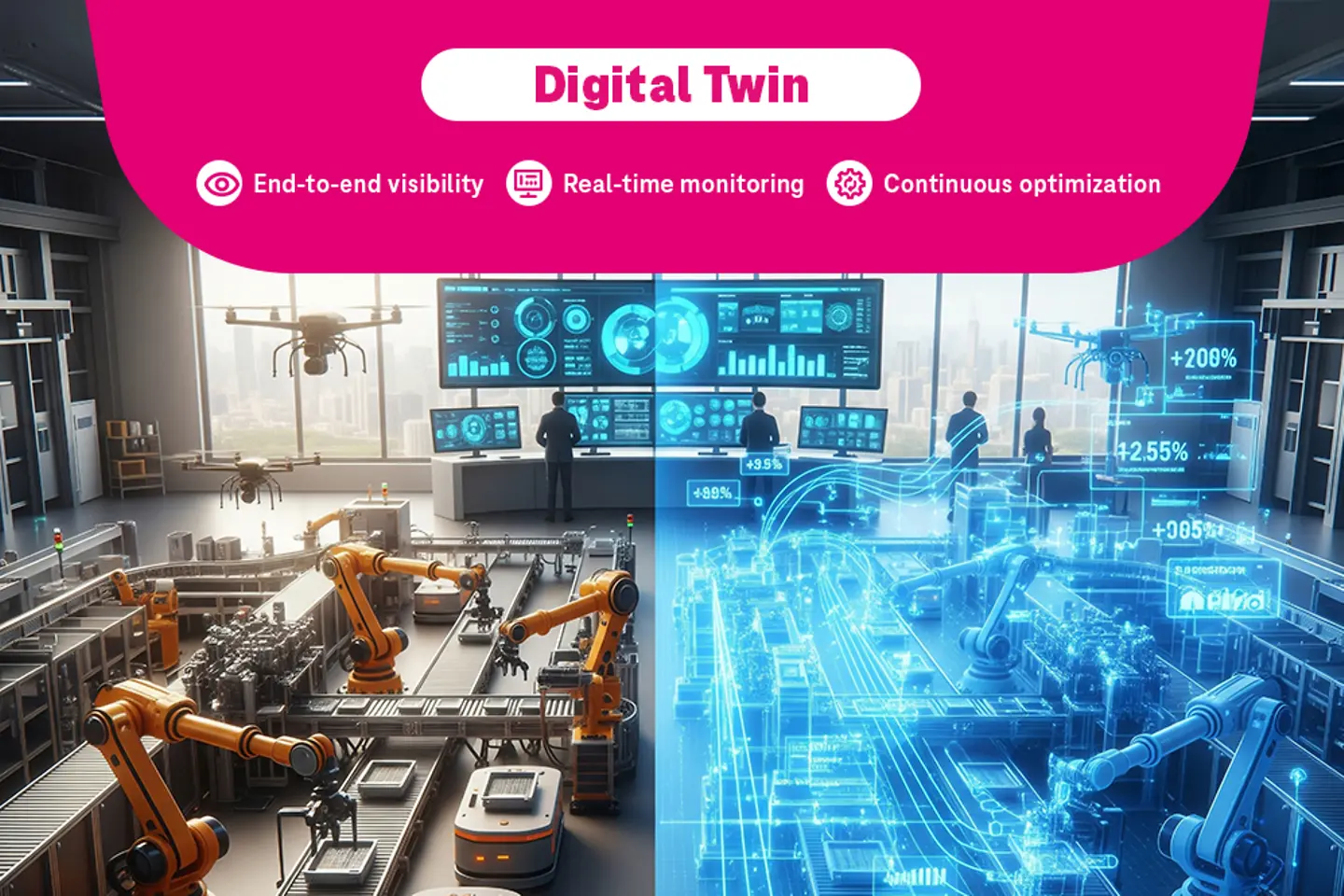
 a hyper-detailed 3D visualization of a fully automated manufacturing plant

Digital Twins are dynamic, virtual representations of physical assets, processes, or entire systems, continuously updated with real-time and historical data. In industrial AI, they play a central role in bridging the physical and digital worlds, enabling simulation, monitoring, and continuous optimization of operations.

Simulation and scenario testing

Digital Twins allow organizations to model and evaluate real-world operational scenarios in a virtual environment before implementing changes in the real world. By combining AI with real-time data, Digital Twins enable:

  • Simulation of production conditions to predict system behavior and performance
  • Identification of inefficiencies and bottlenecks without interrupting live operations
  • Optimization of workflows, energy usage, and resource allocation 

The Digital Twin approach reduces dependence on physical testing. This accelerates innovation cycles and minimizes operational risk and cost.

Factory‑level and system‑level Digital Twins

Digital Twins can be deployed at multiple levels, from individual components and machines to full production lines, factories, and supply networks. They provide:

  • End-to-end visibility: A unified view of interconnected systems and processes
  • Real-time monitoring: Reflect current operating conditions through continuous data integration
  • Continuous optimization: Enable ongoing improvements based on performance insights and predictive analytics 

Beyond operations, Digital Twins support a wide range of applications, including predictive maintenance, product design optimization, and autonomous system training. Digital Twins create a holistic, data-driven view of industrial environments that helps organizations improve coordination, enhance quality, and build efficient, resilient operations.

What is the technology stack behind industrial AI?

Industrial AI is built on a sophisticated layered technology stack that combines physical infrastructure, data systems, advanced algorithms, and deployment frameworks. This integrated approach enables real-time, data-driven automation across industrial environments, supporting everything from model training to execution at scale.

Machine learning and deep learning models

At the core of industrial AI are machine learning and deep learning models. This layer processes complex, high-volume industrial data using frameworks such as TensorFlow and PyTorch. These models:

  • Detect patterns and anomalies in time-series and operational data
  • Predict outcomes such as equipment failures or process deviations
  • Enable automated and prescriptive decision-making 

By transforming raw data into actionable insights, this layer supports predictive and optimized operations.

Computer vision and Edge AI

Computer vision systems enable machines to interpret visual data for applications such as defect detection and automated inspection. Combined with edge AI, processing happens directly on or near machines, enabling:

  • Real-time analysis and low-latency responses
  • Immediate detection of defects or anomalies
  • Reliable operation in environments with limited connectivity 

This edge-centric approach is critical for time-sensitive and safety-critical industrial use cases.

Cloud, hybrid, and on-premise architecture

This is an infrastructure layer in industrial AI. Industrial deployments rely on flexible infrastructure models to balance scalability, performance, and control. The infrastructure options include:

  • Cloud platforms: Provide high-performance computing (GPUs/TPUs), scalable storage, and centralized model training
  • On-premise and edge systems: Support real-time inference and data processing close to operations
  • Hybrid architectures: Combine both approaches, enabling secure data handling while leveraging cloud scalability 

Data, deployment, and operations layer

Beyond core models and infrastructure, industrial AI requires robust data and operational layers. This includes:

  • Data layer: Ingests and processes data from devices, sensors, and industrial systems, supported by data lakes and distributed processing tools
  • Application and deployment layer: Uses containerization (e.g., Docker, Kubernetes) and APIs to integrate AI into industrial workflows such as predictive maintenance, robotics, and Digital Twins
  • MLOps and governance: Ensures continuous monitoring, versioning, and performance management of models, maintaining reliability in production environments 

Together, this end-to-end stack enables industrial AI systems to operate efficiently, scale across sites, and meet the performance, security, and compliance demands of industrial environments. 

What are the data foundations of industrial AI?

Data is the core of industrial AI. It directly determines the accuracy, reliability, and scalability of AI-driven outcomes. The optimization of industrial processes using industrial AI depends on high-quality, structured, and context-rich data that connects both operational technology (OT) and information technology (IT) systems.

High‑frequency sensor streams and time‑series data

Industrial environments generate enormous amounts of data. The continuous streams of time-series data from sensors, machines, and control systems such as PLCs and SCADA include parameters like temperature, vibration, pressure, and system performance. 

To make this data usable, organizations rely on advanced data pipelines and Industrial DataOps practices that ingest, synchronize, and contextualize inputs from multiple sources. Techniques such as unified data models and architecture (e.g., unified namespace) ensure consistency in access and alignment across systems. High-performance infrastructure, including time-series databases and scalable storage, supports real-time processing and historical analysis.

Properly structured and contextualized data facilitates accurate monitoring, predictive modeling, and automated decision-making.

Challenges with noise, drift, and data quality

The accuracy and productivity of industrial AI are directly proportional to data quality. Industrial data is often fragmented, and the quality issues can impact model performance. Key challenges include:

  • Data inconsistencies: Arise from disconnected systems and heterogeneous data formats
  • Sensor drift: Degradation of accuracy over time due to wear or environmental changes
  • Missing or noisy data: Transmission errors, signal interference, or faulty sensors

Addressing these challenges requires robust data pipelines and data governance, including validation, normalization, and semantic modeling to align data with physical assets and processes. Continuous monitoring and standardized data structures ensure that AI models remain accurate and reliable over time.

By establishing a strong data foundation, organizations can move from reactive, manual processes to scalable, AI-driven operations that improve decision-making, efficiency, and overall productivity.

How can industrial AI be implemented?

Successful implementation of industrial AI requires a structured approach. It is a process that starts with identifying the right use cases, then scales solutions across operations and measuring tangible business impact.

Evaluation and use case prioritization

Organizations should start by identifying high-impact use cases with clear ROI potential that align with business objectives. This typically involves evaluating areas with measurable impact, such as reducing downtime, improving quality, or optimizing resource utilization, while also assessing data availability, feasibility, and scalability. Key industrial AI evaluation criteria include:

  • Data maturity: Data availability, accessibility, and quality for AI readiness
  • ROI and impact: Expected cost savings and efficiency gains
  • Risk and complexity: Technical feasibility, implementation effort, and risks
  • Scalability: Assess ability to scale across sites and operations

Piloting and scaling across multiple sites

Pilots help to assess and validate technical feasibility and business value. The real impact becomes visible only when solutions are successfully scaled across use cases, set-ups, production lines, or regions. This requires:

  • Standardized architecture: Ensure consistency in data models, platforms, and deployment approaches
  • Robust infrastructure: Ensure the infrastructure can support real-time processing and large-scale AI workloads
  • Cross-site integration: Ensure centralized insights while accommodating local operational differences 

A scalable foundation ensures that success can be replicated efficiently across the organization and accelerates enterprise-wide adoption.

KPI and ROI frameworks

Progress and success in industrial AI initiatives can only be evaluated when they are tied to clearly defined performance metrics. Key indicators typically include:

  • Cost saving: Achieved through reduced downtime, lowered maintenance, and decreased operational inefficiencies
  • Efficiency gains: Realized through optimized processes and resource utilization
  • Productivity improvements: Reflected in higher throughput and output quality 

Establishing clear KPI and ROI frameworks enables organizations to track performance, justify investments, and continuously refine their AI strategies.

What are the risks and challenges?

While the value industrial AI delivers is evident, the implementation includes technical, operational, and organizational challenges that must be addressed to ensure reliable and scalable outcomes.

Key risks in industrial AI

  • Cybersecurity exposure, safety and reliability concerns: Industrial AI systems operate in mission-critical environments and must meet rigorous standards for security, safety, and reliability. These systems are potential targets for cyber threats, including attempts to manipulate AI outputs or gain unauthorized access to industrial control systems. This poses significant risks to operational continuity.
    At the same time, protecting sensitive operational data and maintaining system integrity are essential to prevent breaches and ensure trusted performance. Any inaccuracies in predictions or system behavior can directly impact processes, leading to damage, safety incidents, or production disruptions.
  • Data quality and bias issues: The effectiveness of industrial AI depends heavily on data quality. Incomplete, inconsistent, or biased data leads to unreliable models. Data silos across IT and OT systems limit accessibility and integration.  The complexity involved in managing and preparing large scale industrial datasets can lead to poor decisions and extended integration timelines. Without strong data governance, these issues can significantly impact model accuracy and business outcomes.
  • Limited transparency: Many AI models lack clear explainability, making it difficult for operators to understand, validate, or trust the outcomes. The limited transparency of some AI models (black boxes) can make it difficult to fully understand or validate decisions. This lack of explainability is particularly challenging in regulated industries, where auditability, compliance, and trust are critical requirements.
  • Skill gaps and change management: Increased automation may shift or replace certain roles, creating a need for reskilling and new competencies within the workforce. Adopting industrial AI requires organizations to evolve both skills and culture:
    Shortage of AI and data expertise, particularly in industrial contexts 
     Workforce upskilling needs, as roles shift with increased automation 
     Resistance to change, often driven by a lack of trust in AI systems or concerns about job displacement

Core implementation challenges

  • Cost, scalability, and compliance: Industrial AI initiatives often involve significant investment in infrastructure, integration, and model development. At the same time, organizations must navigate evolving regulatory requirements and ensure that solutions can scale across multiple sites while maintaining performance and compliance.
  • Integration with legacy systems: Connecting modern AI solutions with outdated machinery and systems can be complex and may consume considerable time. Fragmented data landscapes and siloed systems further increase complexity, cost, and implementation timelines.
  • Fragmented and unstructured data: Industrial data is typically dispersed across legacy systems, modern platforms, and different formats, often lacking standardization. This makes it difficult to create a unified data foundation required for AI, leading to additional effort in data integration, cleansing, and contextualization before meaningful insights can be generated.
  • Regulatory and compliance requirements: Industrial AI deployments must align with a complex and evolving regulatory landscape, including data protection laws, industry-specific standards, and safety certifications. Ensuring compliance requires robust governance frameworks, clear data handling policies, and mechanisms for auditability and accountability.
  • Adoption and cultural barriers: Introducing AI into industrial operations often requires a shift in mindset, processes, and roles. Employees may be hesitant to rely on automated systems or data-driven recommendations, especially in critical environments. Overcoming this requires a cultural shift in mindset, clear communication of value, and targeted upskilling to build confidence and trust in AI solutions.

What does the future of industrial AI look like?

Industrial AI is evolving rapidly and is set to become a foundational pillar of next-generation industry. As technologies mature and scale, organizations will move beyond isolated use cases toward fully integrated, intelligent ecosystems that continuously learn and adapt. 

Autonomous factories and self‑optimizing systems

The future of manufacturing lies in autonomous operations, where AI systems continuously monitor, analyze, and optimize production in real time. These environments will be capable of:

  • Dynamically adjusting processes based on changing conditions
  • Self-correcting inefficiencies without human intervention
  • Coordinating across machines, lines, and entire facilities 

This shift will enable highly flexible, resilient, and efficient production systems. Facilities will increasingly operate autonomously, with AI continuously optimizing processes in real time.

Generative AI for engineering, simulation, and support

Generative AI is transforming how industrial systems are designed and operated by accelerating innovation and reducing development cycles. It supports:

  •  Product design, by generating optimized and lightweight design alternatives
  • Simulation models, enabling faster and more accurate scenario testing
  • Engineering workflows, automating tasks such as documentation, analysis, and troubleshooting 

This allows engineers to focus on higher-value activities while improving both development speed and precision.

Robotics evolution and multi‑robot coordination

Advancements in AI are driving the next generation of robotics, where multiple systems work together intelligently. This includes:

  • Fully automated production lines, with coordinated robotic systems capable of handling complex tasks
  • Intelligent logistics networks, where autonomous vehicles and robots dynamically manage material flow 

With improved perception, decision-making, and collaboration capabilities, these systems will operate more safely and efficiently alongside human workers.

Industrial AI and T-Systems: Industrial AI Cloud to enable AI at scale in Europe

Organizations need more than algorithms to fully unlock the potential of industrial AI. They need powerful, scalable, and secure infrastructure capable of supporting data-intensive, mission-critical, and AI-centric workloads.

The Industrial AI Cloud by Deutsche Telekom and NVIDIA provides a purpose-built foundation for industrial-scale AI, combining high-performance computing with sovereign, enterprise-grade cloud capabilities. It offers:

  • 10,000 high-performance GPUs for large-scale AI training and inference
  • A sovereign, GDPR-compliant environment that adheres to Europe’s regulatory and data protection requirements
  • A high-performance computing (HPC) platform, designed for complex industrial AI workloads 

This infrastructure enables organizations to move from experimentation to full-scale deployment by supporting:

  • Training and operation of advanced AI and large-scale models
  • Development of Digital Twins and simulation environments
  • Seamless scaling of AI applications across sites, processes, and value chains 

Powering the next generation of industrial AI

As industrial AI advances toward autonomous systems, generative engineering, and interconnected ecosystems, the demand for compute power and integrated platforms continues to grow. The Industrial AI Cloud addresses these needs by:

  • Enabling real-time and large-scale AI processing for autonomous and self-optimizing operations
  • Supporting simulation-intensive use cases such as Digital Twins and generative design
  • Connecting data across IT and OT systems to enable end-to-end optimization 

Built for sovereignty, security, and scale

Operating in regulated and safety-critical environments requires strict control over data and infrastructure. Industrial AI Cloud ensures:

  • Data sovereignty, with infrastructure hosted in Europe under European jurisdiction
  • Advanced security and compliance, meeting the requirements of regulated industries
  • High performance and low latency, critical for industrial and real-time applications 

This platform represents Europe’s first large-scale sovereign AI and HPC infrastructure, embedded within Deutsche Telekom’s cloud and network ecosystem. By combining cutting-edge NVIDIA technology with trusted European infrastructure, the Industrial AI Cloud empowers organizations to innovate faster, scale with confidence, and maintain full control over their data and operations, laying the foundation for the next generation of intelligent industry.

Frequently Asked Questions

Q1: How does industrial AI work in real-world environments?

Industrial AI collects data from sensors, machines, and control systems, processes it using advanced AI models, and generates insights or actions in real time—often through a continuous “sense, analyze, act” loop.

Q2: How does industrial AI improve sustainability?

Industrial AI helps optimize energy consumption, reduce waste, and improve resource efficiency, supporting sustainability goals and environmental performance.

Q3: What is Industrial AI Cloud?

Industrial AI Cloud is a scalable and secure platform designed to support industrial AI workloads. It provides high-performance computing, enables AI model development and deployment, and ensures data sovereignty and compliance.

Q4: Can industrial AI be integrated with existing enterprise systems?

Yes, industrial AI can be integrated with enterprise systems such as Enterprise Resource Planning (ERP), Manufacturing Execution Systems (MES), and Supervisory Control and Data Acquisition (SCADA). However, integration may require data standardization and middleware to connect legacy and modern systems.

Q5: What factors determine the success of an industrial AI project?

Key success factors include data quality, clearly defined use cases, stakeholder alignment, scalable infrastructure, and continuous monitoring and improvement.

Q6: What is the role of human operators in industrial AI systems?

Human operators remain essential for oversight, validation, and decision-making. Industrial AI supports human expertise rather than replacing it, especially in critical environments.

Lead the industrial AI era

Scale faster with powerful GPU infrastructure and sovereign cloud—talk to our experts to get started. 

Do you visit t-systems.com outside of Germany? Visit the local website for more information and offers for your country.