The focus of the interview with Jürgen Hill, editor at CIO Magazine, is our Industrial AI Cloud, which we will introduce in Munich at the beginning of February in collaboration with NVIDIA, SAP, and Siemens. How will it be integrated into our T Cloud family? What advantages does it have, compared to the major US providers? And what is the real highlight? You can find out all this and more in the interview – here are the most important excerpts:
When we discussed in May, sovereignty was a major issue for you. Today, six months later, the Franco-German Digital Summit in Berlin and the market developments have shown that this topic is in absolute focus. Will Industrial AI make you an agenda-setter again?
That's an exciting question. We are firmly convinced that there is an unmet demand for industrial AI solutions in Germany – as a manufacturing and process country. While consumer AI (such as the German project SOOFI (Sovereign Open Source Foundation Models) provides language models for everyday use, the Industrial Cloud focuses on fine-tuning production processes.
How do you position the new Industrial AI Cloud in this context? Is it just another cloud offering among the many others in the group?
First of all, our secure and sovereign T Cloud, a multi-cloud, with 7,000 B2B customers is clearly established. The Industrial AI Cloud can be considered an independent part of the T-Cloud family. Our strategic orientation is clear: we primarily address the public, health, defense and automotive segments. It was only in October that we strengthened our health activities with the acquisition of the Austrian IT clinic specialist synedra. The automotive sector remains one of our core competencies anyway.
With a view to the Industrial AI Cloud – you recently announced an industrial AI center for Munich. What exactly awaits us there?
We have decided not to wait any longer, but to take the reins into our own hands. We do this together with partners such as NVIDIA and SAP. In the first quarter of 2026, we will go live with Germany's first actual industrial AI data center in Munich. This center will be equipped with the latest Blackwell chips – DGX B200 and RTX Pro 6000 from NVIDIA – amounting to a total capacity of approximately 10,000 GPUs.
The major US providers advertise their immediate scalability. While many users praise Germany's offers of sovereignty, they complain that the Americans, in contrast, can deliver immediately and at scale.
That is a hard thesis. We don't just offer hardware-as-a-service, we actually offer AI-as-a-Service. To this end, we offer a complete AI stack – the Germany stack – from connectivity to the base plate, including Platform-as-a-Service (PaaS) and Software-as-a-Service (SaaS). We are a German provider with German connectivity, a German operating team and a German security model. All data remains in Germany. And we are here, we deliver now. We will be putting our AI factory into operation as early as February. This is a crucial difference to pure announcements. Time is a competitive advantage, and we wanted to be early in the market – as a "first mover" in the field of industrial AI.
The partnership with SAP is the real highlight. It enables us to cover the entire stack up to Software-as-a-Service (SaaS).
How important is the cooperation with SAP?
The partnership with SAP is the real highlight. Everyone is looking at the partnership between Telekom and NVIDIA. But Telekom and SAP – that's the coup. This is because we cover the entire stack up to Software-as-a-ervice (SaaS). We are not the wholesaler for NVIDIA, but the hub for the German industrial stack. We offer a complete AI stack including IaaS plus, with SAP BTP (Business Technology Platform) and Software-as-a-Service. This enables us not only to provide bare computing power, but also to take medium-sized companies by the hand.
They emphasize the industrial focus. How do the use cases of industrial AI differ from classic IT or consumer applications, such as chatbots?
You addressed a key point here. It's not about developing AI for chatbots. It would be a waste of money to mimic Americans in the field of general AI, such as chatbots. Rather, we need AI for production processes to bring value creation back to Germany.
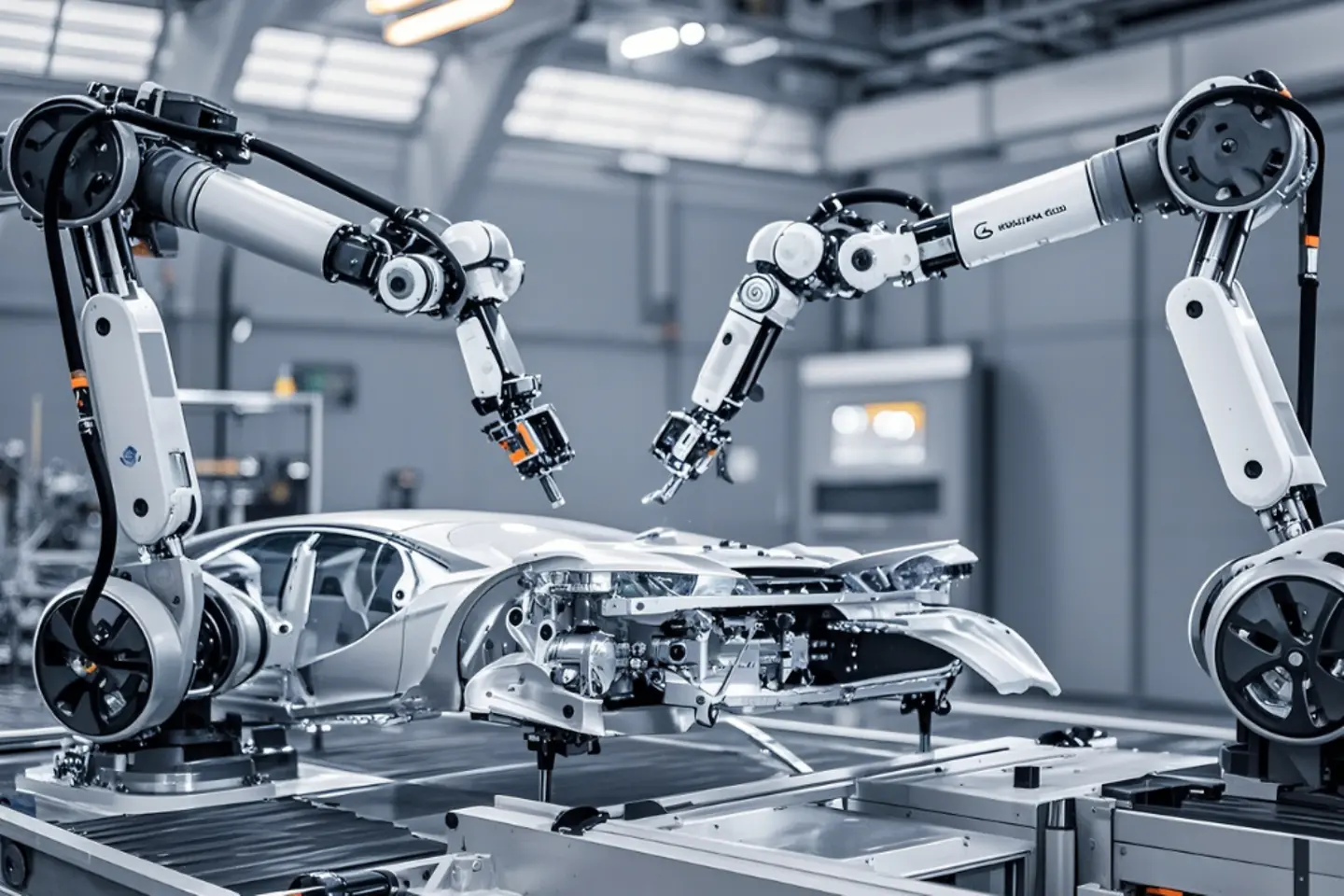
That doesn't mean that we close ourselves off to the consumer world. For example, we are working together with the University of Hannover and operate the German language model SOOFI, which is intended to serve as the basis for Europe's own AI applications. And then there's our partnership with Perplexity. But the industrial sector is different. When it comes to industrial AI applications, we talk about predictive maintenance, robotics or production optimization.
What are the consequences of this?
Industrial AI works with much more complex data vectors. By analogy with mathematics, it could be described as the transition from integer to real numbers. In engineering, you need the decimal precision and not just the granularity of a language model. That's why focusing on industry is our unique selling point as a first mover.

So is the Industrial AI Cloud or the AI data center the place to train and learn AI models for industrial applications? What about the later productive operation?
Correct. We see our AI factory in Munich more for the training and learning phase. The actual compute operations, once the AI applications move into real world use, will likely be performed at the edge or within our traditional data centers. In other words, we transfer the trained models from the high-performance chips in our Munich AI Pods (the "thoroughbred horses") to normal CPU data centers (the "working horses").
Your story sounds logical and conclusive. But what happens if the US hyperscalers jump on the industrial AI bandwagon with their investment power? Aren't you afraid of getting crushed?
We have positioned ourselves commercially clean and are in a position to retrofit. Our AI factory can be expanded: we can quickly double or even quadruple the computing power. In addition, we have another data center up our sleeve in Munich. Within a year, we will be able to add another, specialized AI Data Center if the market demands it.
This text is an excerpt, reproduced with the kind permission of the publisher. Read the full interview here at cio.de (in German only).
This text is an excerpt, reproduced with the kind permission of the publisher. Read the full interview here at cio.de (in German only).