Germany and Europe are taking their AI future into their own hands – and the SOOFI project (Sovereign Open Source Foundation Models) is a key milestone on this path. Leading partners from research and industry – supported by policymakers – are jointly developing a sovereign European language model that will be trained in our Industrial AI Cloud on German soil.
The industrial use of artificial intelligence in Europe so far relies mainly on base models from the USA and China. This is convenient, but carries significant risks: value creation shifts away, companies become mere users of others’ core technologies, and a dangerous dependency emerges – similar to what happened with cloud services. At the same time, there is no European Large Language Model (LLM) of sufficient size that can serve as a starting point for industry-specific specializations, resource-efficient derivatives, and tightly regulated applications.
Furthermore, Europe defines its own standards with the EU AI Act and stringent data protection rules, which are not always incorporated from the outset into global models. Especially in sensitive areas such as education, medicine, administration, and production, AI is needed that respects European values, offers transparency, and enables “Compliance by Design”. Digital sovereignty is therefore not a nice-to-have, but a business-critical factor for the long-term competitiveness of Europe’s economy.
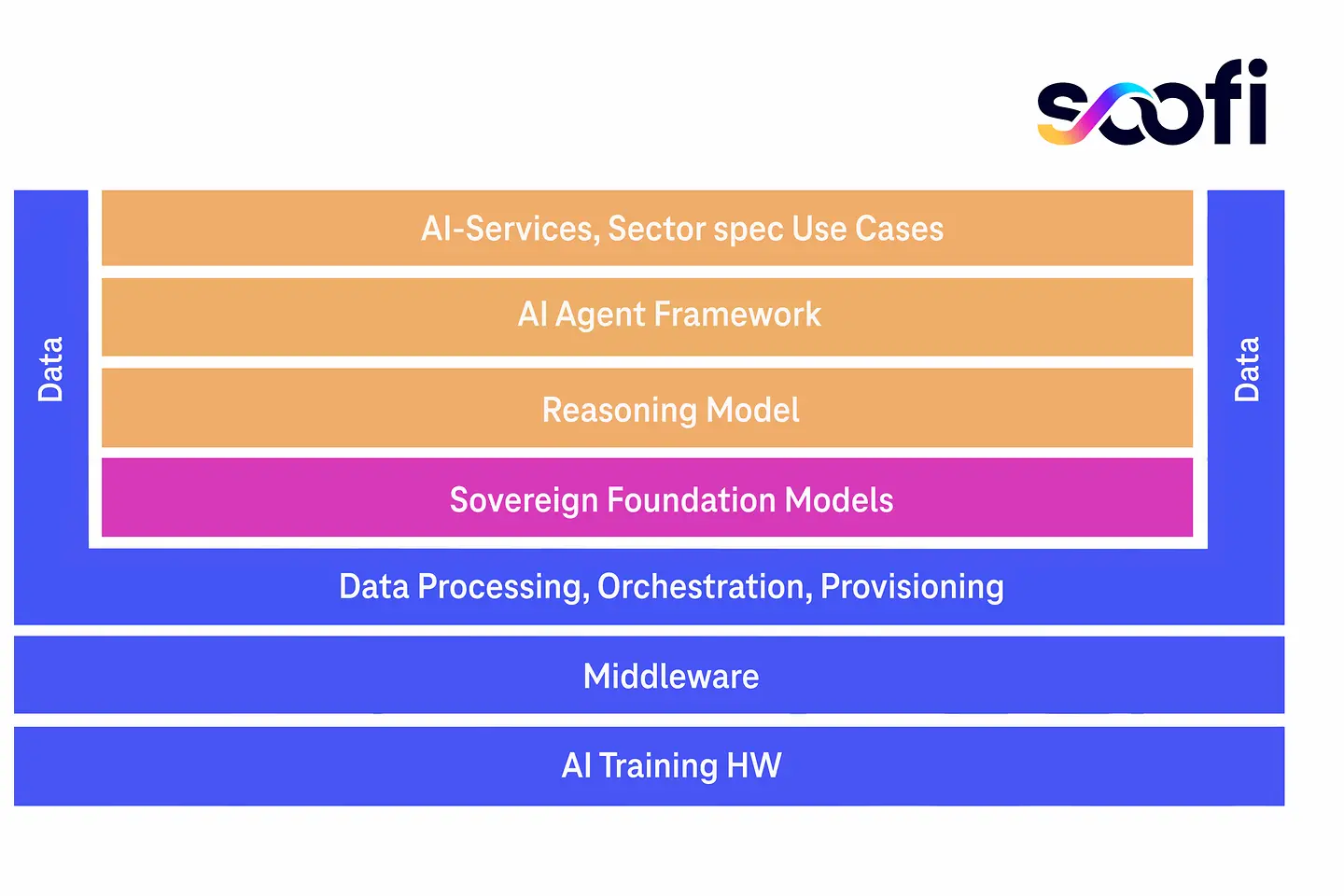
This is precisely where SOOFI comes in. SOOFI stands for “Sovereign Open Source Foundation Models” and is a research project developing a new, powerful, sovereign Large Language Model (LLM) with around 100 billion parameters. This model will be open source and is intended to serve Europe’s economy and society in the EU as a free, trustworthy foundation for own AI applications. It supersedes Teuken7B, a multilingual AI model with seven billion parameters that Fraunhofer trained for all European languages in 2024. SOOFI is – in simple terms – Europe’s answer to ChatGPT.
SOOFI pursues several goals simultaneously: in addition to the base LLM, a specialized “Reasoning Model” will be developed to support structured thinking, better analyze complex technical, regulatory, and organizational interdependencies, and help solve multi-step problems. Based on this, AI-agent technologies will enable first concrete use cases – especially for industry, small to medium enterprises, and the public sector. Use cases could include analyzing complex regulatory frameworks, optimizing production processes, or providing decision support in critical infrastructures.
SOOFI brings together the expertise of leading research institutions, startups, and associations in Germany. The consortium includes Fraunhofer IAIS, Fraunhofer IIS, the German Research Center for Artificial Intelligence (DFKI), the universities of Würzburg and Hanover, Technical University in Darmstadt, and the Berlin University of Technology. The consortium is complemented by the startups ellamind and Merantix Momentum, contributing practical implementation experience and innovation from the startup scene. The project is led by the KI-Bundesverband (National AI Association), which also anchors SOOFI politically and economically and regards it as a key building block of an open, independent, and high-performance European AI ecosystem.
SOOFI is funded by the Federal Ministry for Economic Affairs and Energy. The project is also embedded in the “8ra” initiative, supported by twelve EU member states, aiming to enable seamless use of cloud and edge services from European providers. The results of SOOFI should be available to all EU member states and the entire European business ecosystem.
With SOOFI, we create the foundation to operate artificial intelligence at an industrial level without relinquishing control over data, models, and processes.
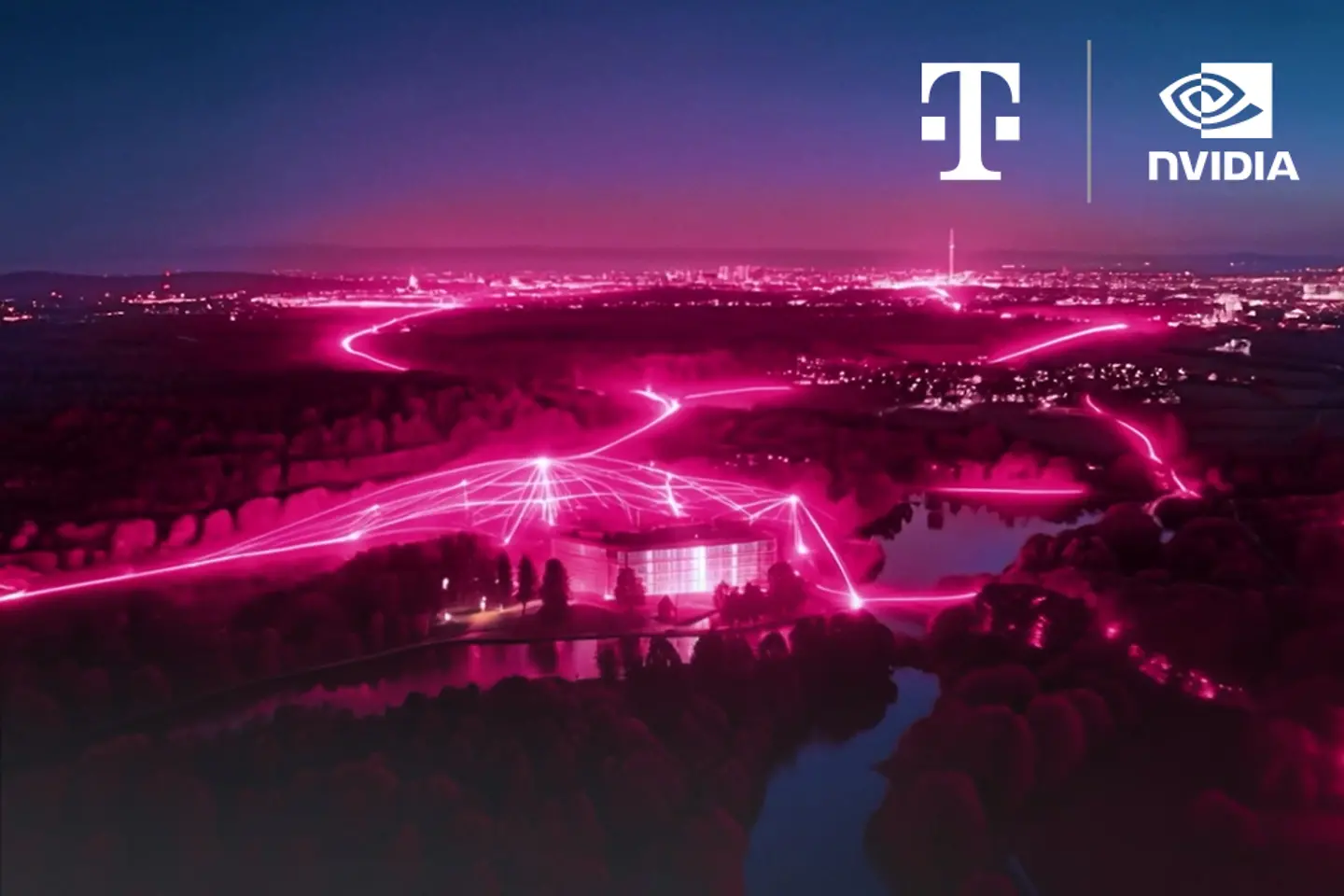
We, Deutsche Telekom and T-Systems, are also a major contributor to SOOFI: With our Industrial AI Cloud, we provide the technological home for this unique language model. We host this AI cloud from one of the largest and most advanced AI factories in Europe, on German soil. Leibniz University Hanover has commissioned Deutsche Telekom to deliver the complete technical infrastructure for the project, in the tens of millions of euros. Operationally, we, as T-Systems, are responsible for the sovereign AI compute infrastructure for SOOFI – including data centers, connectivity, and cybersecurity.
Thus, we play a central role in Europe’s AI value chain: We deliver not only raw compute power needed for such large AI language models but also a regulation-compliant, high-availability, and secure platform operated under German and European law. For the participating research partners, this means they can focus fully on model architectures, training data, evaluations, and use cases – with the assurance that infrastructure, data protection, and compliance are upheld at the highest level.
For training the 100-billion-parameter model, we will provide a consortium of around 130 NVIDIA DGX B200 systems with more than 1,000 GPUs for the project starting from March 2026. This is reserved specifically for the European language model. This AI compute power is embedded in an overall environment that will feature more than 10,000 newly released NVIDIA GPUs (Blackwell chips) and will reach a compute capacity of 0.5 exaFLOPS. That’s 500 quadrillion operations per second. In short, we will increase Germany’s AI compute capacity by about 50 percent in a short period.
Our AI factory is connected via four fiber lines, each 400 Gbit/s, and meets the highest standards for data protection, security, and availability. For a project like SOOFI, this combination of performance, sovereignty, and connectivity is decisive: only thus can massive training runs for foundation models with billions of parameters be conducted efficiently, reliably, and in line with European regulations.
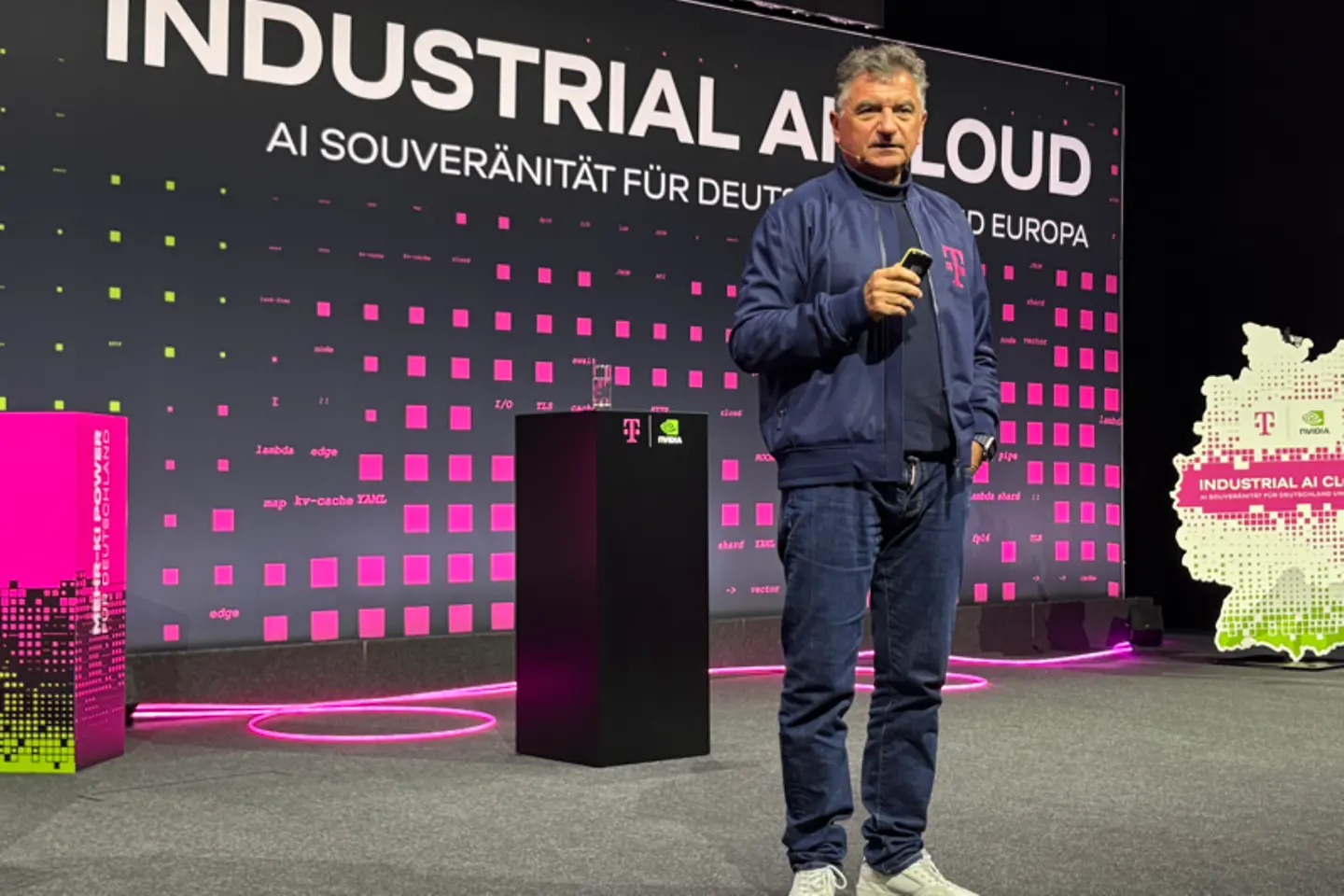
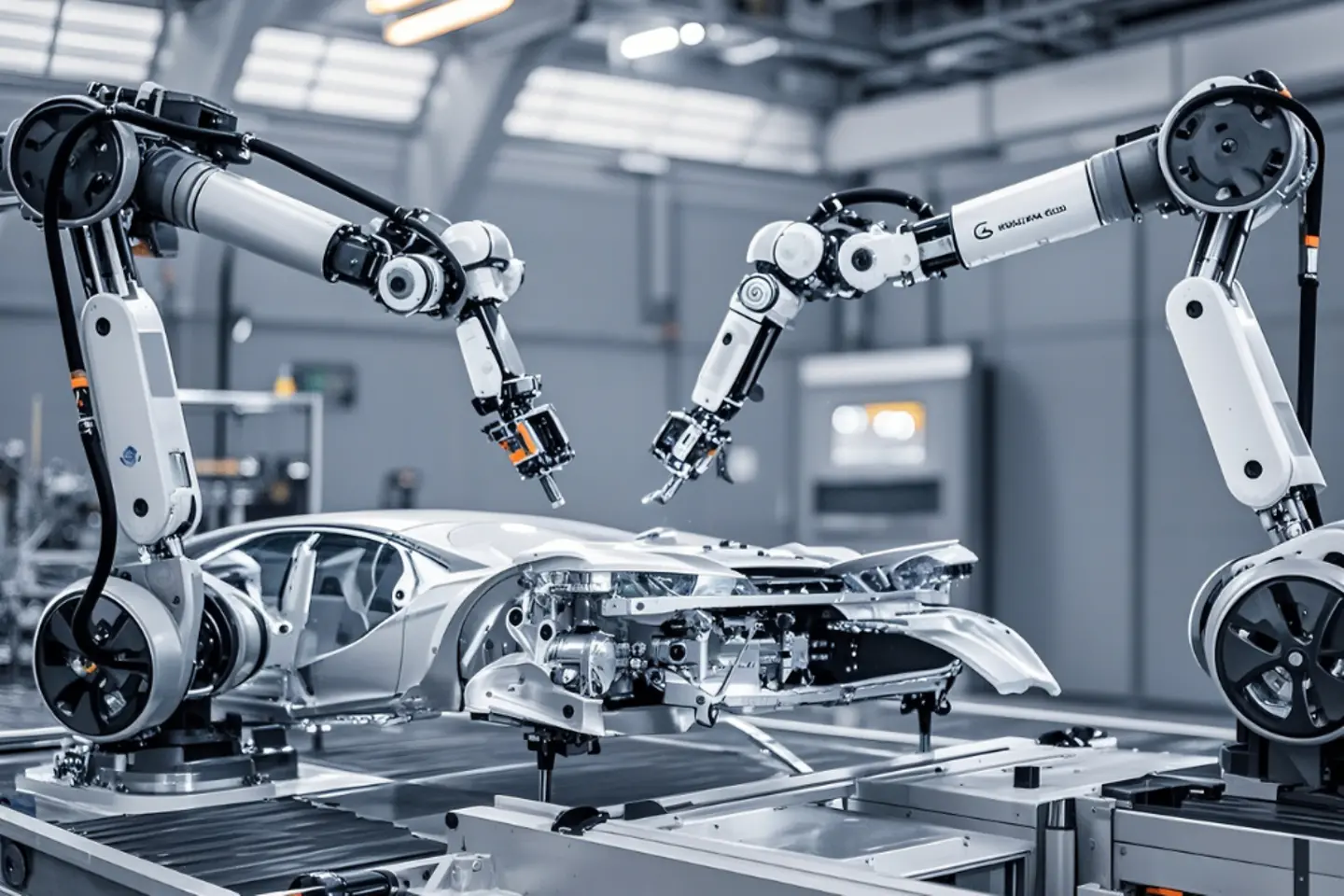
In addition to the SOOFI project, a number of innovative AI startups will also use our AI factory to advance their businesses. Examples include robotics companies Agile Robots (Munich) and Wandelbots (Dresden), drone manufacturer Quantum Systems (Munich), and PhysicsX (London). Our Industrial AI Cloud – with its “Made in Germany” technology stack – is open to other startups, mid-market firms, and large enterprises as well. It is primarily designed for enterprise-critical applications in industries such as mechanical engineering, manufacturing, logistics, robotics, simulation, and public administration. Customers receive flexible access – from pure GPU power to pre-trained models to fully managed AI services – bookable via our T Cloud as a sovereign alternative to hyperscalers.
For Germany and Europe, this infrastructure is far more than a technical project: it creates the foundation to operate AI at industrial scale without relinquishing control over data, models, and processes. And SOOFI will be trained in this environment – as a building block of a sovereign European AI value chain where infrastructure, models, and applications are aligned and oriented to European values and regulations.
With SOOFI, Europe is creating its first Foundation Model of this scale, explicitly intended as a starting point for industry-specific AI solutions and resource-efficient derivatives. Companies can build on it to develop their own domain-specific LLMs – for regulated industries, sensitive data spaces, or multilingual European markets. And all of this without relying on non-European base technology.
Reasoning models play a key role here, because they go beyond classic language understanding and enable structured, traceable thinking. They are therefore of great importance for German and European industry: they analyze complex technical, regulatory, and organizational contexts. At the same time, they can access additional information sources when needed to support well-founded decisions. In this way, reasoning models enable new forms of automation – with the help of interconnected agent systems. They also contribute to quality improvements in development, production, and knowledge management.
The value of SOOFI for our industry goes beyond technology and regulation: the project also strengthens European research and the talent landscape. Leading institutes can continue research on Foundation Models, deepen cooperation within Germany and Europe, and retain highly qualified young talent in the country. Thus, the project goes far beyond the development of a single language model. It is a clear signal that Europe is ready to develop its own open and powerful AI building blocks – from infrastructure rooted on European soil and meeting the highest standards.
SOOFI demonstrates what is possible when top-tier research, leading companies and startups, associations, and policymakers align. For us at Telekom and T-Systems, it is a great honor and pleasure to lay the technological foundation for this crucial future project with the Industrial AI Cloud and to sustainably strengthen Europe’s AI ecosystem together with all partners.
My special thanks go to Jörg Bienert from the KI-Bundesverband and my T-Systems colleagues Jörn Kellermann and Jürgen Lueg, whose expertise and commitment are decisive in bringing SOOFI to reality soon and giving Europe its own AI voice.