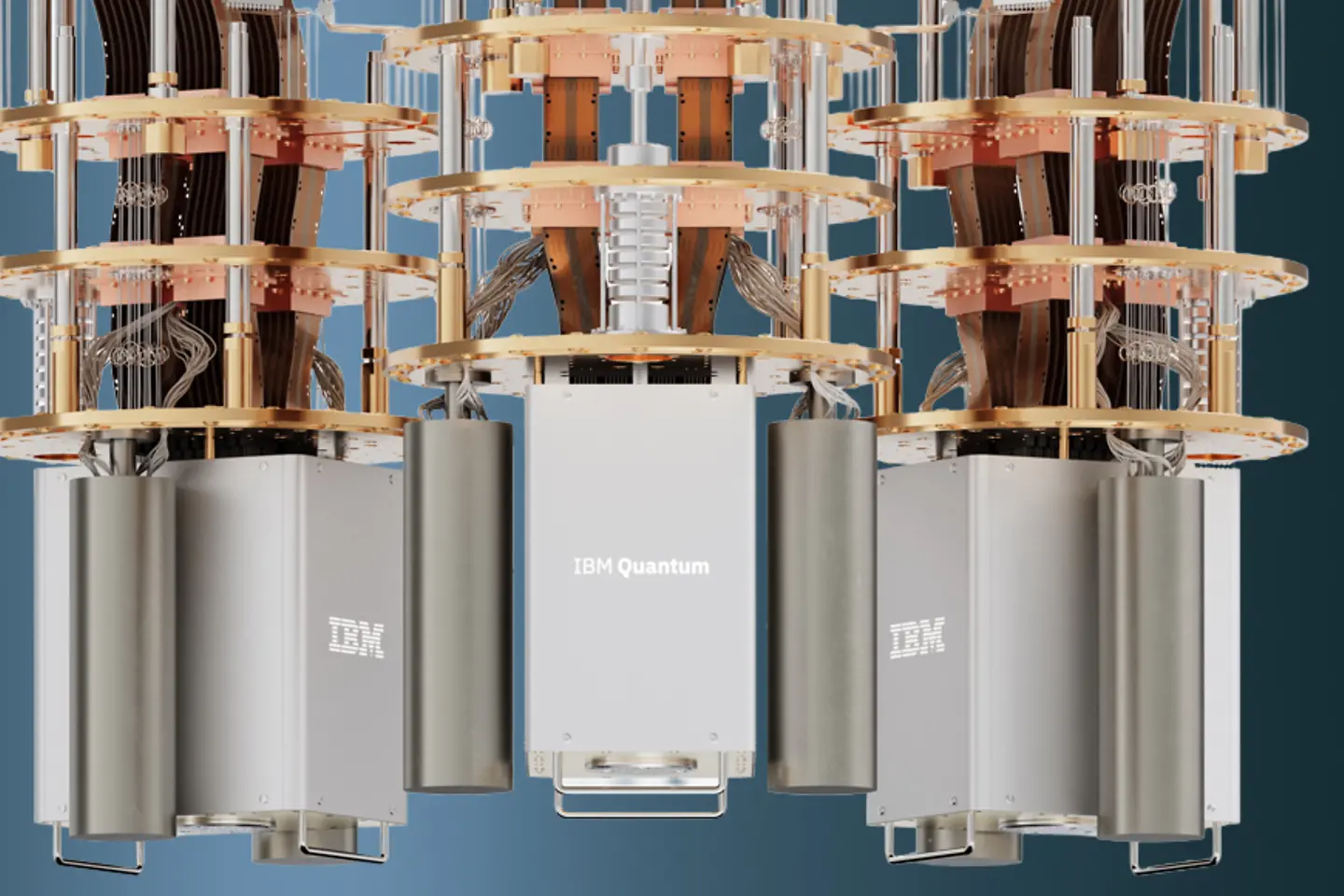
Quantum computing is moving from experimental technology to enterprise strategy. We expect that in 2026 credible claims of quantum advantage will emerge, where quantum and classical methods can provably outperform classical-only methods. Leaders who act now position their organizations to benefit early from this technology and build institutional knowledge, strategies, and talent pipelines that drive a long term competitive edge.
Quantum computing offers transformative potential. Fully realized, it could aid in the development of better catalysts to synthesize more sustainable fertilizer, strengthen risk management through better time series and sequence prediction, optimize supply chain logistics, and accelerate discovery of new antibiotics to counter multidrug resistant bacteria. The opportunity is no longer abstract. The field is advancing across hardware, software, and algorithms fast enough that leaders should begin engaging, and rigorously enough that they should learn to separate substance from hype. A recent IBM report showed that organizations preparing for quantum advantage by 2027 expect 53% more ROI by 2030, compared to their peers.
So, why does quantum matter now, how does it differ from classical computing, which problem classes are ripest to deliver value, and how can organizations move to benefit from this technology in the near future?
Classical computers encode information in bits (0/1) and apply deterministic logic gates. Quantum computers encode information in the quantum states of quantum bits, also known as “qubits,” and evolve those states with gate operations in the form of unitary matrices. In simpler terms: they offer a new way to represent information and can perform a more complex suite of operations on that information.
These new methods are made possible by quantum phenomena like superposition and entanglement. Superposition lets us encode more information into qubits than we can encode into classical bits, while entanglement lets qubits communicate in ways that are innately inaccessible to classical computing. Together, they allow us to develop whole new classes of algorithms that cannot be usefully run with classical hardware alone, some of which might solve certain complex problems exponentially faster than existing techniques. Some of these algorithms have the potential for speedups that address real-world problems, or new insights that would not be achieved with classical methods alone.
The universe runs on quantum mechanics. So do quantum computers. So it makes sense that they would often be the best method for solving certain kinds of problems.
IBM believes that the future of computing is quantum centric supercomputing (QCSC). In QCSC, we think of CPUs, GPUs, and quantum processing units, or QPUs as different resources that work together to solve a problem. Quantum accelerates the hardest subroutines; Classical resources perform the tasks they’re already well-suited to run while aiding in orchestrating and optimizing at scale. GPUs can handle tensor calculations, or offload some of the computational tasks from the QPU and aid in correcting errors innate to quantum computation.

Quantum computing offers transformative potential. The field is advancing across hardware, software, and algorithms fast enough that leaders should begin engaging, and rigorously enough that they should learn to separate substance from hype.
In the last decade, the community has made impressive strides building fast, accurate, and modular systems capable of initializing, evolving, and measuring quantum states with high fidelity – hardware practical enough for real-world enterprise use.
The recent generation of IBM quantum computers achieve speed, connectivity between qubits, and low enough error rates that make quantum advantage feasible, which is why we expect the first credible claims of advantage in 2026.
Using advanced couplers capable of linking quantum chips, we plan to connect more than 1,000 physical qubits capable of running 15,000 gates (steps in a quantum execution) by the end of 2028. We expect to take that further with fault tolerant error correction codes, achieving 100 million gates on 200 logical qubits by the end of 2029. That scale will unlock new frontiers for quantum computation.
A fast, feature rich SDK is essential so software isn’t the bottleneck in hybrid workflows. Qiskit, the most popular open source quantum SDK, emphasizes both speed and quality of transpiled circuits. This is critical when classical and quantum resources work together. Combined with the IBM Quantum Platform, users have access to community-built functions that accelerate their workloads and integration with critical HPC tools like Prefect and Slurm.
Long term, we aim for large-scale, fault-tolerant quantum computing, where many physical qubits work together to detect and correct errors faster than they appear. IBM recently developed new approaches to quantum error correction that are much more practical than earlier proposed methods, and demonstrated the required decoder performance in real hardware. It’s thank to this progress that we are able to commit to building a large-scale fault tolerant quantum computer before the end of this decade.
We feel confident that the field will realize advantage before fault-tolerant quantum computers arrive. We use three main strategies to make this possible: reducing errors during operations, spotting and discarding faulty runs, and running operations on results to remove noise error mitigation.
These error-mitigation techniques, together with improvements to our hardware, software, and quantum-centric supercomputing workflows, make scientifically useful quantum calculations possible today – with verifiable advantage on the horizon.
The field is quickly approaching “quantum advantage”. Quantum advantage is “the execution of an information processing task on quantum hardware” where firstly output correctness can be rigorously validated, and secondly, there is a quantum separation that offers superior efficiency, cost effectiveness, or accuracy versus classical computation alone.
Quantum advantage is both a technical challenge and a business opportunity. On the one hand, scientists are approaching quantum advantage with a bottom-up approach – rigorously proving specific quantum routines that can outperform classical-only techniques, with the hope that some of these routines will provide business value. On the other hand, organizations ranging from Fortune 500 companies to startups are mapping their problems to existing quantum algorithms in search of heuristic speedups.
This is an era of algorithm discovery. Today, there are quantum algorithms providing promise for solving differential equations, performing certain kinds of simulation, optimizing certain kinds of datasets, and performing machine learning tasks on certain kinds of data structures. Whether these algorithms provide benefit for an organization requires further discovery. We expect new algorithms to emerge as well.
Therefore, organizations should be searching for areas where quantum computing might provide benefit by seeking hard problems that their computers struggle to solve today. Then, they should develop a roadmap toward exploring quantum for solving that problem. This is a process best initiated early, so that your organization has time to move through these steps.
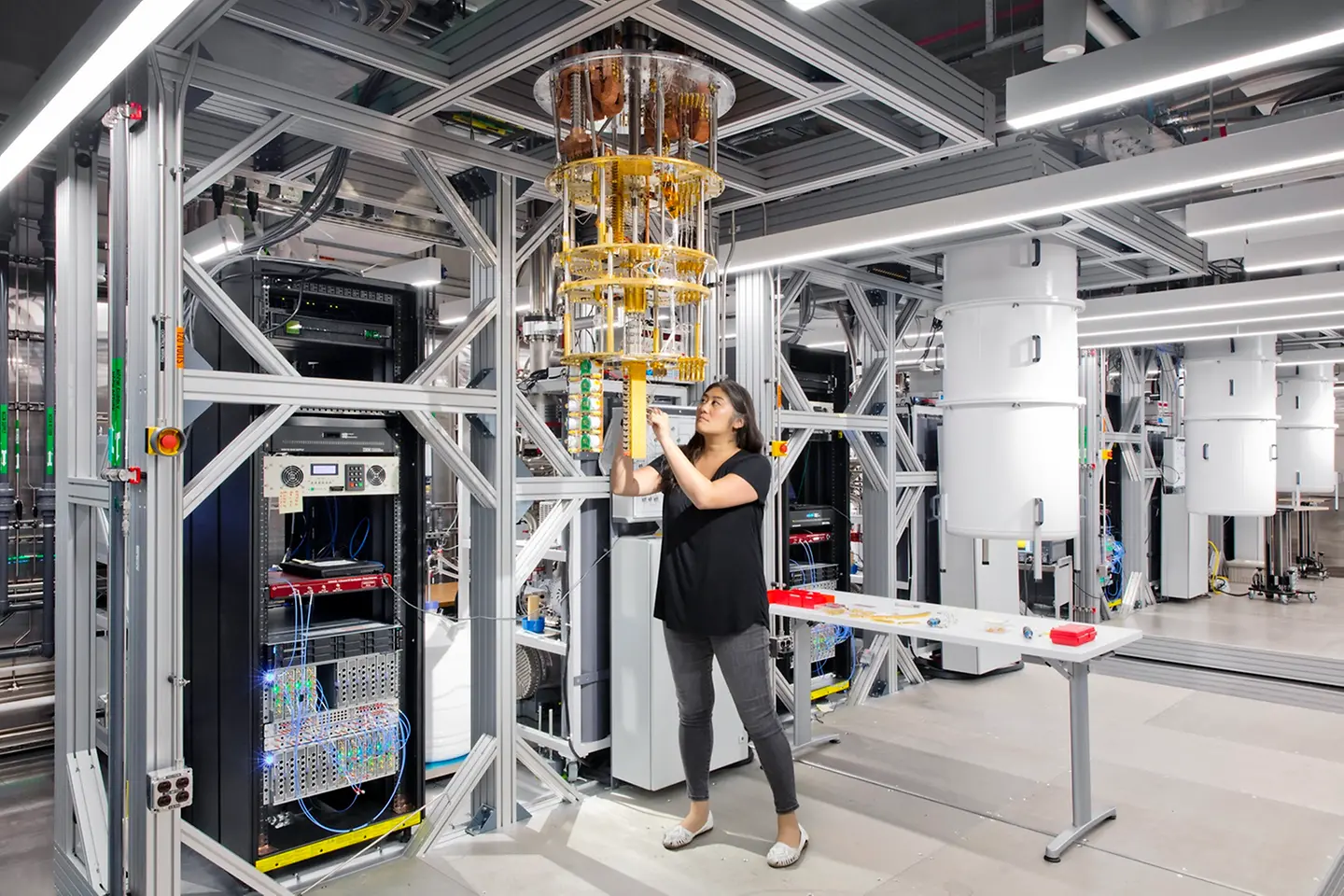
Quantum progress is a team sport. To make quantum advantage real and verifiable, the community should use the open platforms and software tools that allow everyone to share benchmarks, learn transparently, and iterate quickly. We also need strong collaborative networks where partners can validate each other’s results, co-develop standards, and agree on what “verified” really means, so claims of quantum advantage are credible and comparable. Today, researchers at IBM, Algorithmiq, the Flatiron Institute, BlueQubit, and more maintain a tracker for researchers to post promising candidates for quantum advantage so that the field can validate their advantages together.
Just as important is seamless integration with existing high-performance computing and cloud systems, so companies can experiment with quantum inside the tools and security frameworks they already use. IBM Quantum Platform and Qiskit are focused on providing the tools required for this integration.
And finally, we need robust talent pipelines and broad access to education – from classroom modules to online courses and hands-on challenges – so we have a workforce ready to turn quantum potential into real-world results. Across all organizations surveyed for the 2025 IBM Quantum Readiness Index, 61% cited that they are dealing with inadequate quantum skills according to the IBM report.
IBM has been in quantum computing from the very beginning – from co-hosting the 1981 conference where Richard Feynman proposed a quantum simulator of nature, to launching the first cloud-based quantum computer in 2016, to maintaining the largest and most powerful fleet available globally today. IBM’s strategy focuses on useful quantum computing with a clear line of sight from near term quantum advantage to fault tolerant quantum computing before the end of the decade. Right now we offer cloud systems with 100+ qubits and capable of running 5,000+ two qubit gates, and those offerings scale every year.
We are just as focused on building the quantum community. We have built a network of hundreds of institutions (and hundreds of thousands of users) pursuing quantum computing with IBM quantum technology. And we offer robust online learning programs to help novices and practitioners alike grow their skills.
And finally, we make public, verifiable commitments and stick to them. Since 2020, we have tracked our plans to advance quantum computing with a public roadmap, checking off milestones as we achieved them. Our detailed plans are available for anyone to read, and we expect to be held accountable by the ecosystem to meet those commitments.
Enterprises should move with practical ambition: pilot with clear validation, invest in people, and connect to the community that is proving (and improving) what quantum can do.
Let’s build the future of quantum computing together.