
What keeps the shoppers loyal today? It’s not just a discount coupon or a points card anymore. It’s real-time personalization, smooth omnichannel journeys, and the trust that their data is safe. Retailers know about this shift but delivering it at scale is where the real challenge lies. Loyalty marketing today must be personal, purposeful, and profitable. Keep reading to see why keeping up with loyalty marketing is the new normal.
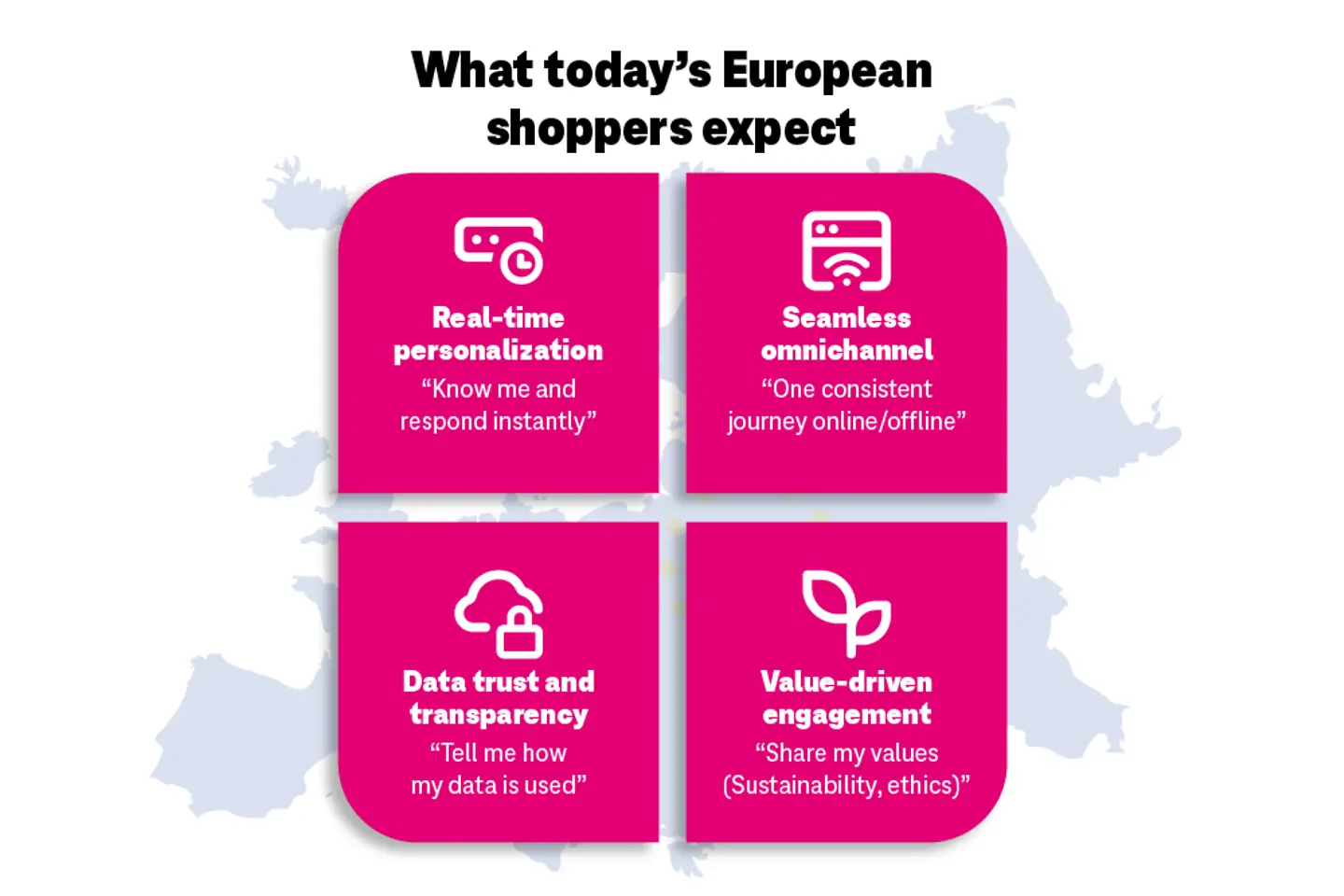
Still rewarding transactions or building real commitment? Once upon a time, a points card was enough. Today’s shoppers demand value beyond discounts. They want retailers to know them without overwhelming them, to recognize intent, and to offer relevance in real time. This shift makes loyalty less about promotions and more about relationships built on purpose, personalization, and trust.
So why does IT have a bigger role than ever in this? Retail loyalty is no longer just a marketing strategy, but a tech-driven capability. Systems must integrate data across channels, predict behaviors, and execute personalization in milliseconds. This requires a robust IT infrastructure, seamless API orchestration, and platforms that scale personalization without losing human touch. Loyalty now sits at the crossroads of marketing and IT.
Loyalty marketing is now rooted in its trust. Today’s European consumers are sharper and more selective. Sustainability and trust are now loyalty drivers, not just price cuts. Loyalty must feel consistent online, in-store, and mobile—with zero friction.
This means ensuring data flows seamlessly across touchpoints, powering real-time personalization and secure engagement. Brand loyalty is not just for the points collected on every shopping; it needs to reflect values. Sixty-four percent of European consumers say sustainability is a key factor in their purchase decisions, and 71 % of millennials expect brands to clearly explain packaging or product changes such as shrinkflation¹. More than awareness, these numbers signal expectation.
Customers today demand more than easy transactions. They expect transparency in how their data is used, consistency in social and environmental messaging, and brands that walk the talk. If a loyalty program cannot meet these expectations, loyalty can evaporate overnight.
In this new paradigm, loyalty is more than a program, it is a brand’s integrity, expressed through every interaction.
So, the real question is, are we building real loyalty, or just chasing repeat purchases?
Loyalty today begins long before checkout. Before a shopper makes their first purchase, they’re already judging your brand on transparency, values, and relevance. In fact, over 50% of European consumers say they are more likely to be loyal to brands that reflect their beliefs and personal values. That means loyalty isn’t something you earn at the point of sale; it’s something you build through consistent, ethical, and personalized engagement across channels. We can’t deny the fact that over 64%2 online adults agree that loyalty programs influence what they buy and agree that programs influence where they make purchases.
And this evolution isn’t just about consumer expectations. Regulatory frameworks across Europe are putting increased pressure on retailers to rethink data use, consent, and ethical targeting. Loyalty marketing is evolving from a reactive program to a proactive strategy built on trust, intention, and long-term relationships. The takeaway? If loyalty still lives in your marketing department, it’s time to elevate it. Because now, loyalty is not a reward, it’s a relationship.
Retailers need to design loyalty strategies that balance customer experience (CX) with customer lifetime value (CLTV). This not only means acquiring customers, but also retaining and growing them through relevant, data-driven engagement.
Across Europe, compliance is emerging as a trust signal that shapes where consumers choose to shop. Regulations such as GDPR, the NIS2 Directive, and the EU AI Act are redefining how retailers collect, manage, and safeguard customer data. But instead of slowing down innovation, these frameworks are enabling a more secure and transparent approach to personalization. For forward-looking retailers, strong data governance isn’t just a mandate, but a new lever for loyalty.
The shift is clear: loyalty marketing is no longer about the “next purchase”. It’s about CLTV—how long and how deeply customers stay engaged. A short-term discount may drive a sale, but only trust, relevance, and emotion ensure that customers keep coming back.
AI-driven personalization now enables retailers to predict preferences, adapt offers, and craft individualized journeys. But customers don’t just want personalization, they want meaningful relevance. A message that feels off-target erodes loyalty; one that resonates builds connection. Loyalty lives in every touchpoint—be it online, in-store, or mobile. European consumers expect brands to “know them” across channels, with no disconnects. A loyalty strategy that doesn’t unify experiences risks alienating customers. IT solutions must ensure smooth data flow across platforms to maintain consistency.
Rational benefits (discounts, vouchers) can bring customers in. But emotional loyalty gives the sense of belonging, trust, and shared values. European shoppers increasingly align with brands that represent sustainability, ethics, and transparency.
Retail loyalty is inseparable from tech. Secure, compliant, and smart data usage builds trust, while advanced analytics turn insights into action. IT leaders have a key role to play here: enabling scalable personalization, ensuring data safety, and making loyalty measurable through KPIs such as CLTV, retention, and engagement. In an era where choices are limitless, loyalty is the new competitive edge. Retailers who see loyalty marketing as a long-term growth driver rather than a campaign add-on are the ones who win.
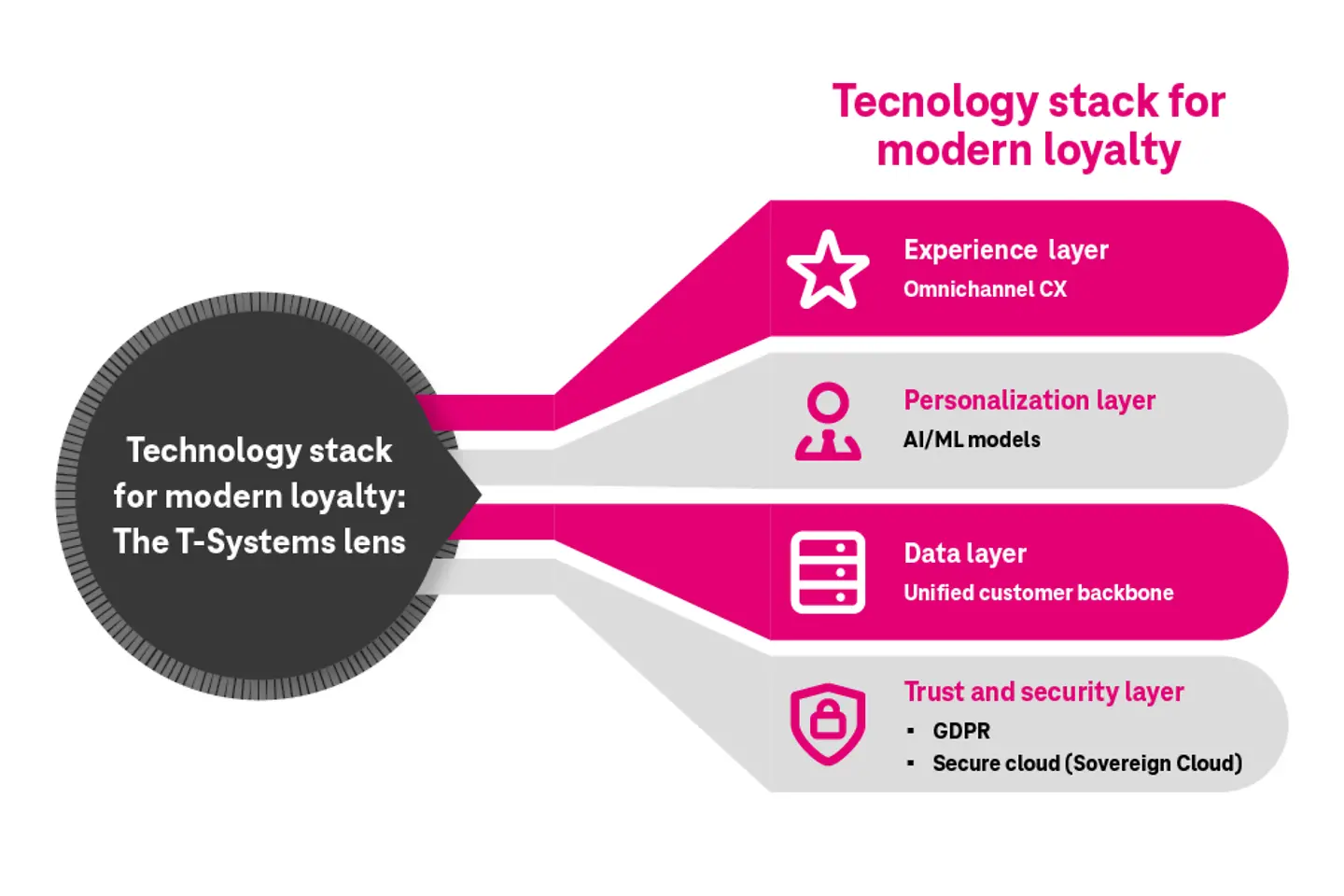
Delivering personalized, omnichannel loyalty isn’t a marketing-only play, but a technology challenge. Here’s why:
To build modern loyalty strategies, retailers need a technology architecture capable of connecting experiences across physical and digital touchpoints without compromising security or compliance. This is where the T-Systems technology stack comes into play, bringing together experience design, AI-driven personalization, unified data, and sovereign-cloud-grade security.
The infographic below illustrates this layered architecture from the experience layer to the trust and security foundations showing how each component works together to deliver loyalty that is consistent, intelligent, and privacy-aware.
At T-Systems, we help leading retailers implement intelligent platforms that ensure every personalization is compliant, every interaction is meaningful, and every backend system reinforces the promise of trust. It’s not just about technology, it’s about enabling loyalty at scale, powered by cloud, AI, and secure data ecosystems. From real-time personalization engines to integrated customer data layers, we help retailers deliver loyalty that lasts.
Why are your customers chasing badges, climbing tiers, and unlocking exclusive perks? Because gamification is no longer a gimmick. It’s gradually becoming the new normal of loyalty marketing in Europe.
More than 45%3 of brands now identify gamified and experience-based rewards as key drivers of customer marketing for the next two to three years. And they’re backing that up with investment. From “Spin to Win” discounts to collaborative challenges and VIP milestones, loyalty is being reimagined as something fun, interactive, and emotionally engaging.
What’s behind this level-up? Progress creates engagement. When customers feel like they’re advancing instead of just transacting, they stick around. Tiers such as Bronze, Silver, and Gold give them goals. Micro-rewards keep them returning. It’s not just about rewarding purchases. It’s about rewarding participation.
And none of this works without smart infrastructure. Real-time data, behavioral insights, and marketing automation power these personalized journeys. Loyalty becomes an ongoing conversation, not a static program. In 2025, you’re not just running campaigns, you are building experiences your customers want to come back to.
Loyalty was experienced in apps or cards. Today it lives across every touchpoint, online, in-store, email, chat, voice. True omnichannel loyalty connects these experiences.
Retailers integrating loyalty across digital and physical channels see higher customer retention and stickier engagement. In Europe, loyalty behavior now often begins pre-purchase; customers expect consistent service and recognition wherever they shop.
This shift reflects deeper expectations: customers want seamless, relevant experiences, not fragmented interactions. When a loyalty journey spans web, mobile, and in-store with aligned rewards and personalization, brands build loyalty that lasts.
Retailers are embedding rewards and recognition directly into payment experiences, turning every swipe or scan into a brand moment. Think of real-time loyalty redemption, instant cashback tied to spend behavior, or personalized offers triggered through digital wallets. This seamless integration removes friction while elevating satisfaction. According to a recent report on digital commerce, embedded finance tools tied to loyalty programs are seeing a 38%4 lift in participation rates among Gen Z shoppers.
For brands, it’s not just about reducing churn. It’s about converting every transaction into a deeper relationship.
In a world of global commerce, hyper-local relevance is emerging as a loyalty advantage. Retailers are leveraging geolocation and in-store data to deliver loyalty experiences that are timely, contextual, and location aware. For example: a fashion brand pushes a loyalty bonus when a member enters a flagship store. A grocery chain sends personalized recipe discounts based on local weather patterns and past purchases. Consumers are more likely to engage with loyalty offers when they are tailored to where they are and what they’re doing. The message is clear, loyalty isn’t just about who your customers are, but where they are.
Here are key principles from brands who are winning loyalty currently:
Remember: the goal isn’t to make customers come back. It’s to make them feel like they belong.
Loyalty marketing in Europe has entered a new phase: which is shaped by data ethics, emotional relevance, and competitive pressure. It’s no longer about simply retaining customers. It’s about building meaningful relationships from the first click to long-term engagement.
Retailers who treat loyalty as a core business strategy, not a campaign; will outpace those stuck in transactional models. At T-Systems, we work with retail leaders to build loyalty ecosystems that are secure, scalable, and ready for what’s next. The future belongs to brands that understand this: Loyalty isn’t earned once. It’s earned every day.
1 what-matters-to-todays-consumer-2025, Capgemini, 2025, Capgemini research institute
2 Consumers Crave More Than Discounts From Loyalty Programs, John Pedini, 2025, Forrester
3 Loyalty Program Trends 2026 report, Open Loyalty, 2025, Open Loyalty
4 State of the customer obsession, Forrester,2023, Forrester