Europe’s manufacturing industry is often described as the industrial crown jewel. Automotive and aerospace manufacturers, known for precision and quality, are now accelerating into Industry 4.0, powered by AI and cloud computing. But this progress comes with a challenge: innovating without compromising sovereignty. And sovereign cloud is emerging as the foundation for Europe's manufacturing future.
Cloud computing has become the default infrastructure for global business. Manufacturers rely on it to run enterprise resource planning (ERP) systems, connect IoT-enabled machines, and enable supplier collaboration. Artificial intelligence (AI) depends on the scale and speed that only cloud platforms can provide.
Yet, in Europe, public cloud services alone do not fully address the risks. The United States’ CLOUD Act still casts a long shadow, raising the possibility of foreign authorities demanding access to sensitive European data. At the same time, European laws such as GDPR, NIS2, and DORA impose strict rules on data handling, residency, and compliance.
Manufacturers face a paradox: the innovation they need is often hosted on infrastructures they cannot fully trust. This creates a widening gap between the promise of cloud and the sovereignty requirements of the European industry. Bridging that gap is essential for competitiveness.
Manufacturing in the age of Industry 4.0 is fundamentally data-driven. Every production line, robotic arm, and connected machine is now a source of continuous data streams. A single automotive plant can generate terabytes of data daily from CAD drawings, sensor readings, predictive models, and supplier data. All flow across global value chains.
The challenge is not the creation of this data, but its secure use. Intellectual property theft has become a major risk, with design files representing the very essence of competitive advantage. Export control laws add another layer of complexity, requiring firms to restrict the movement of certain data across borders. On top of this, reliance on non-European operators can expose entire supply chains to disruption.
In other words, the competitiveness of Europe’s manufacturers increasingly depends on how they govern, secure, and process their data. Sovereign cloud provides the framework to do so.
When you think of sovereignty, you often picture borders and restrictions. Sovereignty in the digital age is about enabling innovation with confidence. For manufacturers, sovereignty can be understood across three dimensions:
Data sovereignty ensures that design files, production data, and supplier information are stored and processed within European jurisdictions, under European control. Encryption keys and access rights remain with the manufacturer, not a foreign hyperscaler.
Operational sovereignty protects continuity. Factories cannot afford downtime, especially when disruptions ripple across global supply chains. Autonomy in IT operations, disaster recovery in European jurisdictions, and zero outage principles ensure resilience.
Technology sovereignty avoids vendor lock-in. Manufacturing IT depends on ERP, manufacturing execution system (MES), and product lifecycle management (PLM). Sovereignty ensures independence in workload design, deployment, and long-term roadmap control.
Together, these three dimensions form the backbone of sovereign manufacturing IT and are enablers of competitiveness.
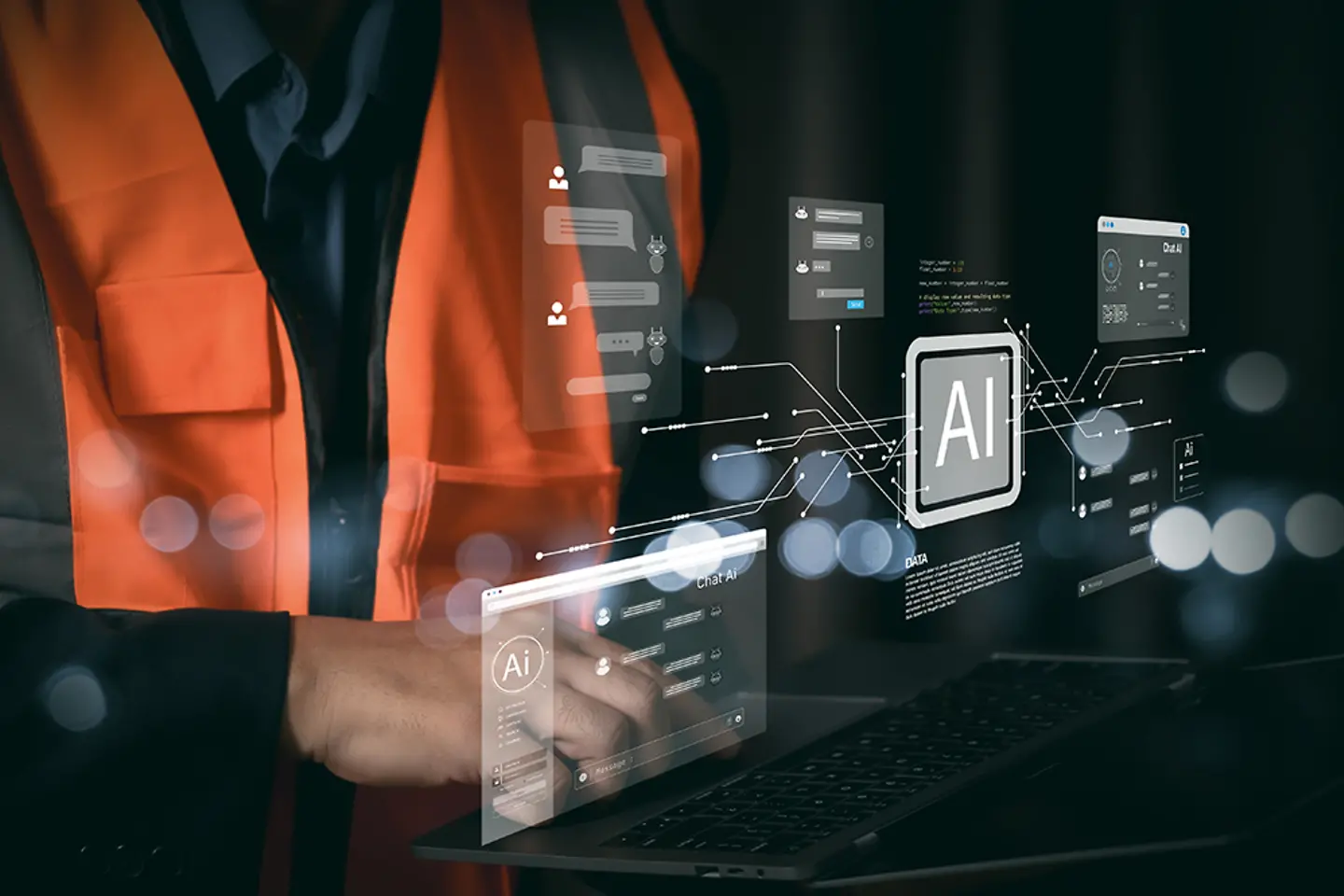
Across Europe, manufacturers are investing heavily in AI. Predictive maintenance, quality inspection, and energy optimization are among the most common pilot projects. Yet, nearly 70 percent of AI initiatives in manufacturing are in “pilot purgatory”.1
The models work. But the infrastructure beneath them often does not exist. Data is trapped in legacy systems; latency undermines real-time decisions; and sovereignty concerns block deployment on foreign platforms. What looks like a failure of AI is usually a failure of the foundation.
Manufacturers typically take one of two paths. The first is to modernize everything upfront, which includes applications, data lakes, edge infrastructure, governance, and only then pursue AI. This is comprehensive, but slow and costly.
The second approach is pragmatic: start with AI, identify a use case with tangible ROI, and then modernize only the necessary systems. This iterative path works faster, delivers ROI earlier, and builds the sovereign foundation step by step.
For most manufacturers, the second path is emerging as the model that balances speed, cost, and sovereignty.
Take predictive maintenance as an example. A machine on the production line must anticipate failure, trigger spare part orders, and reschedule production. Anomaly detection happens at the edge, where milliseconds matter. Diagnosis at scale requires global data comparisons in the cloud.
Data from MES, ERP, maintenance logs, and supply chain all play a role. But these systems are often decades old. Modernization becomes essential to unlock the data needed.
And then comes sovereignty. Feeding the secret sauce of production data into non-European infrastructures is not acceptable. The CLOUD Act still creates risk. Sovereign cloud provides the only environment where innovation and compliance align.
Working backwards from AI use cases reveals the stack: app modernization to expose data, edge and hybrid cloud for scale and speed, and sovereign cloud for trust.
The vision of sovereign AI in manufacturing is no longer abstract. In 2025, Deutsche Telekom and T-Systems, together with NVIDIA and SAP, announced the creation of the world’s first Industrial AI Cloud.
Built entirely on German soil, the Industrial AI Cloud was launched on February 4, 2026. This infrastructure features 10,000 GPUs across NVIDIA DGX B200 systems and RTX Pro 6000 Servers, increasing AI computing power in Germany by around 50 percent. It is designed for simulation-first, AI-driven manufacturing, from generative design to large-scale digital twins.
T-Systems provides the sovereign backbone: secure data centers, compliance with European standards, operational control, and AI solutions delivered under the EU values of privacy and data protection. For manufacturers, this means trusted infrastructure at a global scale, with sovereignty guaranteed.
This initiative is Europe’s industrial AI moonshot to position sovereignty not as a constraint, but as a catalyst for global leadership.
Building on sovereign foundations, T Cloud is Deutsche Telekom and T-Systems’ holistic European cloud offering, designed to meet the growing demand for sovereignty across industries. Launched in September 2025, T Cloud responds directly to the 2024 Draghi Report’s warning about EU dependence on foreign technologies, addressing financial, operational, and strategic risks.
T Cloud unifies all cloud services under one roof, following a multi-cloud philosophy. It integrates hyperscaler offerings, consulting services, and Telekom’s own infrastructure into a seamless ecosystem. Customers can choose the level of sovereignty they require, from data and operational control to full technology autonomy, without being locked into a single provider.
T Cloud ensures GDPR-compliant infrastructure, zero-trust security, and 24/7 monitoring from certified European SOCs. By combining digital sovereignty with economic viability and scalability, T Cloud empowers manufacturers to innovate while remaining fully in control.
T Cloud and the Industrial AI Cloud highlight what sovereign cloud makes possible. Compliance-first architectures keep data within Europe. Secure IoT and AI deployments can be realized, powering predictive analytics, digital twins, and autonomous factories. Encryption models such as Bring Your Own Key and Hold Your Own Key guarantee control over intellectual property. Sovereign cloud is not about isolation. It is about trusted spaces where innovation scales without compromise.
As part of Deutsche Telekom, T-Systems has been embedding sovereignty into cloud long before it became a mainstream concern. Its portfolio spans independent sovereign environments and hyperscaler partnerships, all framed by European guardrails.
What differentiates T-Systems is its end-to-end approach, from migration, modernization to managed services, and governance. Real-world references prove the value: University Clinic Schleswig-Holstein secures medical imaging with sovereign controls; BARMER runs secure eID for 8.7 million policyholders on T-Systems’ Open Sovereign Cloud.
For manufacturers, the same principles apply – secure R&D data in PLM, trusted AI in predictive maintenance, and compliant supply chain platforms; all on sovereign foundations.
Manufacturers that embrace the sovereign cloud can assure regulators, build trust with customers, and secure innovation pipelines. They become resilient against geopolitical risks and cyber threats. They gain the freedom to scale AI and Industry 4.0 initiatives without compromise.
The future will not be determined by who has the most advanced robots, but by who can combine AI innovation with sovereignty.
Data has become Europe’s most strategic industrial resource. Protecting it is not simply compliance; it is competitiveness, resilience, and innovation. Sovereignty and speed can go hand in hand, with the sovereign cloud providing the foundation and the Industrial AI Cloud bringing in intelligence. Together, these will define the next chapter of European manufacturing.
1 From AI to Impact: Capabilities powering Lighthouses’ 4IR adoption, McKinsey & Company, 2024, online
2 Gartner Identifies the Top Trends Shaping the Future of Cloud, Gartner, 2025, press release
3 Europe Sovereign Cloud Market Size & Outlook, 2025-2033, Grand View Horizon, 2024, online