 Image generated with AI
The defense industry is digitalizing rapidly, from networked production environments to hybrid IT and OT landscapes. At the same time, each new interface expands the attack surface and increases the risk of sophisticated cyber attacks. Organizations can improve their resilience through an integrated approach that combines zero trust, microsegmentation, managed detection and response, and AI-supported threat detection.
Geopolitical tensions and an increasingly volatile security situation are changing the framework conditions for many sectors, especially for the defense industry. This is where strategic relevance, sensitive data, and high availability requirements meet accelerated digital transformation. Cyber security is therefore becoming more about resilience and decisive action than technology alone.
In addition, defense companies are becoming increasingly software driven, not only in the traditional office IT, but also across the entire value chain: engineering, production, and operations. Networked systems, remote access, and data-driven processes create efficiency and speed. At the same time, new dependencies and additional entry points are emerging that can no longer be secured on the side.
Cloud services, on-premises environments, third-party access, and OT systems exist in parallel—each with different levels of security, responsibilities, and technical requirements. The result is a broader, more dynamic attack surface that can hardly be controlled with isolated measures.
The threat situation is no longer theoretical. The ENISA Threat Landscape Report 2025 analyzed 4,875 cybersecurity incidents in Europe within one year—a clear signal that cyber risks are permanently present and increasingly professionalized.1 The key question therefore is: how can the defense industry remain capable of acting as digitalization continues to gain pace?
Cyber resilience begins where visibility and control over identities, access paths, and data flows are consistently combined, and where security architectures are designed to both detect and limit incidents.
Cyber incidents in the defense industry are rarely just an IT problem. Even brief interruptions can slow down production processes, supply chains, or service-critical operations, and thus directly impair the ability to act. At the same time, the issue goes far beyond availability: design data, defense secrets, and sensitive know-how are attractive targets for highly professional attackers.
In the defense industry in particular, requirements related to sovereignty, control, and compliance play a central role. A report by Thales underlines the extent to which the security situation is worsening in defense-related industries. A 600% year-on-year increase in cyber attacks has been reported in the aviation and aerospace supply chain, with 27 attacks registered between January 2024 and April 2025.2 Threat intelligence evaluations, such as those from CybelAngel, also indicate a high level of activity targeting aerospace and defense organizations.3
This makes it even more important to adopt a security approach that not only focuses on prevention, but also anticipates worst-case scenarios. How quickly can an attack be detected, and how effectively can it be contained before it becomes an operational incident? This is exactly where cyber resilience comes into play.
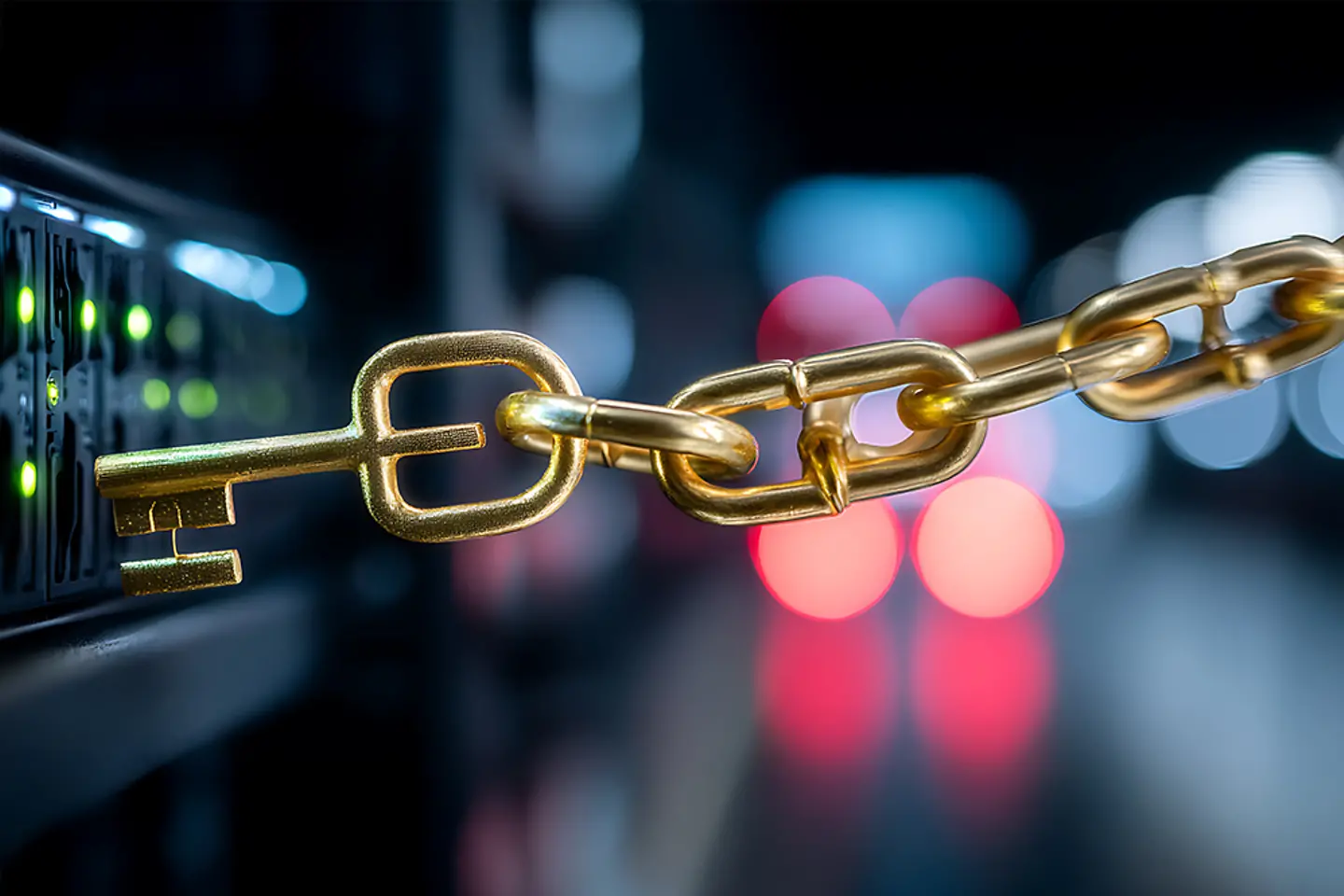
Cyber resilience rests on four essential capabilities: transparency across assets, identities, and data flows; rapid containment to limit lateral movement; strong detection and response through MDR or SOC; and continuity to maintain and restore operations in a structured way.
Cyber resilience cannot be achieved through individual measures alone. It is built through security architectures that make complexity manageable while preventing an incident from escalating into an operational disruption. The defense industry therefore requires an approach that combines access control, data flow visibility, and rapid response capabilities, regardless of whether systems operate in the cloud, on premises, or within OT environments.
A central building block is zero trust. Instead of relying on implicit trust, every access request is continuously verified based on identities, authorizations, context, and behavior. This shifts the focus away from the traditional inside versus outside model towards precise control over who can access what, and under which conditions.
On this foundation, microsegmentation provides an additional layer of protection. It separates workloads, systems, and communication paths at a fine-grained level, reducing the risk of attackers moving laterally through the infrastructure after gaining initial access. This is particularly critical in hybrid IT and OT landscapes, where different zones, systems, and responsibilities can otherwise create unintended shortcuts for attackers.
However, even strong preventive measures are not a substitute for operating securely in real world conditions. Resilience also depends on how quickly an attack can be detected and how consistently it can be stopped before causing impact.
This is where MDR plays a key role. With continuous monitoring, structured analysis, and rapid SOC-led response by expert teams, the goal is not just generating alerts but also ensuring swift containment and restored control.
AI supports cyber security in the defense industry where traditional approaches reach their limits, especially when evaluating large volumes of data, detecting weak signals, and prioritizing events under time pressure. Pattern recognition and anomaly detection help identify suspicious activities earlier, particularly in environments where IT and OT operate in parallel and security data from multiple sources converges.
Specifically, AI helps make cyber security in defense environments more operationally effective, for example, through:
This creates a real advantage, especially in security critical environments, but only when AI is not used in isolation. Without consistent visibility, defined control points, and a functioning response chain, a new form of complexity can quickly emerge: many alerts, many dashboards, but limited operational impact.
In practice, it is therefore not the number of tools that matters, but the ability to control access, limit communication paths, identify incidents, and respond systematically. A resilience-oriented security approach therefore relies on integration, both technically and organizationally.
This is precisely where the strength of experienced security partners such as T-Systems becomes clear. Cyber resilience is not created through individual components, but through the coordinated interaction of architecture, operations, and responsiveness across IT, OT, and hybrid environments.
More tools do not automatically mean more security. An integrated architecture improves:
A resilient security architecture can be built on a modular basis, depending on protection requirements, environment, and maturity level:
Cyber resilience in the defense industry is not created by individual measures, but by a coordinated security model consisting of prevention, containment, detection, and response. What matters most isn’t “more security”, but the ability to apply it consistently and in an integrated way—even across hybrid IT/OT environments.
This is where T-Systems supports companies—through security consulting, zero-trust architectures, microsegmentation, and MDR, backed by globally established SOC structures and deep operational expertise. The result: cyber security becomes a prerequisite for stability, decisive action, and futureproofing.
1 Threat Landscape Report, 2025, ENISA
2 Key Cloud Statistics, 2025, Thales Group
3 Aerospace & Defense Threat Landscape Report, Sep 2025, CybelAngel