 Image generated with AI
AI is becoming the central infrastructure of the digital economy. Yet when it comes to powerful foundation models, Europe has so far been heavily dependent on non-European providers. This dependency poses economic, security-related, and geopolitical risks. Open, sovereign models on European infrastructure are therefore crucial to safeguarding technological capability, industrial value creation, and regulatory agency. With Soofi, a European approach to a competitive AI ecosystem is taking shape.
Artificial intelligence (AI) is no longer a technology of the future. It has become the central foundation for innovation, productivity, and competitiveness. Large language models (LLMs) in particular—so-called foundation models—are evolving into a kind of operating system for the AI economy. They serve as the basis for applications in business, public administration, research, industry, healthcare, education, and many other fields.
Those who control these models control a significant part of the future digital infrastructure. This is precisely why the question of AI sovereignty is not abstract for Europe, but highly concrete: Do we want to merely use AI—or do we also want to shape it ourselves?
Today, the most powerful foundation models are developed almost exclusively by US and Chinese companies. OpenAI, Anthropic, Google, and other providers dominate the market. Training such models requires enormous computing power, large volumes of data, technological excellence, and significant financial resources. Europe is currently largely dependent on this key technology.
This dependency is risky. It not only affects prices or market shares, but also impacts Europe's overall strategic capacity to act. When European companies and public administrations source central AI systems exclusively from non-European providers, a permanent transfer of value creation occurs. Europe pays, while key revenues, data access, technological expertise, and platform power are generated outside Europe.
There is also a geopolitical dimension. Technology companies are increasingly subject to the influence of national interests. Political decisions, export restrictions, regulatory requirements, or economic policy interventions can have a direct impact on the availability, costs, and terms of use of AI systems. Current examples such as the blocking of access to Fable 5 and Mythos 5 for users outside the United States illustrate what such dependencies can look like in practice. The availability of powerful AI systems is not only a technical question, but increasingly also a political and economic one. For European companies, public authorities, and critical infrastructure, this represents a risk that must be taken seriously.
Security also plays a central role. External models create dependencies in digital infrastructure. Particularly when it comes to sensitive data from industry, public administration, research, healthcare, or security sectors, it is not enough to simply consume AI as an external cloud service. Europe needs models that are transparent, verifiable, adaptable, and operable on European infrastructure.
However, sovereignty does not mean isolation. It is not about ending international cooperation or ignoring global innovation. On the contrary. Europe needs open, interoperable, and competitive AI systems. But it also needs its own technological foundations in order to independently decide which models are deployed, further developed, and integrated into critical processes.
This is exactly where Soofi comes in.
Soofi develops open, sovereign foundation models as the basis for a European AI ecosystem. The goal is to provide the European economy, industry, and public administration with powerful models that are transparent, adaptable, and independently usable. To this end, the project brings together German expertise in the field of LLMs in a joint consortium for the first time: research institutions and start-ups are collaborating under the leadership of the KI-Bundesverband.
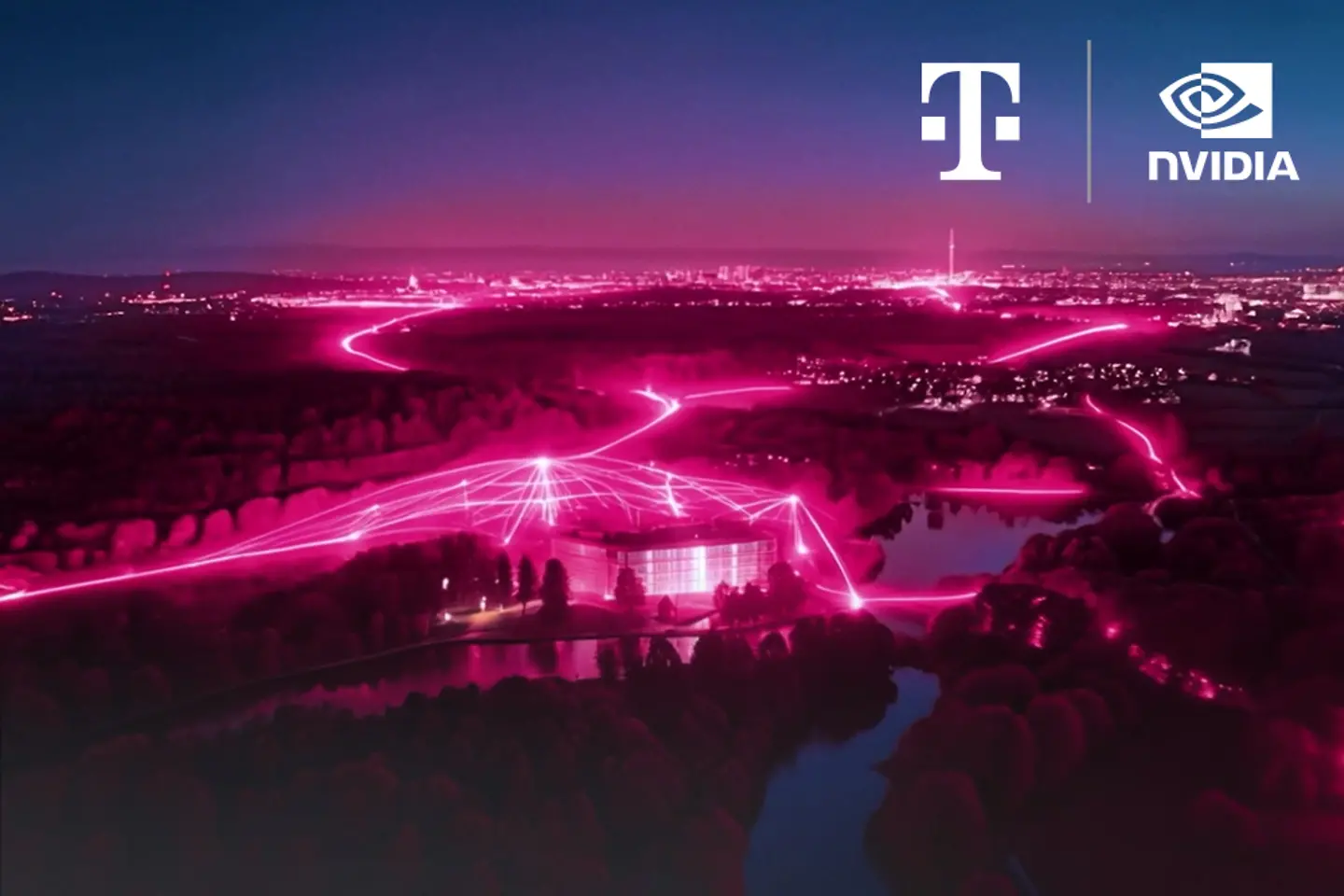
The roadmap is ambitious: Soofi S is set to be released in summer 2026 as a first production-ready base model with around 30 billion parameters and MoE architecture, trained on Telekom's AI cloud in Munich. Building on this, larger models are planned, up to a frontier-level model. At the same time, specific requirements are to be added in collaboration with industry—such as multimodality, edge capability, and industry-specific datasets.
The decisive point, however, is not model size alone. What matters is the principle: open, transparent, sovereign, and designed from the outset to meet European requirements. This also includes alignment with the EU AI Act. While many existing systems need to be retrofitted to comply with European regulations, a European model can be developed in accordance with these requirements from the very beginning.
Digital sovereignty is not created through appeals, but through concrete infrastructure. Those who want to preserve European agency must ensure that government agencies, public institutions, and critical infrastructures can use AI systems without becoming dependent on geopolitical decisions made by non-European corporations or governments.
For policymakers, this is of strategic importance. Digital sovereignty does not arise from appeals, but from concrete infrastructure. Those who want to preserve Europe's ability to act must ensure that authorities, public institutions, and critical infrastructures can use AI systems without becoming dependent on the geopolitical decisions of non-European corporations or governments.
For businesses, the benefits are equally tangible. Companies need stable and predictable costs, data security, freedom of integration, and the ability to adapt models to their own requirements. An open model reduces vendor lock-in and enables companies to integrate AI into existing IT landscapes, rather than binding themselves entirely to proprietary platforms.
This is particularly crucial for European industry. Many of the most important AI applications do not emerge from generic chatbots, but along complex value chains: in product development, mechanical engineering, manufacturing, logistics, quality assurance, customer service, document analysis, and process automation. This requires models that can be adapted to specific data, technical languages, and industrial requirements.
Soofi is therefore more than a single model. It is an attempt to build a European value-creation ecosystem. Applications, services, adaptations, security audits, data preparation, deployment, and operations can all be developed in Europe. This retains both technological expertise and economic value here.
The current development is funded through European resources. In the long term, however, Soofi is to be transferred to private-sector ownership and further financed by European industrial partners. This is important, because technological sovereignty must not permanently depend on public funding. It requires a viable market model that enables innovation, operation, and further development over the long term.
Europe is now facing a decisive turning point. The coming years will determine whether we remain permanent users of third-party platforms for foundation models, or whether we build our own powerful alternatives. This decision will impact everything—right from the AI industry to industrial policy, security policy, research policy, and Europe's future competitiveness.
Soofi shows that a European answer is possible. The expertise is there. Research is strong. Industry has demand. The regulatory requirements are clear. What is needed now is the shared will to turn individual initiatives into a viable European infrastructure.
AI will shape the next phase of the digital economy. If Europe wants to remain sovereign in this process, it must co-develop the foundations itself. Not at some point in the future, but now.