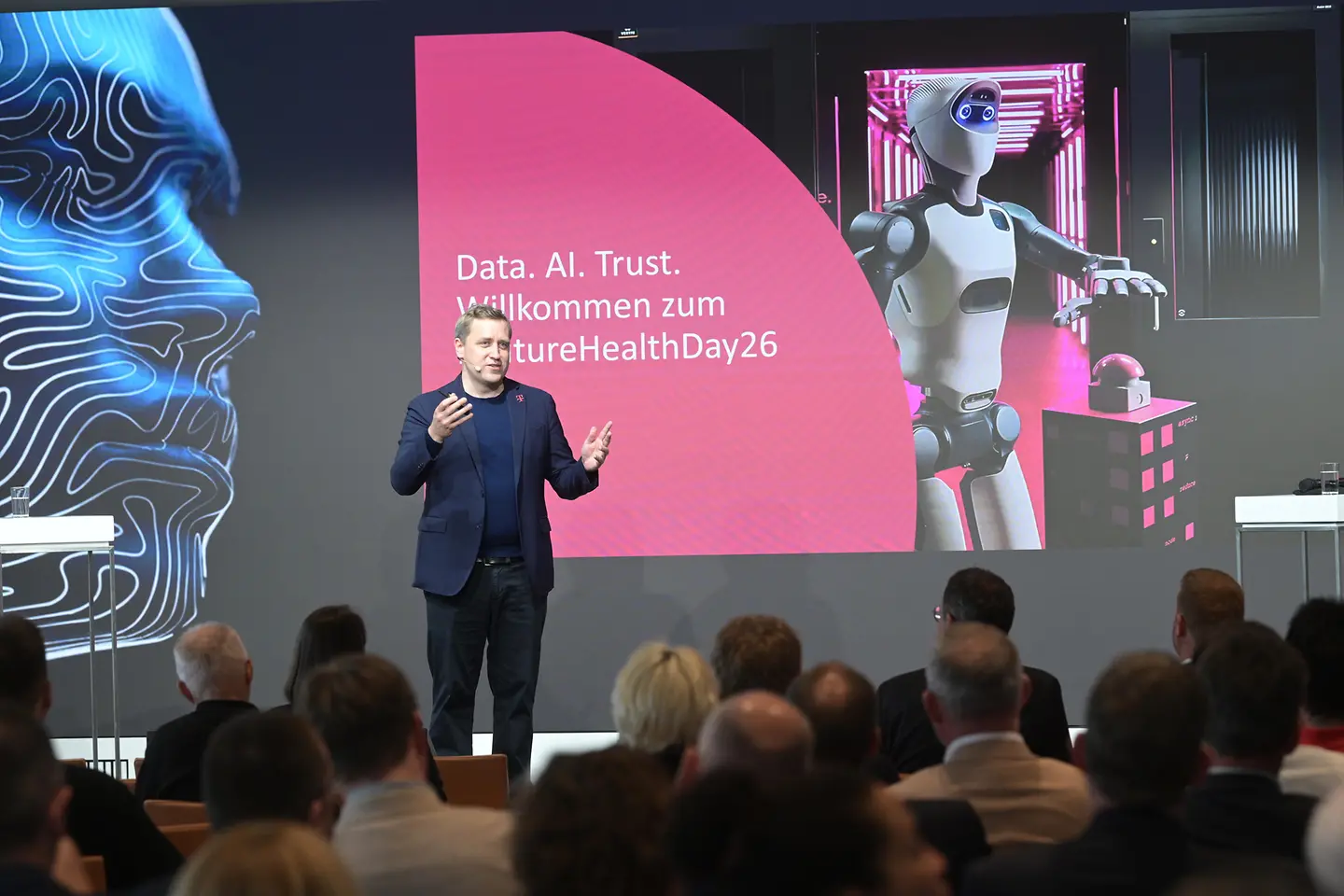
One day before the start of DMEA, Europe's most important trade fair for digital healthcare, Deutsche Telekom hosted the fourth Future Health Day. Germany's Federal Data Protection Commissioner, the Head of Digitization at the Federal Ministry of Health, and many other guests were present. The motto: 'Data, AI, Trust.' Gottfried Ludewig, Head of Public Sector and Health, Deutsche Telekom AG and T-Systems, surprised attendees by exclusively presenting the sovereign patient file.
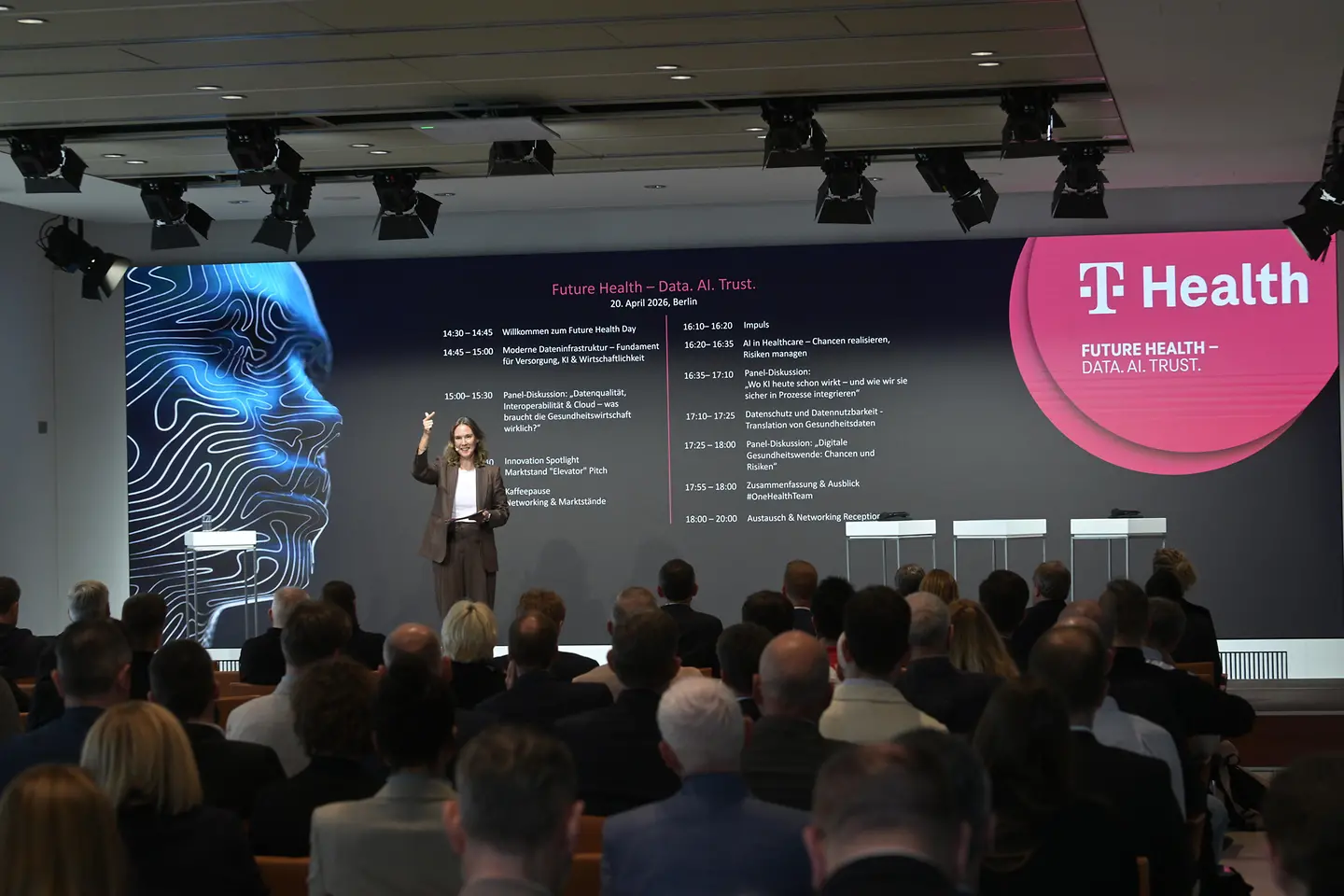
Host Jessica Hanneken welcomed around 200 guests from business, politics, and the healthcare sector to the fourth Future Health Day of Deutsche Telekom at Bertelsmann’s Berlin Representative Office. The motto: “Data, AI, Trust.”
“AI is the industrial revolution of our time,” said Gottfried Ludewig, Head of Public and Health, at the opening. “Two-thirds of Germans already use AI—even my 81-year-old father works with ChatGPT.” For patients, AI has long since arrived: “More than 50 percent seek AI-based diagnoses or second opinions.” At the same time, he warned against misguided priorities: putting digital before inpatient before outpatient falls short. What matters is connectivity. “Data, AI, Trust—nothing works without trust.” Structured, secure data is the foundation of a connected healthcare system.
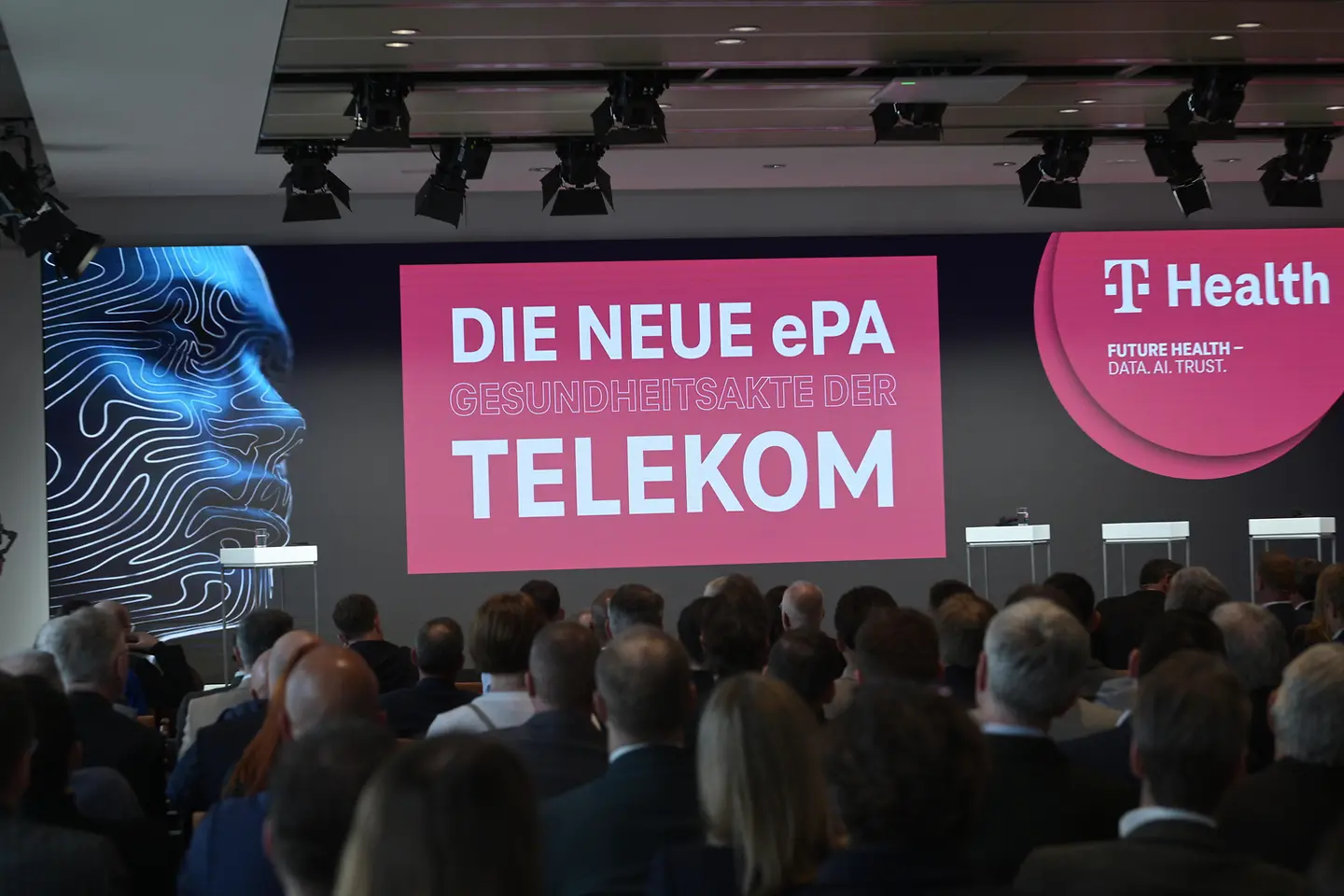
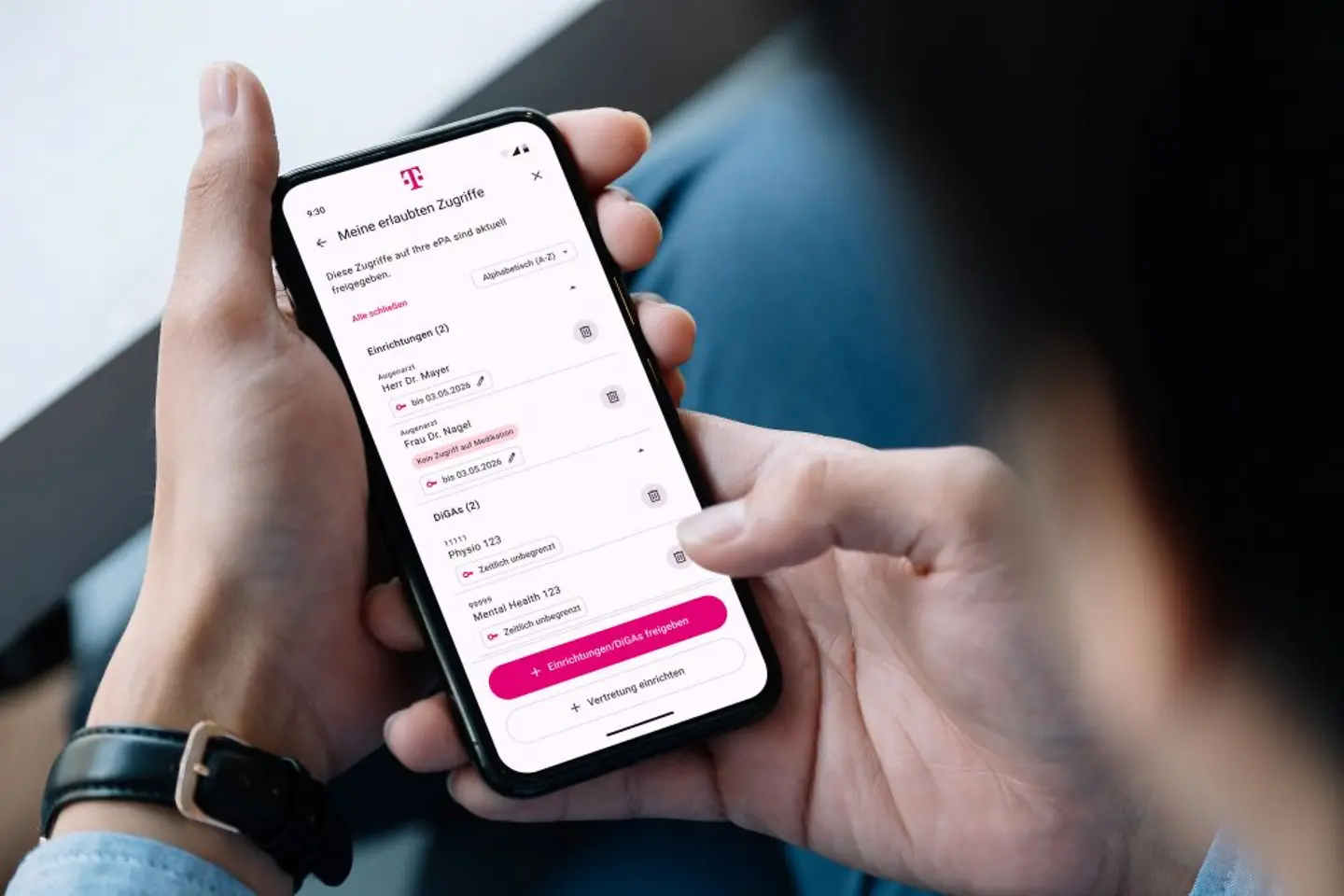
Ludewig also had a surprise in store. He exclusively presented the sovereign electronic patient record “Made in Germany.” It stands for health data under European control and a consistently user-friendly design—as a foundation for trust, acceptance, and digital sovereignty in healthcare.
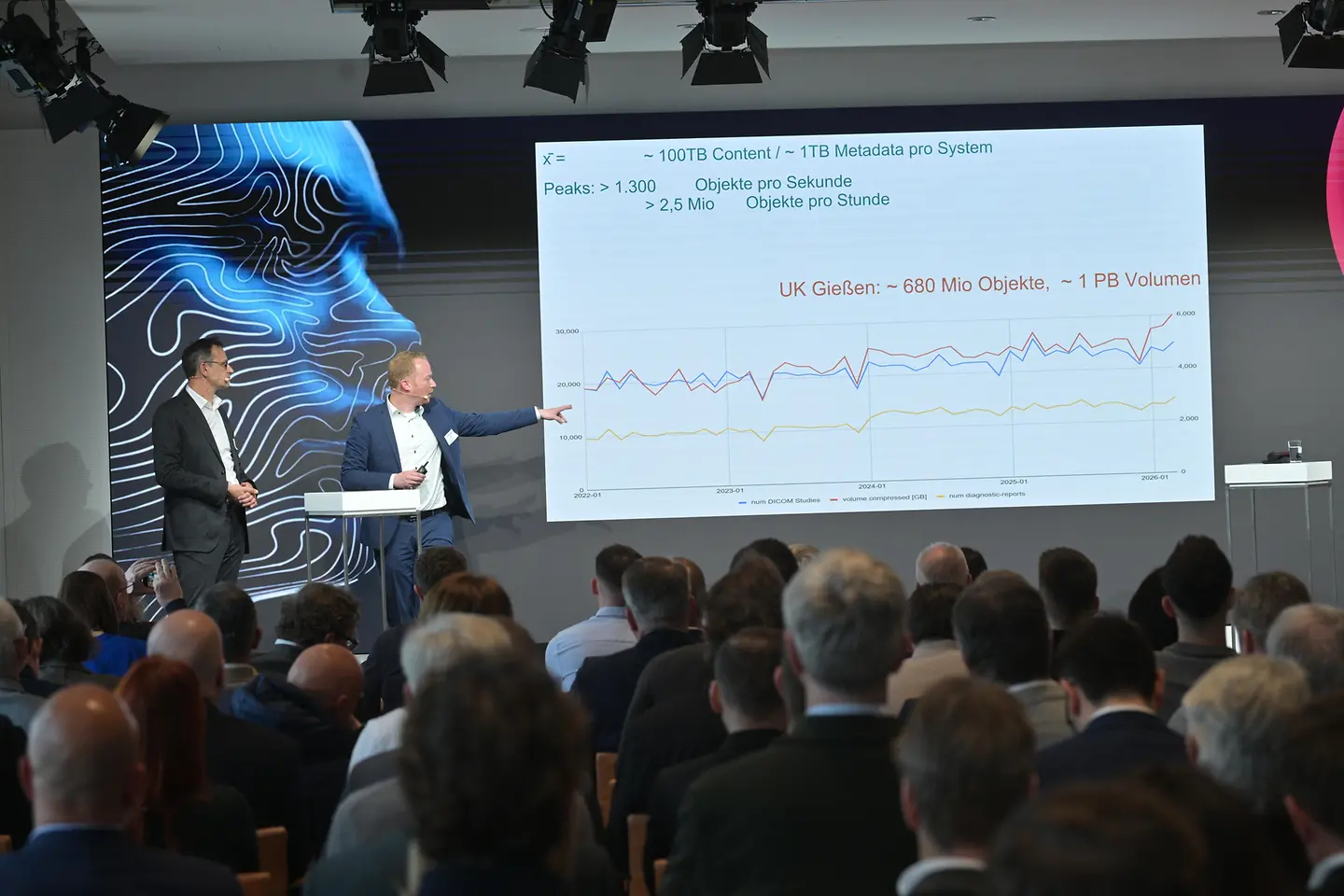
Modern data infrastructures as the foundation for connected, secure, and efficient healthcare delivery. How interoperable systems, AI, and open standards can improve care, support decision-making, and create more time for patients was demonstrated by Stefan Andreatta (synedra IT) and Jens Lotz (Head of IT at the University Hospital Giessen and Marburg). Since 2022, 680 million data records have been collected at the Giessen University Hospital following the introduction of the Synedra data management system. Andreatta summed it up: Data doesn’t want to be alone. Data wants to be secure. Data wants to improve the world.
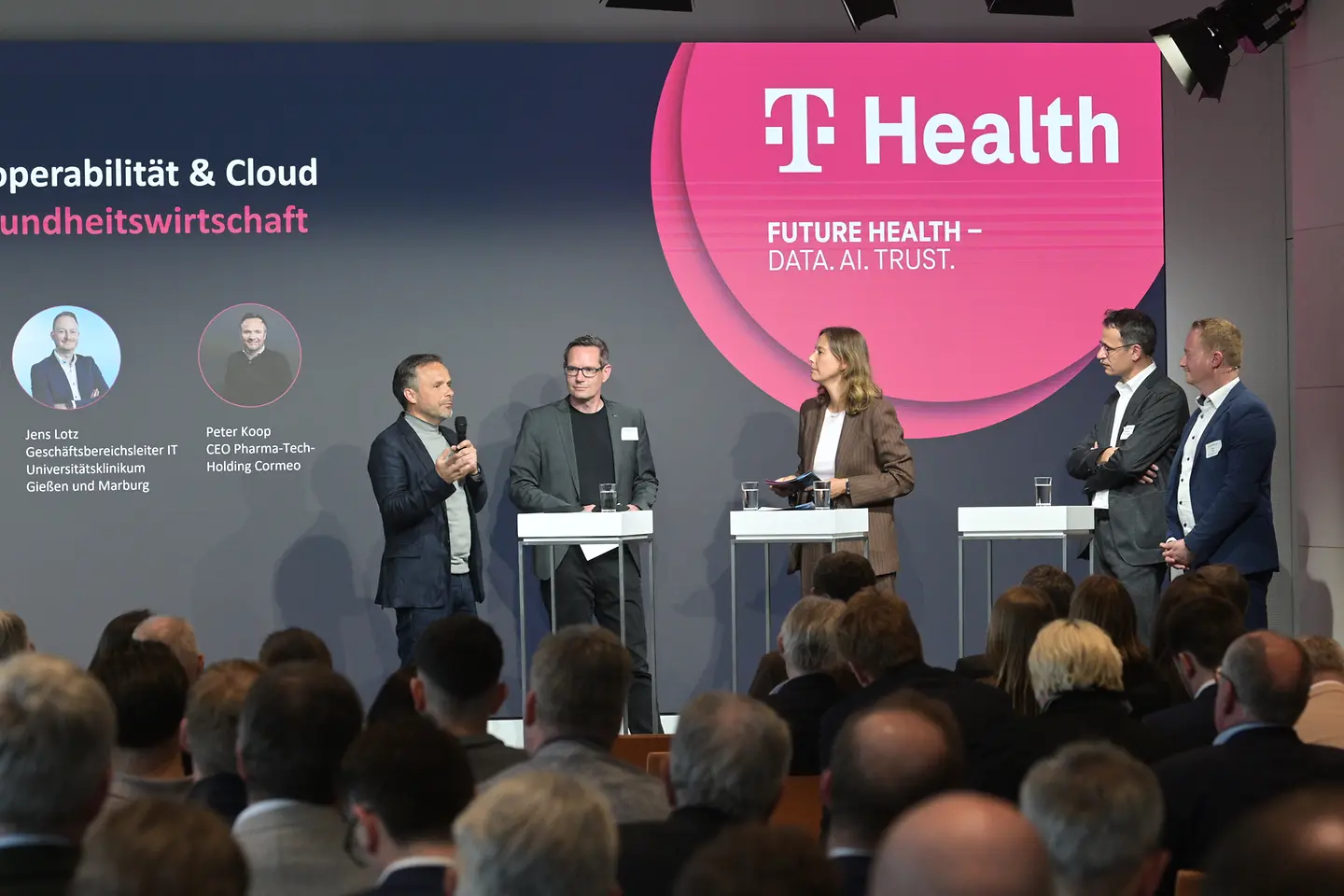
The panel discussion with Kornell Adolph (Managing Director of AOK connect), Stefan Andreatta, Jens Lotz, and Peter Koop (CEO of Cormeo) made one thing clear: today, the most common data format in healthcare is still DIN A4—despite standards, true interoperability is lacking. “The CT report doesn’t arrive, medication data isn’t usable—that’s not a technology problem, it’s a connectivity problem,” emphasized Peter Koop. Kornell Adolph added: “Patient well-being must take priority. Developers should look over users’ shoulders instead of working past them in parallel.”
Numerous partners presented themselves at Future Health Day: Palo Alto (cybersecurity), RP Doc Solutions (medication therapy safety), the new Telekom subsidiary synedra (health content management systems), Teton (AI-supported care systems), and, of course, Deutsche Telekom’s T Health division.
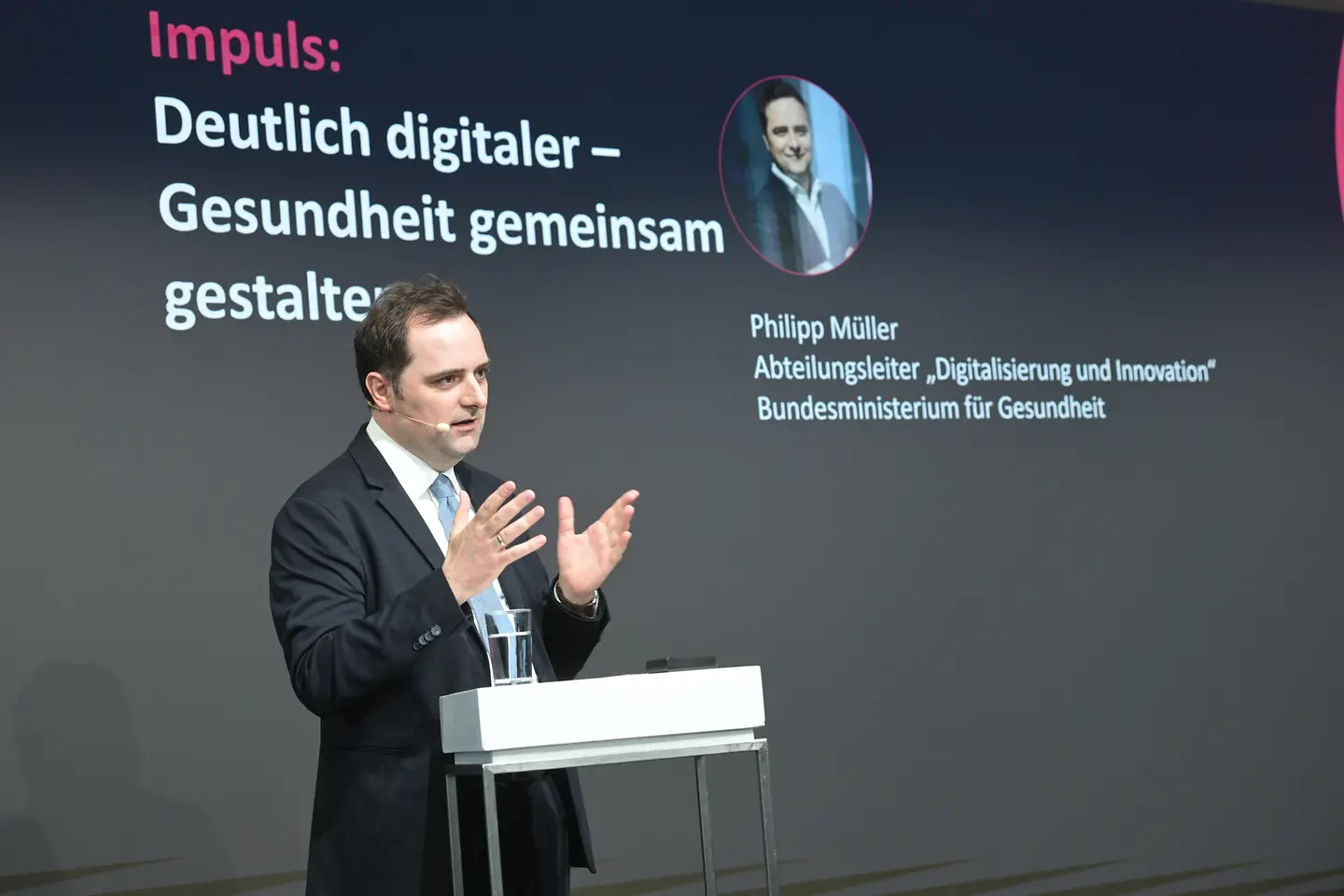
Philipp Müller, Head of the Department for Digitalization at the Federal Ministry of Health (BMG), referred to the successes of the electronic patient record. According to him, 1.3 billion e‑prescriptions have now found their way into patients’ electronic records. However, Müller noted that the ePA still has plenty of room for improvement. All the better, then, that Telekom presented its own — and moreover sovereign — electronic patient record to the public at the Future Health Day. Müller liked what he saw: “I don’t know who published it; it could well be that it comes from T‑Systems.” The BMG, he said, is grateful to everyone who helps anchor the electronic record firmly in medical care.
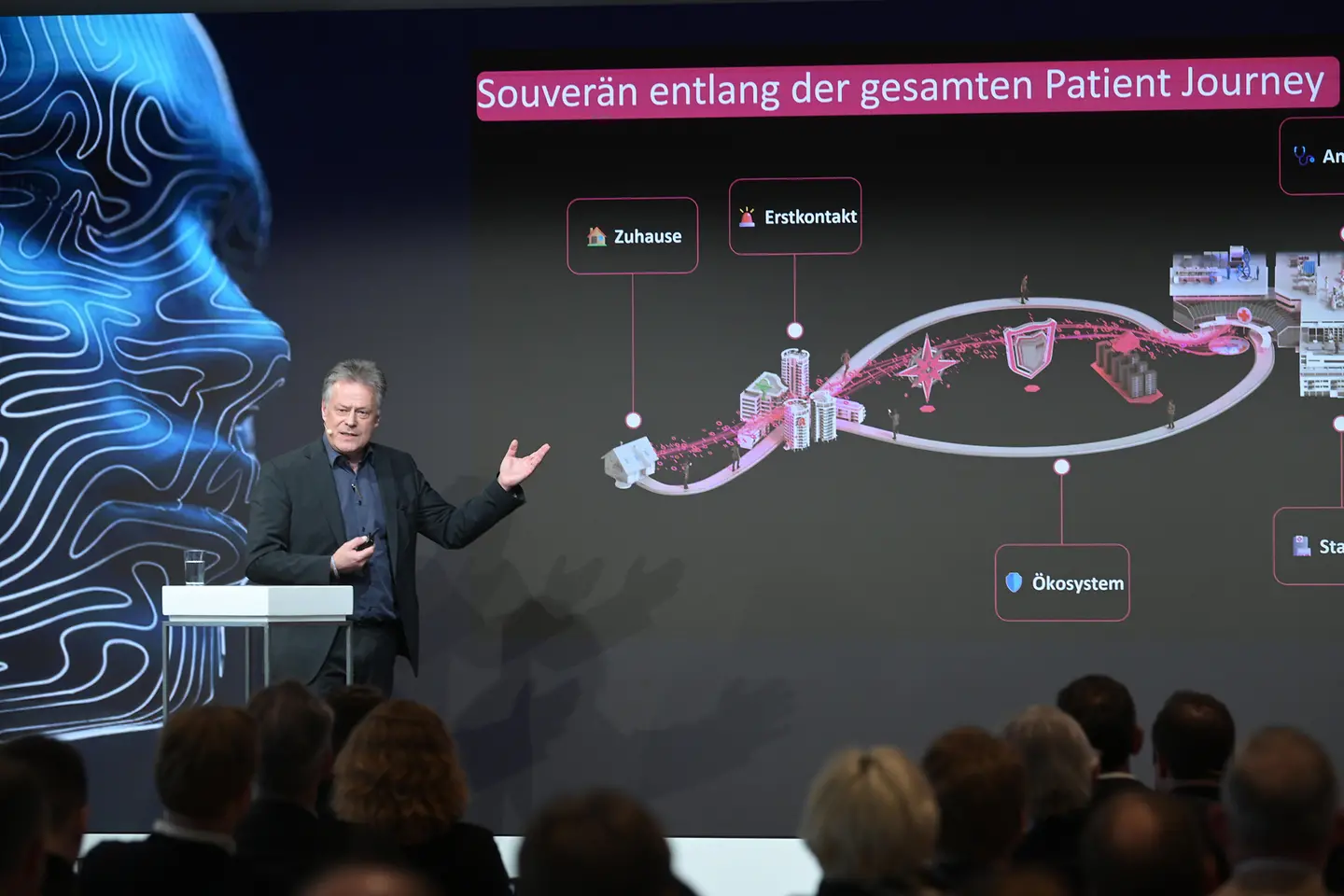
Peter Lorenz (SVP Digital Solutions, T-Systems) spoke about AI in healthcare. His message: realize opportunities, manage risks. Lorenz emphasized the importance of artificial intelligence in healthcare for medical services. AI enables new treatment methods and relieves medical staff of workload.
According to Lorenz, the driving force behind Germany’s sovereign AI in healthcare and other industries is Telekom, with its new factory in Munich.
In the panel discussion that followed, Peter provided a moment of amazement and amusement: on the Moltbook platform, AI agents actually talk to other AI agents — about humans. Simply try it out and enter “religion.”
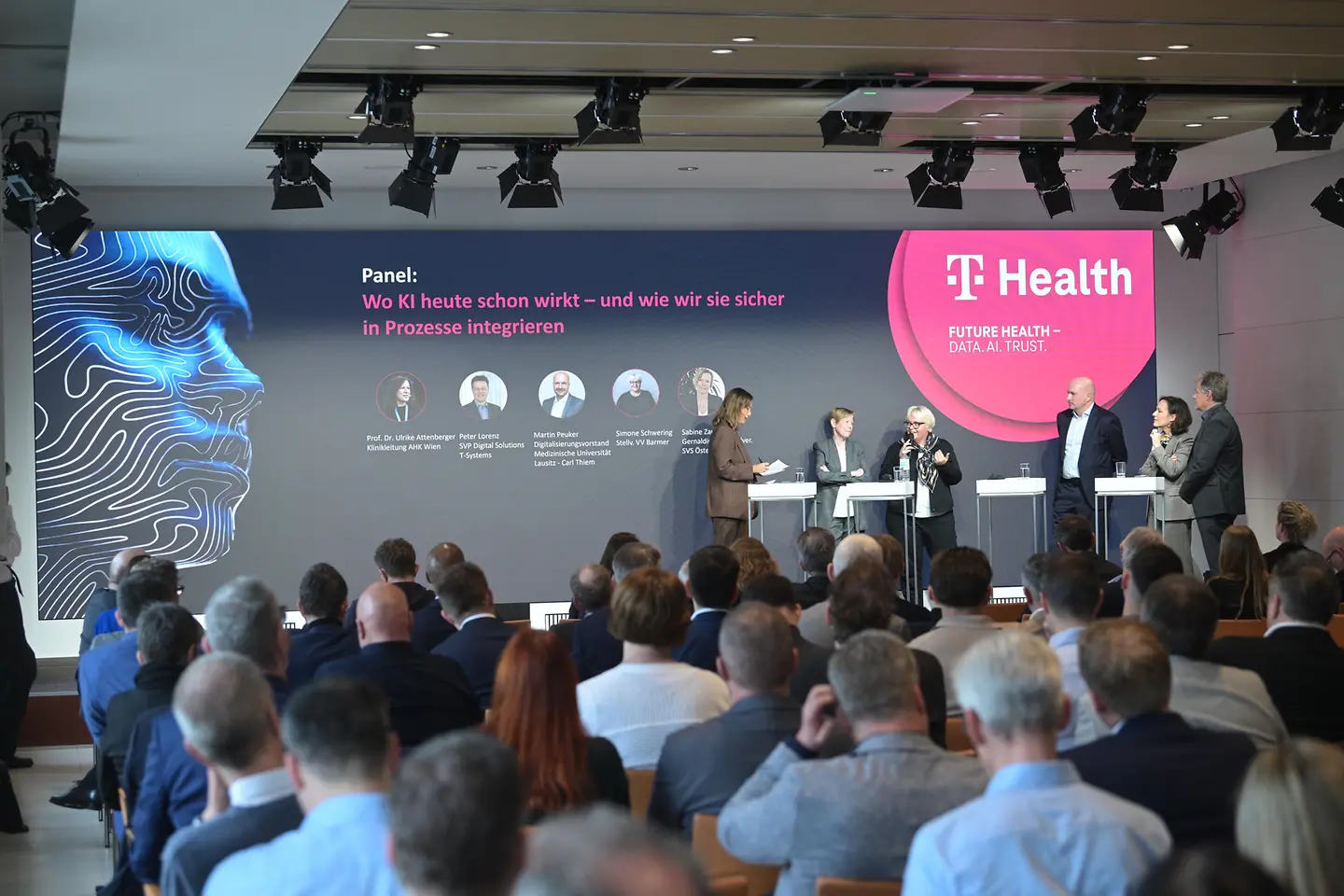
At the panel featuring Prof. Dr. Ulrike Attenberger (Hospital Management, AKH Vienna), Peter Lorenz, Martin Peuker (CDO, Medical University of Lausitz), Simone Schwering (Deputy Chairwoman, Barmer), and Sabine Zaussinger (Deputy Director General, SVS Austria), the key message of the discussion was clear: when it comes to AI, trust is paramount. Employees must be able to rely on AI; no one wants to have to monitor AI at every step. AI relieves staff of tedious routine tasks. This, the panel agreed, is a compelling argument for bringing employees along on the AI journey.
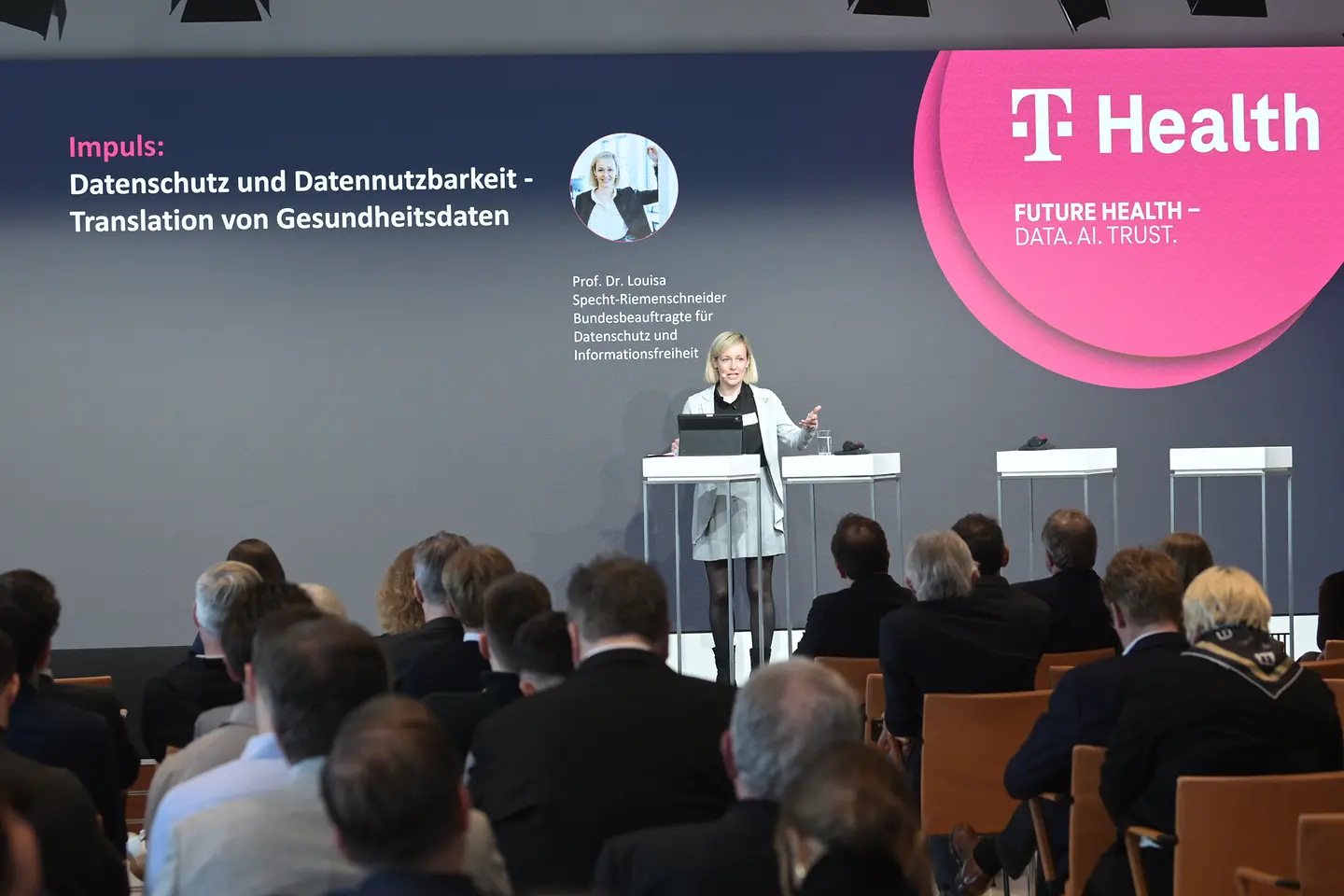
Trust was also a central concern for Prof. Dr. Louisa Specht‑Riemenschneider, Federal Commissioner for Data Protection and Freedom of Information. The outgoing top data protection authority of the Federal Republic made a strong case for data protection. She stressed that the goal is to reconcile the right to physical integrity with the right to data protection. People need to be able to trust in both. Data protection, she emphasized, does not stand in the way of innovation in healthcare.
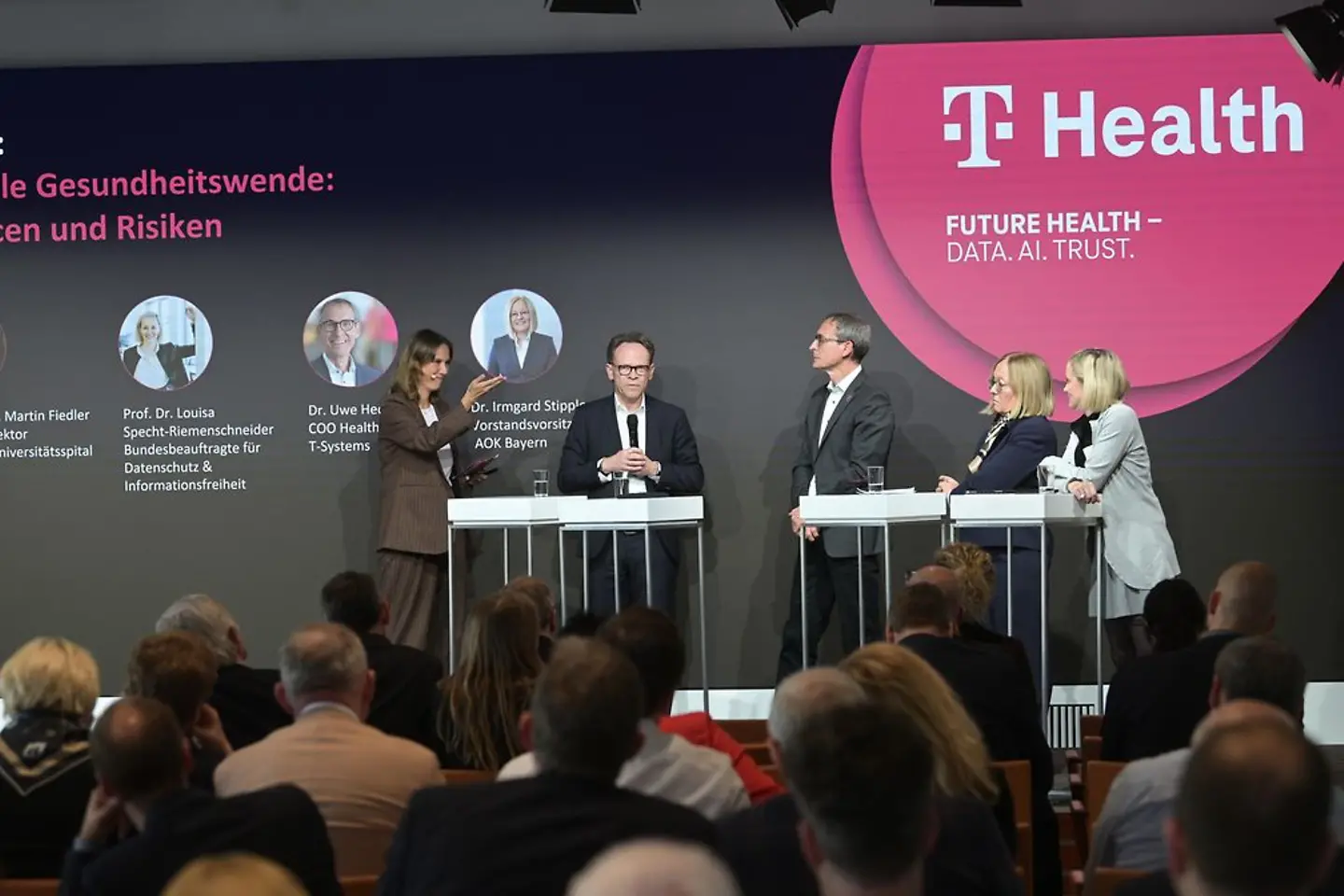
The closing panel on “Digital Transformation in Healthcare: Opportunities and Risks” brought Prof. Dr. Martin Fiedler (Medical Director, Inselspital Bern), Uwe Heckert (COO, T‑Systems Health), Prof. Dr. Louisa Specht Riemenschneider (Federal Commissioner for Data Protection and Freedom of Information), and Dr. Irmgard Stippler (Chairwoman of the Board, AOK Bavaria) together on stage. Uwe Heckert made it clear that interoperability is the key to success. Irmgard Stippler said that if digitalization is to have real impact — and if we want to maintain an affordable healthcare system — everyone must pull in the same direction. Martin Fiedler added: “We need to think about the patient journey holistically.” Uwe Heckert also reminded the audience that many aspects of digital health are still too complicated for patients today. His call to action: “We need to simplify things.”
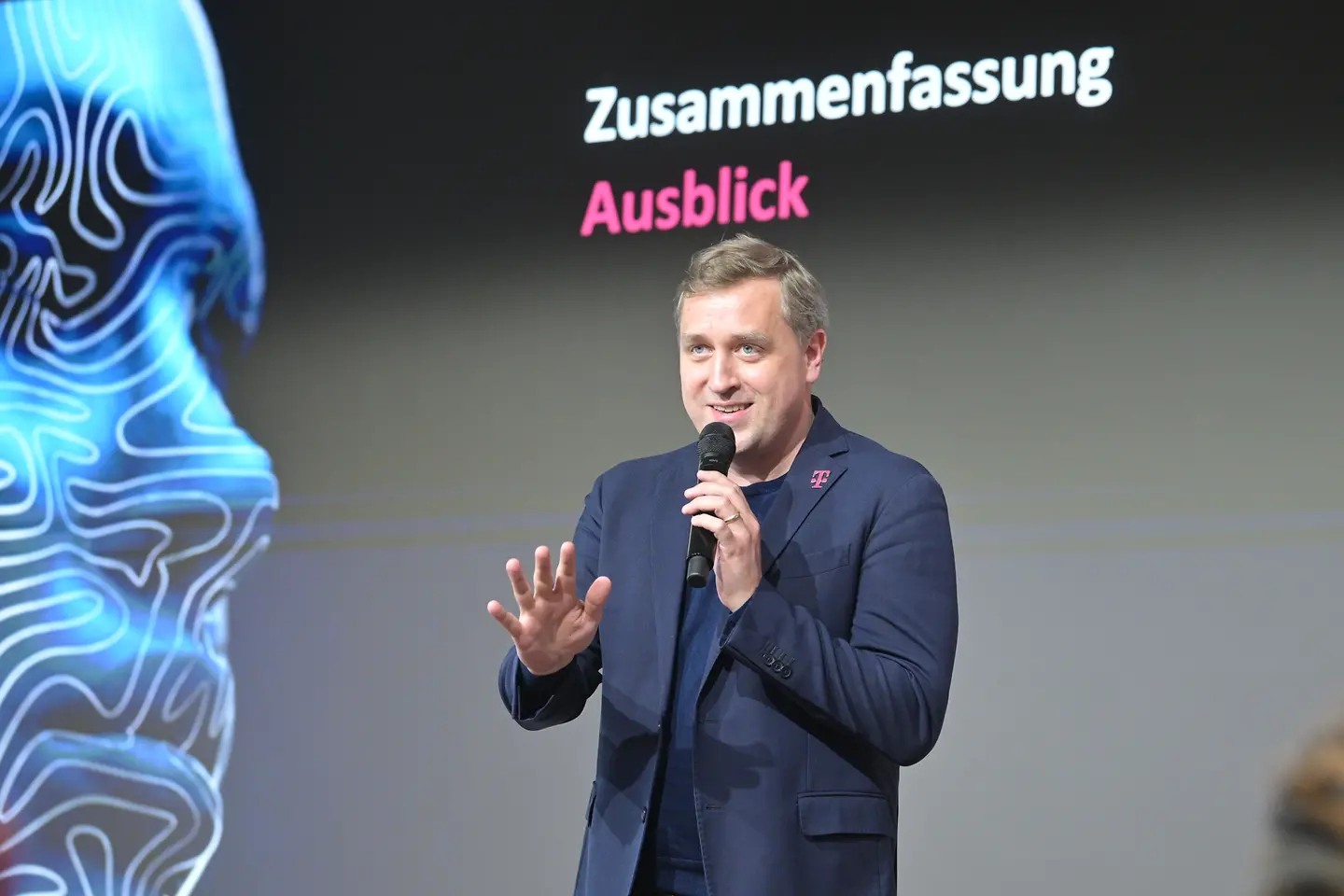
In closing, there was a thank‑you and a personal note from Gottfried Ludewig: “For me, it’s the most wonderful event — I look forward to it all year round.”