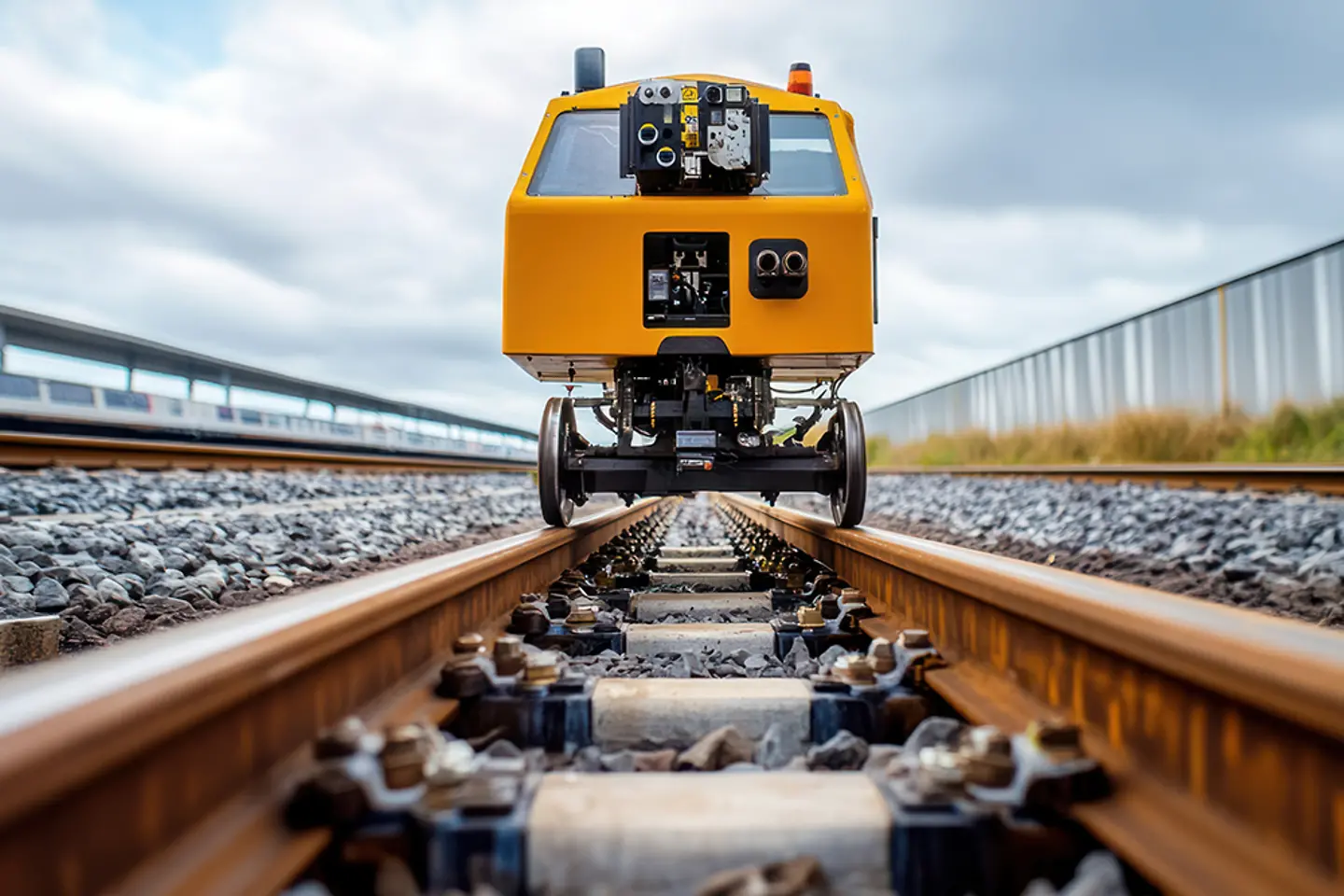
Smart robotics is transforming public transport and rail logistics. Yet, as long as robots are not cleanly integrated into IT systems and operational workflows, many projects remain stuck in the pilot stage. Only the interplay of autonomous robots and secure digital platforms enables automation in the public transport sector to scale.
The mobility transition demands speed. At the same time, railway operators are under increasing cost pressure and therefore want to make greater use of automation solutions—such as the robot dog Spot, whose "keen nose" is powered by advanced cameras, sensors, and artificial intelligence (AI). This enables it to detect damage to freight trains—an automated inspection in real time. In test runs, it has already been deployed to shorten train pit stops, speed up repairs, and relieve employees of routine tasks. In some maintenance depots, robots also assist with grinding and painting ICE coaches. However, Spot and the robot family in rail and public transport are still mostly operating within the scope of pilot projects. What is currently lacking is the necessary integration and scalability to roll out automation solutions across the company or even the entire industry.
Germany ranks fifth, behind South Korea, the USA, Japan, and China, on the list of countries that make extensive use of robotics and automation. However, we do not owe this to the public transport sector. While the first industrial robots entered automotive manufacturing halls decades ago, we still see a great deal of manual work in the maintenance and intralogistics departments of transport operators: if a long-distance train needs fresh water, for example, maintenance workers still show up with hoses, just as they always have. If spare parts need to be fetched from a warehouse, an employee hops onto a cargo bike. Is management simply missing the boat here? It's not that simple.
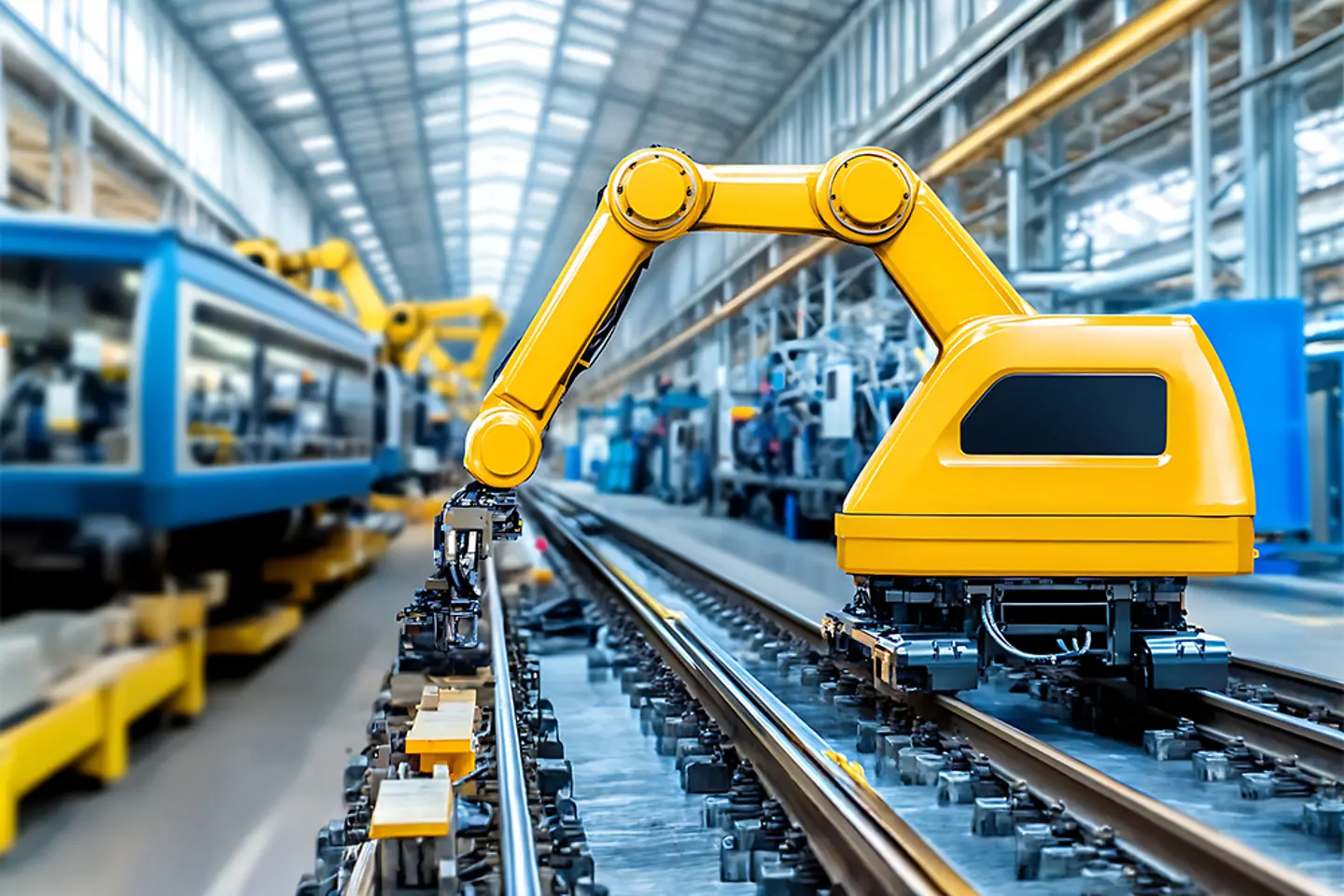
Of course, plant managers are interested in relieving the burden on their engineering teams. After all, the industry is suffering from a shortage of skilled workers and is under considerable cost pressure. But when individual plants actually decide to adopt smart robotics, it is typically a one-off solution that does not scale across the entire company—and its potential thus goes to waste. Put differently: the problem is not a lack of robotics, but a lack of industrialization in their use. Many automation solutions are not integrated into the company's IT infrastructure and systems. The result: high manual effort, no economies of scale, growing integration complexity, and a proliferation of isolated solutions.
T-Systems has therefore developed the "Autonomous Logistics" platform for Automated Guided Vehicles (AGVs)—i.e., driverless transport vehicles. This enables customers from sensitive industries, such as public transport, to deploy robots in an agnostic manner. The platform provides a vendor-independent, secure environment for robot control and integration. Individual plants or departments can thereby independently implement various use cases such as spare parts transport, maintenance support, or inspection tasks. The advantage: they do not need to go through the complex effort of integrating these activities—because T-Systems takes on this task with the platform. This enables the transition from isolated robotics initiatives to industrialized use with a clearly defined governance framework for security and operations.
Such platforms also enable companies to choose different levels of sovereignty—up to the highest level of sovereignty when running in T Cloud Public. Because there is one thing customers should always keep in mind: robot manufacturers work on innovations; they want to relieve people of burdens with their machines. However, they have not previously seen it as their job to set up the software required to control a robotics process in a sovereign manner. Only gradually is this perspective beginning to change here as well. Companies in critical infrastructure, in particular, need to know what each robot app sends to the outside world, whether it collects information it should not access, and how to prevent both risks.
Public transport is not the only sector with sensitive security and sovereignty requirements. Similar patterns—gradual automation, clearly defined governance—can be found in all safety-critical environments. Take for instance the military logistics facility at the Bundeswehr's mechatronics center in Jülich. This facility overhauls military vehicles, handles their maintenance, and brings them up to the latest technical standards—and has secured robotic assistance. To make the transport of spare parts from the automated small parts warehouse to the workshop more effective and to relieve the burden on employees, T-Systems is supporting a pilot project with autonomous robots. To ensure the robots can safely find their way from the warehouse to the workshop, a 5G infrastructure establishes a high-performance connection. The advantage: the 5G campus network not only enables the rapid transport of large volumes of data, but also ensures that the information remains on the campus.
Companies that want to replace their isolated robotics initiatives with an industrialized approach using a scalable solution need an enterprise-compliant digital platform. It must cover the following capabilities:
My recommendation: Start with clearly prioritized use cases for smart robotics—a simple use case where effectiveness can be well demonstrated. This will help you make the transition to inustrialized robotics as quickly as possible.